Mythos Mozart is a cutting-edge multimedia attraction in the heart of Vienna that reimagines the life and music of Wolfgang Amadeus Mozart. Opened in September 2022 at the very site where Mozart spent his final year and composed works like The Magic Flute and the Requiem, this experience invites visitors to dive into Mozart’s world with all their senses. Unlike a traditional museum, Mythos Mozart offers an hour-long journey through interactive, high-tech installations instead of historical artifacts. The result is a unique blend of music, art, and technology that aims to inspire both devoted Mozart fans and newcomers alike.
Mozart Portal have not visited the exhibition ourselves; the content is based on publicly available sources, press material, and a broad range of critical and visitor responses.
Origins and Concept Development
The concept for Mythos Mozart began taking shape in 2019, when an international team of experts and artists started developing this privately financed project[4][5]. The driving idea was to honor Mozart “in a way that’s never been seen before,” by connecting tradition with modernity, art with music, and creativity with technology[6].
The creative roster behind the experience is impressive: British-German light designer Moritz Waldemeyer crafted a glowing tribute to the Requiem, new-media artist Refik Anadol (based in LA) contributed AI-driven visuals, and Austrian-Iranian filmmaker Arash T. Riahi helped shape the storytelling[5].
The musical soundscape was composed and arranged by Austrian composer Walter Werzowa, then recorded afresh by students of Vienna’s University of Music (mdw) in an exclusive collaboration[7].
Leading institutions like the Salzburg Mozarteum Foundation and Mozarthaus Vienna lent support and expertise to the project[8], ensuring historical authenticity even amid the digital spectacle.
Prominent artists serve as ambassadors: star tenor Rolando Villazón (artistic director of the Mozarteum) and violinist Aleksey Igudesman were early champions of Mythos Mozart, envisioning it as “one of Vienna’s biggest attractions” that makes Mozart accessible to a new generation[9].
According to managing director Hans Gasser, the mission was to “create a new space for innovation and culture” that bridges past and present[6]. In charge of the overall concept and content was Christoph Widauer, a Vienna-based music and media expert who oversaw the project’s realization[10]. After years of development and a rapid 11-month fit-out of the venue’s basement, Mythos Mozart finally opened its doors in fall 2022 as a permanent attraction.
An Immersive Journey Through Mozart’s World
Visitors enter Mythos Mozart in small groups at timed intervals, embarking on a roughly 60-minute tour through five distinct rooms. From the first steps, it’s clear this is not a conventional exhibition – it’s an experience. Each room presents a different facet of Mozart’s life or work through elaborate audiovisual design:
Room 1: Mozart’s Requiem – Mozart’s Death
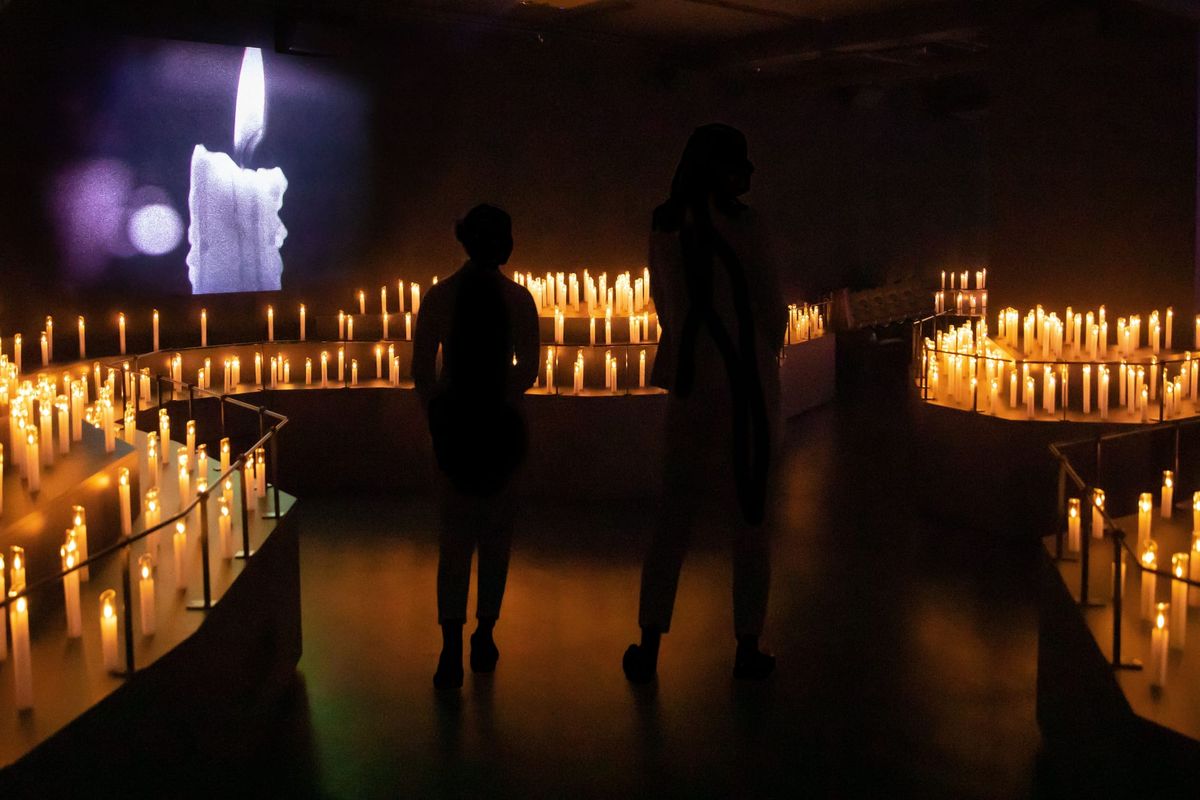
The journey fittingly begins at the end. In a mysterious chapel-like space, 1,500 LED candles flicker in the dark to the haunting strains of Mozart’s unfinished Requiem. Shadows dance on the walls amid the glow of candlelight, an atmosphere developed by designer Moritz Waldemeyer. Many visitors find this opening scene mesmerizing – “thousands of candles (not real) illuminate to the Requiem’s music in a magical display,” one reviewer noted[15]. It sets a reflective, almost sacred tone, evoking the moment of Mozart’s death and the “moment of his immortality” as the official narrative puts it[13].
Room 2: Vienna 1791 – Mozart’s City
Stepping into the next room, you are transported back to 18th-century Vienna. A 45-meter, 360° animated panorama surrounds you with scenes of Mozart’s time – the bustling streets, Baroque architecture, and even a whimsical balloon ride over old Vienna.
This panoramic film (created by Vienna’s Arx Anima studio) lets visitors stroll through Mozart’s neighborhood and peek at landmarks of his era. The floor even features replica cobblestones to enhance that feeling of authenticity. It’s a vivid time-travel moment, though some critics felt the idyllic imagery (complete with hopping rabbits and storybook charm) drifts into romanticized fantasy, sacrificing historical realism for visual flair.
Room 3: World Music – Mozart’s Eine kleine Nachtmusik
The third room is all about interaction. Here, Mozart’s famous “A Little Night Music” becomes a global jam session. Visitors can play along on instruments from around the world, from drums to gamelan, each adding their sound to the piece. Through playful participation, this section highlights Mozart’s influence and the universal language of music. The atmosphere is lively and hands-on – a chance for you to become part of the performance. (It’s also a hit with younger visitors looking for a fun, tactile experience.)
Room 4: Genius – Mozart the Composer
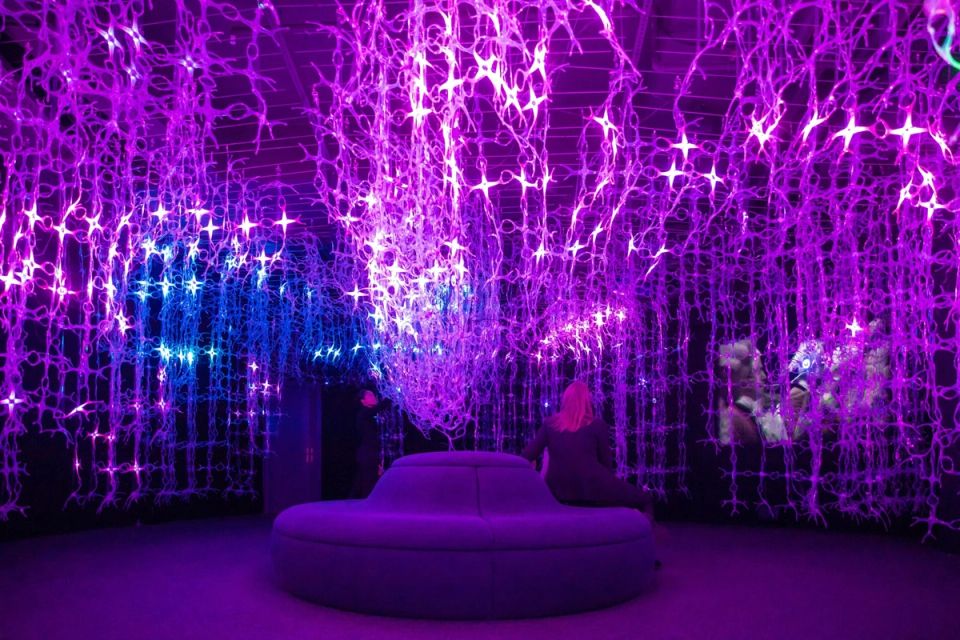
In an abstract change of scene, room four plunges visitors inside Mozart’s creative mind. You walk amid a tangle of illuminated wires and neuron-inspired light sculptures – thousands of synapse-like points firing in time with music. This installation visualizes Mozart’s musical creativity as a network of light and sound, an almost sci-fi depiction of genius. Surrounded by these glowing webs, visitors get a sense of how Mozart’s ideas might have interconnected. It’s a striking, modern art approach to celebrate the complexity of his compositions.
Room 5: The Magic Flute – Mozart Forever
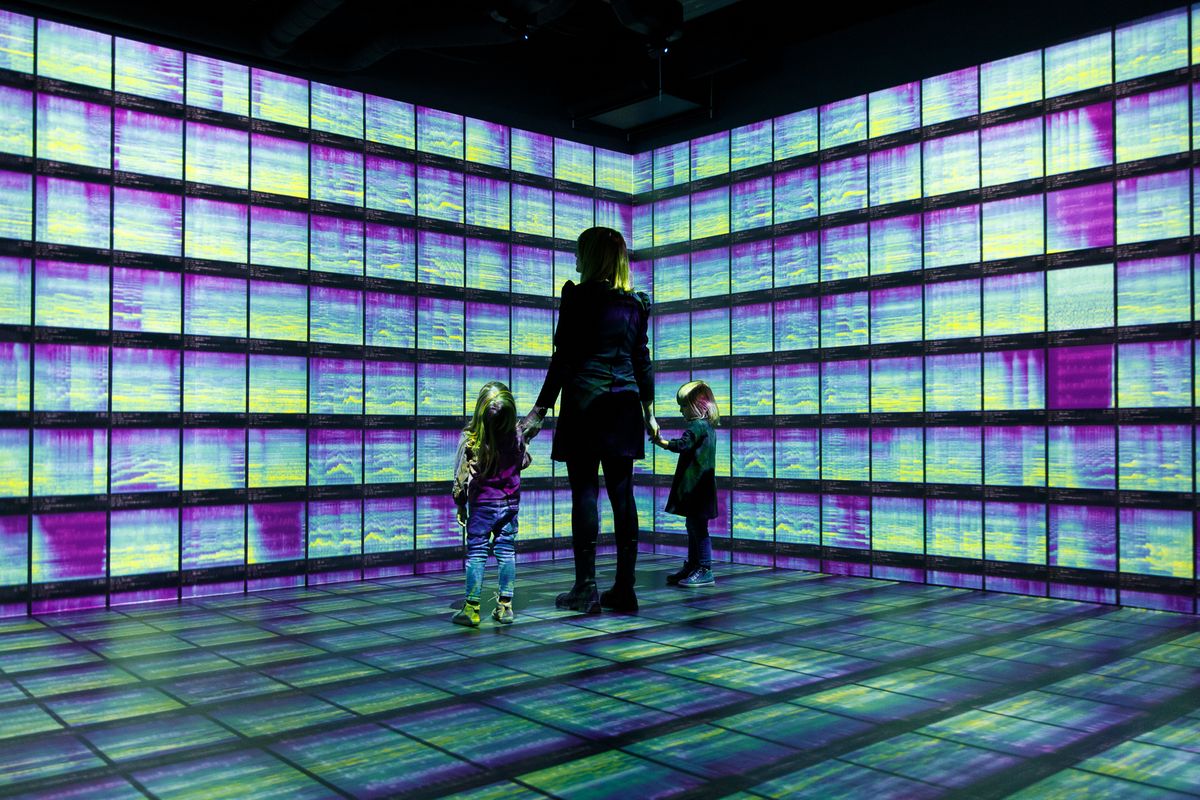
The grand finale is a feast for the eyes. In the last room, The Magic Flute’s imaginative world is reinterpreted through AI-driven digital art. Famed digital artist Refik Anadol used “millions of pieces of data” about Mozart – from musical structures to images – to generate swirling, dreamlike visualizations projected all around. You might see abstract patterns, cosmic landscapes, or fragments of Mozart’s scores morphing on the walls, all set to the triumphant music of The Magic Flute. It’s Mozart as seen through the lens of 21st-century technology, creating what Anadol calls “fantastic visual worlds”[24]. The effect is meant to leave visitors with a sense of “Mozart forever” – that his legacy lives on in endless new forms.
What Do Critics and Visitors Say?
Reactions to Mythos Mozart have spanned from awe-struck praise to pointed criticism, reflecting its unconventional nature. Many visitors have lauded the experience as an inspiring and emotionally moving tribute to Mozart. They note that Mythos Mozart isn’t about learning every biographical fact, but about feeling the music and atmosphere.
“The installations are beautiful to behold and, together with Mozart’s brilliant music, form a unique symphony of feelings that you can simply enjoy,” one reviewer wrote, advising to “switch off your brain and just soak it in”[27].
Indeed, the exhibit’s multi-sensory approach – with immersive visuals, surround sound, and interactive fun – has been successful in captivating those who might find a traditional museum less engaging. Families and casual tourists often find it “absolutely worth seeing… creative, touching, fantastic”, as another visitor put it[28]. The spectacle, creativity, and modern presentation have been praised for making Mozart’s genius feel accessible and exciting to a new generation[9].
However, not all critics are convinced. Classical music purists and some culture commentators have questioned the depth and authenticity of Mythos Mozart’s content. Austria’s Der Standard newspaper noted that anyone expecting original artifacts or scholarly detail “will be disappointed. High-tech speakers and flat-screens provide the 18th-century flair” instead[2].
The exhibition has been described as “kitsch in overdrive” – a flashy audiovisual show that sometimes prioritizes spectacle over substance[29][30]. The more-is-more American-style presentation, while entertaining, led one critic to doubt “whether Mythos Mozart can truly contribute to Vienna’s art and culture scene”, even if it serves as a “nice, family-friendly attraction”[30].
Some visitors expecting a deeper insight into Mozart’s life have echoed these critiques. A scathing user review on TripAdvisor argued that the experience delivered “little Mozart, [but] a lot of technical gimmickry” and felt “somewhere between bad kitsch and computer-generated flicker”[31][32]. This reviewer found the narrative disjointed and the audio mix overwhelming, complaining that “we couldn’t really follow it… one moment we felt like in a vampire movie, then in an animated picture book, then in The Matrix”[31].
Others disliked the strictly timed format: "You must stay with your group in each room until the sequence finishes, with no option to linger or leave early – which a few people found frustrating"[33].
These critical voices suggest that Mythos Mozart is not a substitute for a real museum if you’re seeking scholarly enrichment. Instead, it’s best appreciated as an immersive art show or entertainment piece.
Even a positive travel blogger who enjoyed the spectacle noted that “it’s a fun and varied diversion apart from usual museum presentations. Still, it doesn’t hurt to visit the Mozarthaus afterward” for the historical context[34].
This balanced view reflects how savvy travelers might approach Mythos Mozart: enjoy it for what it is – a modern homage and imaginative journey – while remembering that Mozart’s true story continues in the archives, original locations, and traditional concerts around Vienna.
Visiting Mythos Mozart: Location and Tips
Place: Mythos Mozart is conveniently located in central Vienna at Kärntner Straße 19 (1010 Vienna) – just a few minutes’ walk from the iconic St. Stephen’s Cathedral[35]. In fact, this address is noteworthy: it stands on the site of the old “Kleines Kayserhaus” where Mozart lived in 1791 and where he died on December 5 of that year[36][37]. Today, the Steffl department store occupies the block, and Mythos Mozart is housed in Steffl’s basement level, which has been transformed into the exhibition space[38]. Visitors can enter through the department store – elevators inside (and a panoramic lift on the building’s exterior) provide access to the Mythos Mozart entrance in the basement[39]. The facility is fully accessible, with barrier-free routes for strollers or wheelchairs.
Hours: Mythos Mozart is open daily, with extended hours on weekdays. From Monday to Friday, opening time is 10:00 AM to 8:00 PM, and on Saturdays, Sundays, and holidays from 10:00 AM to 6:00 PM[40]. The last admission time slot begins about 75 minutes before closing (to allow visitors to experience all five rooms)[41]. It’s a timed entry system: when you book a ticket, you select a specific start time for your tour. Advance booking is strongly recommended, especially in high tourist season, as group sizes are limited. Tickets can be purchased via the official website or on-site if available.
Prices: The standard adult ticket price is around €23 (as of 2025)[42]. There are discounted rates for youth, students, or seniors, and children under a certain age (usually 6) may enter free – check current details when booking. Holders of the Vienna City Card get about 24% off the ticket price[43], which is a nice perk for travelers.
Inside the venue, you’ll find a Mozart-themed gift shop selling everything from CDs and books to quirky souvenirs (yes, even Mozart in Playmobil form)[44].
Sources
Sources
Mythos Mozart official site and Vienna Tourism Board – descriptions of the concept, venue, and experience[13][5][37]
Press releases & news articles – background on the project’s development and partners[4][8]
AV Stumpfl case study – insights on the creative team, technology, and implementation[6][23]
Reisebloggerin.at – first-hand visit impressions and tips from a travel blogger[15][48]
Der Standard (Caroline Schluge) – critique of the exhibition’s artistic approach and cultural value[30]
Tripadvisor reviews – diverse visitor opinions, from enthusiastic praise[27] to critical dissatisfaction[31][32].
[1][4][8][18] MYTHOS MOZART – Neue Mozart-Attraktion in Wien
[2][19][29][30] Die Ausstellung "Mythos Mozart": Auf ein Selfie mit dem Wolferl - Musik - derStandard.at › Kultur
[3][15][34][44][45][46][48] Mythos Mozart in Wien
https://www.reisebloggerin.at/2023/01/mythos-mozart-in-wien/
[5][7][9][11][35][37][39][40][41][42][43][47] Mythos Mozart - vienna.info
https://www.wien.info/en/art-culture/music-stage-shows/mythos-mozart-431146
[6][10][12][14][17][21][23][25][26] 2022-10 Mythos Mozart
https://avstumpfl.com/en/showcase/mythos-mozart/
[13][16][20][22][24][36][38]About - Mythos Mozart
https://mythos-mozart.com/en/about/
[27][28][31][32][33] Mythos Mozart (Wien) - Lohnt es sich? Aktuell für 2025 (mit Fotos)
https://www.tripadvisor.at/Attraction_Review-g190454-d25181444-Reviews-Mythos_Mozart-Vienna.html