Symphony No. 36 in C major, “Linz” (K. 425)
沃尔夫冈·阿马德乌斯·莫扎特
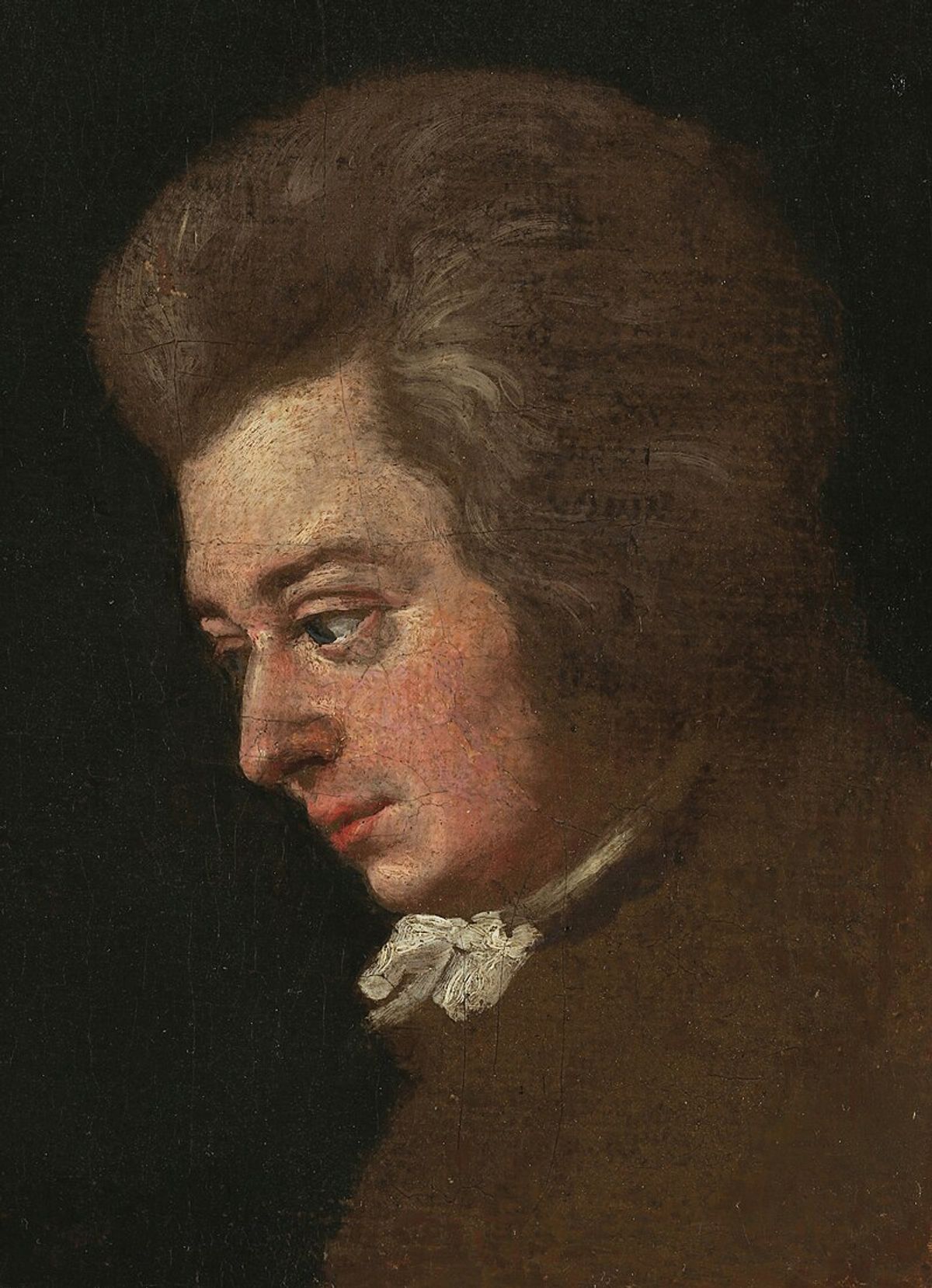
Mozart’s Symphony No. 36 in C major, “Linz” (K. 425), was composed in Linz between 30 October and 3 November 1783—an act of practiced brilliance under deadline pressure. Premiered on 4 November 1783, it marries ceremonial C-major splendor (trumpets and timpani included) with an unusually ambitious, Haydn-aware symphonic design.
Background and Context
In the autumn of 1783 Wolfgang Amadeus Mozart (1756–1791) and his wife Constanze were traveling back toward Vienna after a Salzburg visit that had been emotionally and politically complicated: Mozart was still negotiating the consequences of having left the Prince-Archbishop’s service, and he was also testing what it meant to live as a freelance composer in Vienna. The stop in Linz was, on paper, merely practical—a pause on the road—but it became a vivid demonstration of how Mozart’s “public” career could suddenly be demanded of him anywhere.


As an Amazon Associate we earn from qualifying purchases.
Linz offered something Vienna did not always guarantee: an eager aristocratic host with an orchestra ready to play. The local patron was Count Johann Joseph Anton Thun (often cited simply as “Count Thun”), who received the Mozarts hospitably and—crucially—expected music in return. Program-note retellings sometimes reduce the story to a single point (Mozart wrote the symphony “in four days”), but the deeper significance is what that deadline produced: not a lightweight stopgap, but a work that sounds like an answer to the question of what Mozart’s symphony could be once it absorbed the scale and rhetorical seriousness increasingly associated with Joseph Haydn’s Viennese practice.
One should also hear the Linz against Mozart’s broader 1782–83 aesthetic: the years of intensified contrapuntal study (Bach and Handel), the sharpening of his orchestral wind-writing, and a growing interest in “architectural” openings—beginnings that do not simply start, but establish a world. The first movement’s slow introduction is the most obvious sign of this ambition, but the entire symphony behaves as if it expects an attentive, public audience rather than a background social function.
Composition and Premiere
Mozart’s own correspondence makes the Linz situation unusually concrete. Writing from Linz to his father Leopold Mozart on 31 October 1783, he explains that a concert is scheduled for Tuesday, 4 November, and that he has no symphony with him—so he is composing a new one “at breakneck speed,” to be finished in time [3] [4]. That letter is not merely colorful; it frames K. 425 as a work born from professional necessity, yet conceived with a composer’s confidence that he could meet an institutional demand without lowering artistic standards.
The dating in the Mozarteum’s Köchel catalogue places the composition in Linz from 30 October to 3 November 1783, with the first version completed within that window [1]. The first performance followed immediately on 4 November 1783, in Linz [1] [2]. (Mozart later performed the symphony in Vienna—evidence that he valued it as more than an ephemeral local offering [2].)
A striking contextual detail, often missed in basic summaries, is that the Linz concert seems to have included not only K. 425 but also a symphony by Michael Haydn to which Mozart supplied a newly composed slow introduction—music that later helped generate confusion around the so-called “Symphony No. 37” attribution [5] [6]. In other words, Linz shows Mozart not simply as a composer of “new works,” but as a practical musical director: adapting existing repertoire, tailoring introductions, and shaping a public event on short notice.
Instrumentation
K. 425 is scored for a festive late-18th-century orchestra—“festive” above all because Mozart chooses trumpets and timpani for a symphony in C major. The Mozarteum catalogue lists:
- Winds: 2 oboes, 2 bassoons
- Brass: 2 horns, 2 trumpets
- Percussion: timpani
- Strings: violins I & II, violas, cello, double bass
This is the orchestration of an outdoor-ceremonial key brought indoors: C major, with trumpets and drums, signals brilliance and public address as much as it does harmonic “rightness” on natural brass [1] [7].



As an Amazon Associate we earn from qualifying purchases.
Two scoring points are especially illuminating.
First, the slow introduction in the opening movement is not just a formal device but an orchestral one: it allows Mozart to stage the ensemble—strings and winds establishing a grave, expectant sonority before the main Allegro spiritoso releases accumulated energy. For Mozart, this is comparatively rare and therefore meaningful; he is importing a Haydn-associated rhetorical strategy into his own symphonic language [7].
Second, the Andante’s sound world is distinctive because Mozart retains trumpets and timpani in the slow movement, using them with restraint rather than display. Contemporary listeners accustomed to “silent drums” in slow movements would have registered this as a timbral enlargement of lyric space—not militarizing the movement, but giving its phrases a special kind of weight and glow [7] [3].
Form and Musical Character
I. Adagio – Allegro spiritoso (C major)
The opening Adagio is among Mozart’s most architecturally persuasive slow introductions: it does not merely “set the key,” but establishes a ceremonial rhetoric of arrival. The harmonic pacing feels deliberate—pauses, sustained sonorities, and carefully graded dynamic shifts that make the later Allegro feel like an event rather than a continuation.
When the Allegro spiritoso begins, it does so with a kind of controlled propulsion—bright, yes, but not breathless. This balance is part of the work’s interpretive fascination: written in extreme haste, yet seeming to refuse haste as a character. The movement’s sonata-allegro form (exposition, development, recapitulation) is clear, but Mozart enriches it with details that reward close attention. Most discussed is a brief quotation of Handel’s Messiah “Hallelujah” chorus—an audible trace of Mozart’s Handel absorption in these years, and a reminder that “learned” style could appear as wit, homage, or rhetorical signal within a public symphony [2].
Interpretively, the first movement poses a choice: should the introduction be “grandly slow” (emphasizing its novelty in Mozart’s output) or “structurally flowing” (keeping tension alive so that the Allegro feels inevitable)? Historically informed performances often favor clarity and forward motion; older Central European readings sometimes broaden the introduction to heighten the sense of ceremonial space. The score supports either, but the best performances make the boundary between introduction and exposition feel like a theatrical curtain rising—sudden light after poised darkness.
II. Andante (F major)
Mozart’s Andante moves in 6/8 with a gentle siciliano character: rocking motion, long-breathed melody, and a pastoral poise that seems to soften the symphony’s ceremonial exterior [7]. Yet it is not a retreat into intimacy; the movement’s color is subtly “public,” in part because of those restrained trumpet and timpani punctuations.
What makes this Andante particularly modern-sounding is how Mozart distributes expressive responsibility across the orchestra. The strings sing, but winds shade the harmony and articulate phrase-ends with a conversational tact that anticipates the richer wind-characterization of his later Viennese symphonies. The timpani and trumpets, used quietly, become almost like architectural columns: they do not draw attention to themselves, but change how the ear perceives the room.
III. Menuetto (C major) – Trio
The Menuetto returns to C-major ceremony, with strong metric emphasis and the kind of “courtly” firmness that trumpets and timpani can underline without turning the dance into a march. It is easy to hear this as conventional; it becomes less so when one listens for Mozart’s handling of register and instrumental balance. He writes a minuet that can project in a theatre, not merely charm in a salon.
As an Amazon Associate we earn from qualifying purchases.
The Trio provides the expected contrast: lighter texture, more intimate wind coloring, and a different kind of grace—an internal room within the larger hall. Many conductors use the Trio to recalibrate the symphony’s scale, letting listeners feel how Mozart can reduce forces without reducing seriousness.
IV. Finale: Presto (C major)
The finale is often described as energetic; that is true, but it is more precisely energetic through articulation. The Presto thrives on crisp attacks and tight rhythmic unanimity, and it asks the orchestra to sound both brilliant and agile. In performance, the movement can become merely fast; in the best readings, speed serves the musical argument—short motifs accumulating into longer spans, exuberance engineered rather than sprayed.
This finale also completes the symphony’s “deadline paradox”: music produced under time pressure that nevertheless sounds planned, proportioned, and dramaturgically convincing. Its jubilant C-major rhetoric is not a simple victory-lap; it is the final proof that Mozart could write for public impact without sacrificing motivic craftsmanship.
Reception and Legacy
K. 425’s nickname, “Linz,” might suggest an occasional piece tied to a place; in practice it has become one of the symphonies through which Mozart’s mature orchestral voice is most commonly introduced. Part of its endurance lies in its hybrid identity: Salzburg-trained fluency meeting Viennese ambition, Italianate brightness framed by a Haydn-like slow introduction, and festive scoring that still allows genuine lyric inwardness.
Musicologically, the symphony’s legacy includes two particularly interesting afterlives.
First is the “Symphony No. 37” confusion: because Mozart composed a slow introduction for a Michael Haydn symphony for the same Linz occasion, later cataloguing and attribution history temporarily elevated this hybrid into Mozart’s canon. The episode is not just bibliographical trivia; it reveals how Mozart’s practice of adaptation—writing introductions, reworking material for specific events—can blur modern assumptions about the autonomy of a “work” [6].
Second is the interpretive tradition around the opening Adagio. Since Mozart so rarely uses slow introductions in symphonies, performers and scholars tend to treat K. 425 as a key document in his negotiation with Haydn’s symphonic rhetoric. Whether one views the introduction as “Haydn-style” borrowing or as Mozart’s own orchestral dramaturgy, it stands at the beginning of a line that listeners often trace forward to the larger-scale introductions of the late 1780s symphonies.
As for recordings, K. 425 has been a touchstone in debates about orchestral size and articulation: it can sound monumental with modern symphony forces, but it can also sound theatrically incisive with smaller classical ensembles. Historically informed interpreters have often used the work to demonstrate how trumpets and timpani can be brilliant yet integrated, and how the Andante can remain poised even when the outer movements are driven hard. The symphony’s repertoire status is thus not only a matter of popularity; it is a measure of its capacity to withstand (and illuminate) changing performance ideals.


As an Amazon Associate we earn from qualifying purchases.
乐谱
从Virtual Sheet Music®下载并打印Symphony No. 36 in C major, “Linz” (K. 425)的乐谱
[1] Mozarteum (Köchel Catalogue) entry for KV 425: dating (30 Oct–3 Nov 1783, Linz) and instrumentation.
[2] Wikipedia: Symphony No. 36 (Mozart) — overview, premiere date, later Vienna performance, and Handel quotation note.
[3] Santa Fe Symphony program notes quoting Mozart’s 31 Oct 1783 Linz letter about composing a new symphony for 4 Nov concert; notes on trumpets and timpani in the Andante.
[4] London Concert Choir work note referencing Mozart’s 31 Oct 1783 letter and the four-day composition/premiere tradition.
[5] Hong Kong Philharmonic performance note: Linz visit context and concert program including a Michael Haydn symphony with Mozart’s added slow introduction.
[6] Wikipedia: Symphony No. 37 (Mozart) — attribution history; Mozart’s slow introduction to a Michael Haydn symphony linked to the Linz concert.
[7] Boston Symphony Orchestra (Jan Swafford) program note: arrival date/time, four-day composition window, scoring, movement character (siciliano Andante; trumpets/timpani in slow movement).