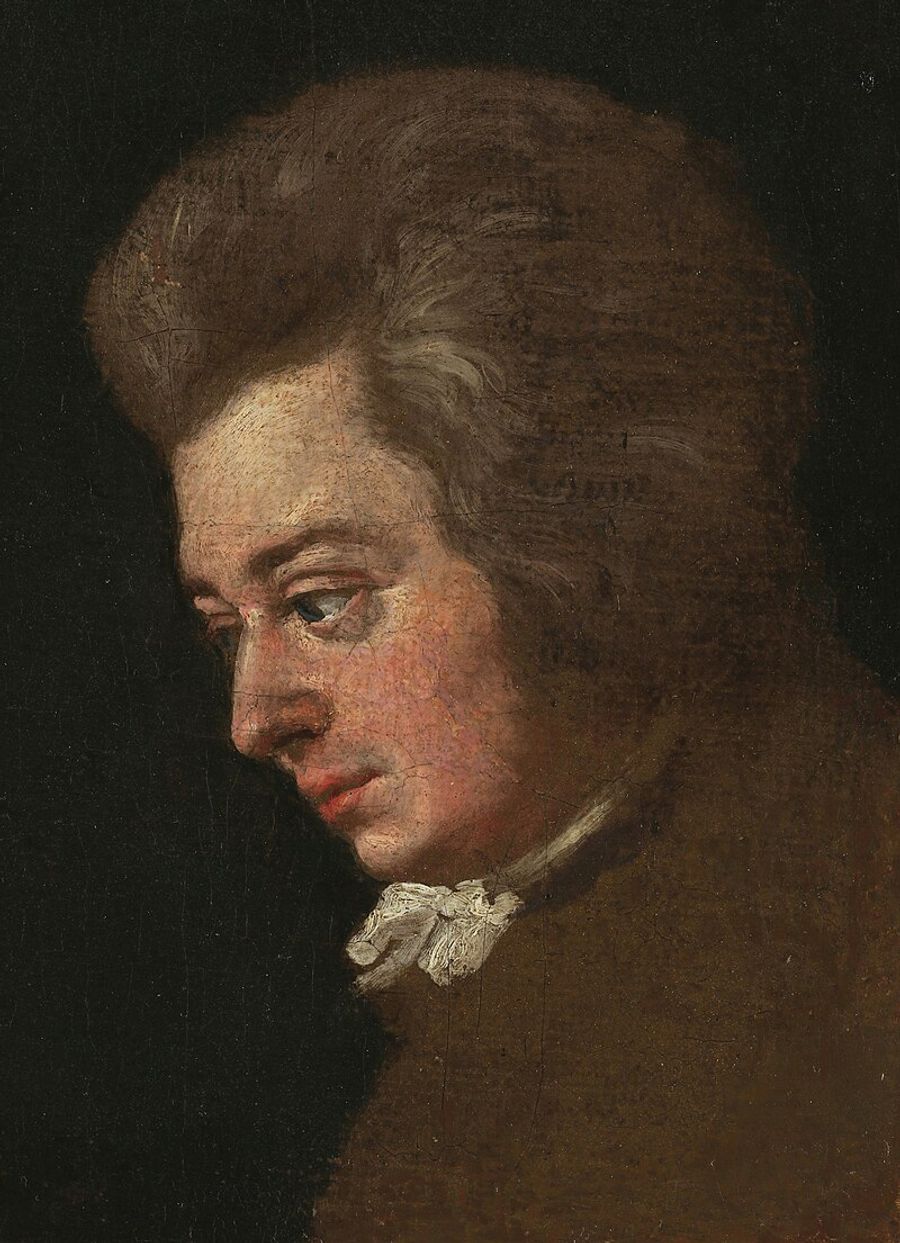
- Köchel-nummer
- K9 452 | K6 452
- Sjanger
- Kammermusikk
- Form
- Pianokvintetter, -kvartetter og -trioer
- Toneart
- E Flat Major
- Dato
- 30 Mars 1784
- Sted
- Vienna
- Alder
- 28
Mozarts Kvintett for klaver og blåsere (K. 452) ble komponert i Wien i 1784 og står i krysningspunktet mellom to verdener: den offentlige, virtuose kulturen rundt klaverkonserten og kammermusikkens intime, samtalepregede kunst. I et berømt stolt brev til faren etter de første framføringene kalte Mozart den «det beste verket jeg noen gang har komponert»—en slående dom fra en komponist som oftere er mer tørrvittig enn selvgratulerende.[2]
Bakgrunn og kontekst
Wien tidlig i 1784 var Mozarts mest intenst «offentlige» sesong som komponist og utøver. Han bygde opp en borgerlig konsertøkonomi rundt seg selv—abonnementsarrangementer i leide lokaler, akademier til inntekt for seg selv i hoffteatre—og han trengte repertoar som kunne fungere i flere sammenhenger: glitrende nok til å toppe et kveldsprogram, men samtidig smidig nok til å passe i salonger, private sale og øvingsvennlige rom.
K. 452 hører nettopp hjemme i dette praktiske wienerøyeblikket. Mozart hadde nettopp begynt sin egen tematiske katalog (sin Verzeichnüß aller meiner Werke) i februar 1784, og innførslene fra våren viser at han tenkte som en musikalsk entreprenør: klaverkonserter til abonnementsserien, side om side med kammerverk som kunne markedsføres til kjennere og framføres med tilgjengelige førsteklasses musikere.[1]
Det som gjør kvintetten uvanlig, er ikke bare besetningen—klaver sammen med obo, klarinett, horn og fagott—men også dens sosiale betydning. Mozart låner den klanglige identiteten til den wienerske Harmonie (hoffets blåseensemble) og setter den i dialog med klaveret på en måte som verken er en «mini-konsert» eller «blåsere med akkompagnement». Blåserne er ikke et dekorativt fargelag; de er personligheter. Det er kammermusikk tenkt med et offentlig publikum i sikte.
Komposisjon og dedikasjon
Mozart førte verket inn i katalogen sin 30. mars 1784, noe som plasserer fullføringen midt i den blendende rekken av klaverkonserter fra den sesongen.[4] Kvintetten er skrevet for klaver, obo, klarinett, horn og fagott—en kombinasjon som i dag er kanonisk, delvis fordi Mozart fikk den til å klinge som noe selvsagt.
Urframføringen fant sted på Mozarts akademi til egen fordel 1. april 1784 i Burgtheater i Wien.[2][6] Dette er viktig: Burgtheater var ikke en privat stue, og Mozart skrev ikke for elegant bakgrunnsmusikk. Han presenterte seg som Wiens ledende klavervirtuos og som en komponist med fantasi til å omforme velkjente ensembler.
Halvannen uke senere, i et brev datert 10. april 1784 til faren Leopold Mozart, ga han en av sine mest avslørende selvvurderinger. Etter å ha rapportert om suksessen med abonnements-konsertene og teaterakademiet, skriver han at han komponerte «to store konserter og deretter en kvintett, som framkalte den største applausen», og legger til den forbløffende setningen: han selv mente at den var «det beste verket» han hittil hadde komponert.[2] Brevet er verdifullt ikke bare som skryt, men fordi det knytter verkets identitet til framføring og mottakelse. K. 452 er kammermusikk som Mozart måler etter offentlig gjennomslagskraft.
Kvintetten har ingen dedikasjon i vanlig forstand, men dens «dedikasjon» kan utledes av de sannsynlige utøverne og det wienerske blåsermiljøet rundt Mozart. Tilstedeværelsen av klarinett—fortsatt en relativt moderne orkesterfarge på 1780-tallet—peker mot musikerne ved hoffteatrene og klarinettmiljøene som også ga næring til Mozarts større blåsekomposisjoner i disse årene.[3]
Form og musikalsk karakter
Mozarts løsning på kjerneproblemet—hvordan balansere et perkusivt klaver mot blåsere som kan holde tonen—definerer kvintettens karakter. Han tynner ikke bare ut klaversatsen; han finner opp en retorikk av veksling og integrasjon. Tidvis taler blåserne som et kor, tidvis som solister inne i koret, og i avgjørende øyeblikk får Mozart selve klaveret til å oppføre seg som et blåseinstrument: syngende linjer, langpustede fraser og fin, sømløs overlapping.
I. Largo – Allegro moderato (Ess-dur)
Den langsomme introduksjonen (Largo) proklamerer straks en grunntanke: blåserne gis seremoniell autoritet. Åpningen er nærmest symfonisk i sin retoriske tyngde, og likevel i kammerformat—ingen pauker, ingen samlet strykerklang, bare fem musikere som må skape storhet gjennom balanse og artikulasjon.
Når hoveddelen Allegro moderato begynner, avviser Mozart det forventede hierarkiet der klaveret «leder» og blåserne «akkompagnerer». I stedet vandrer det tematiske stoffet mellom instrumentene med en slags operatisk rollebesetning: oboen kan være skarp og lysende, klarinetten mild og overbevisende, fagotten både komisk bass og lyrisk partner, hornet en harmonisk bærebjelke som brått kan tre fram som protagonist. Klaveret fungerer ofte som formidler snarere enn dominator—en tilnærming som bidrar til å forklare hvorfor verkets konsertaktige tredelte plan likevel kjennes grunnleggende som kammermusikk.
En fruktbar måte å høre satsen på, er som en forhandling mellom to ensembler: (1) Harmonie-kvartetten, som kan opptre som en selvstendig blåseserenade, og (2) klaveret, som kan opptre som et miniorkester. Mozarts geni er at han lar hver identitet komme fullt til syne uten at verket spalter seg i «blåsekvartett» mot «klaversolo».
II. Larghetto (B-dur)
Andresatsen er et av Mozarts mest raffinerte studier i blandet klangfarge. Klaverets syngende linje—ofte bedragersk enkel på papiret—avhenger av anslag, stemmeføring og en følelse av å «puste» sammen med blåserne. Her behandles særlig klarinetten som et fløyelsmykt dobbelt av menneskestemmen, mens oboens skarpere profil skaper en kontrollert chiaroscuro.
Det som går utover ren «skjønnhet», er Mozarts konstruksjon av intimitet i et verk som vender seg mot offentligheten. Larghetto ber ikke lytteren beundre virtuositet; den ber lytteren lene seg inn. Dette kan være en grunn til at K. 452 kunne «framkalle den største applausen» i et teater: den tilbyr ikke bare kontrast i tempo og toneart, men i sosial holdning—offentlig glans som viker for privat bekjennelse.[2]
III. Allegretto (Ess-dur)
Finalen gjenoppretter det utadvendte, men med en vri: heller enn et rett-fram kappløp er den en avbalansert, godt humørfylt diskusjon mellom likeverdige. Klaverets figurering kan være atletisk, men Mozart omfordeler stadig teksturen slik at intet instrument reduseres til rent fyllstoff.
Mange lyttere legger merke til hvor ofte Mozart skriver i «blandede par»: klaver med fagott; obo med horn; klarinett som vever seg mellom dem. Dette er ikke tilfeldig koloritt—det er strukturelt. Satsens energi kommer av hurtig omgruppering av stemmer, som om Mozart demonstrerer de mange mulige sosiale konstellasjonene inne i ett og samme ensemble. Med andre ord: finalen er ikke bare en «lykkelig slutt»; den er et manifest for en ny type kammerretorikk, der klangfarge i seg selv blir en formskapende kraft.
Mottakelse og etterliv
K. 452s ry begynner med Mozarts eget vitnesbyrd. Brevet av 10. april 1784 er ikke bare berømt; det har preget verkets senere tolkningshistorie og oppmuntret utøvere og forskere til å spørre hva det egentlig var Mozart mente han hadde oppnådd her.[2] Et sannsynlig svar er praktisk: han hadde, tilsynelatende uten anstrengelse, løst balanse- og teksturproblemene ved å kombinere klaver med blåsere. Men den dypere prestasjonen er estetisk: han skapte et verk som kan leve både på konsertscenen og i salongen uten å endre identitet.
Kvintettens innflytelse kan høres i neste generasjons arbeid med samme besetning—mest berømt Beethovens Kvintett for klaver og blåsere i Ess-dur, Op. 16, hvis blotte eksistens viser at Mozarts instrumentasjon hadde blitt en modell det var verdt å svare på.[7] Senere repertoar arvet ikke bare besetningen, men også Mozarts prinsipp om «konsertant likeverd»: ideen om at blåseinstrumenter i kammermusikk kan behandles med samme retoriske verdighet som en klaversolist.
I framføring er K. 452 fortsatt en lakmustest på ensemblespill. De mest opplysende tolkningene unngår gjerne to motsatte fristelser: å gjøre blåserne for symfoniske (tunge, sammensmeltede, anonyme) eller å gjøre klaveret for konsertant (for framskutt, orkestralt, dominerende). Historisk informerte framføringer på fortepiano kan tydeliggjøre Mozarts teksturintensjoner—særlig måten en lettere klang med raskere avklinging inviterer blåserne til å tale fritt snarere enn å konkurrere.
Likevel handler kvintettens varige appell ikke om «riktighet». Den ligger i den sjeldne mozartianske blandingen av offentlig selvtillit og privat takt: et verk som kan blende et publikum, smigre fem virtuoser, og likevel låte—når det er på sitt beste—som intelligent samtale.
Kilder
[1] Mozarteum (Köchel Catalogue) entry for K. 452, with New Mozart Edition reference.
[2] White Rose eTheses (University of Leeds): dissertation quoting Mozart’s 10 April 1784 letter to Leopold about K. 452 and its 1 April 1784 performance.
[3] Mozart Society of America Newsletter (Jan 2012): discussion of K. 452’s premiere context and Vienna wind milieu (incl. Stadler hypothesis).
[4] Wikipedia overview page for the work (useful for basic cataloging such as Mozart’s catalogue entry date).
[5] Bärenreiter Urtext (Neue Mozart-Ausgabe) edition preview for KV 452, confirming scoring and editorial basis.
[6] Mozart & Material Culture (King’s College London): Burgtheater venue page listing Mozart’s concert there on 1 April 1784.
[7] Cambridge Core (Variations on the Canon): chapter on Mozart’s K. 452 and Beethoven’s Op. 16, addressing reception/relationship.