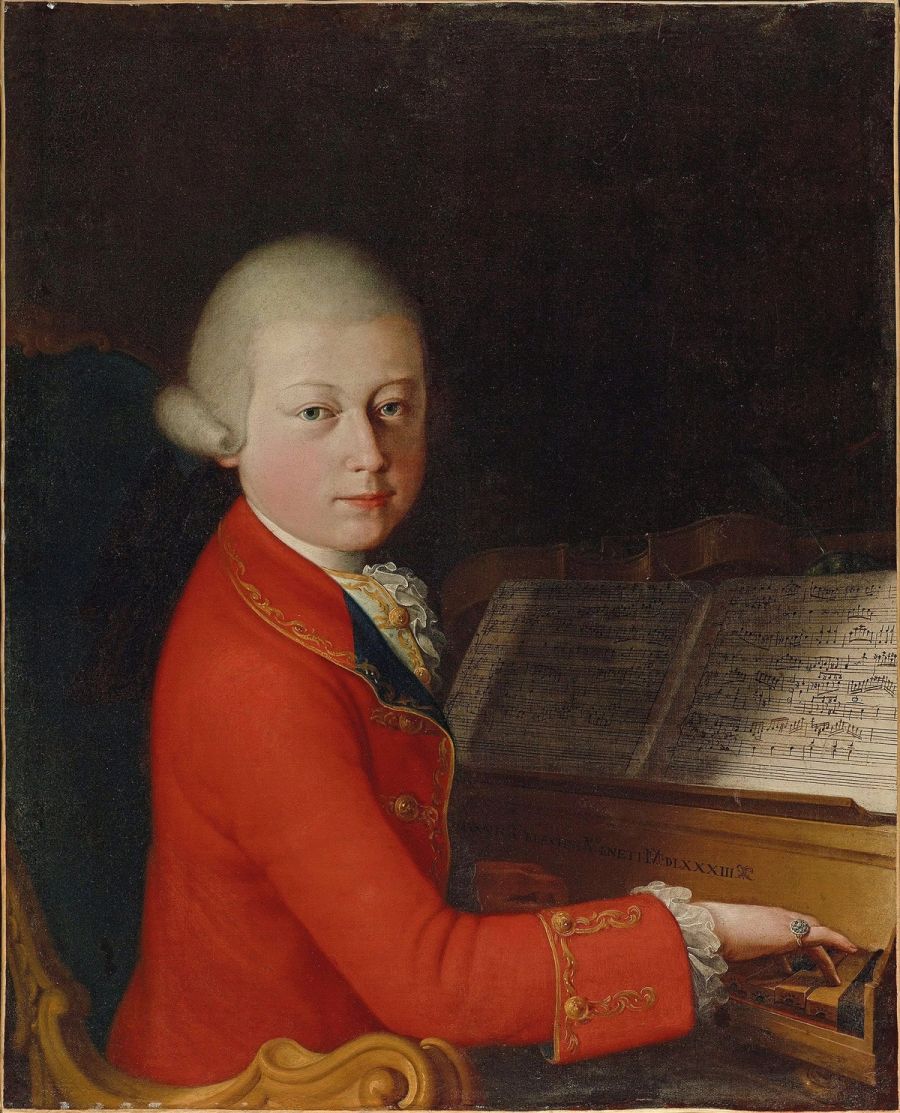
- 쾨헬 번호
- K9 74 | K6 74
- 장르
- 관현악
- 형식
- 교향곡
- 조성
- 사장조
- 날짜
- 봄 1770
- 장소
- Milan
- 나이
- 14
볼프강 아마데우스 모차르트의 교향곡 제10번 G장조 K. 74는 1770년에 쓰인 초기 작품으로, 오페라 서곡으로 구상되었을 가능성과 함께 3악장 이탈리아식 서곡 관습을 보여준다.
작곡 & 배경
볼프강 아마데우스 모차르트의 교향곡 제10번 G장조 K. 74는 1770년에 작곡되었으며, 그해 봄 첫 이탈리아 여행 중에 쓰였을 가능성이 크다. 자필 악보에는 다른 사람의 필체로 “Ouverture zur Oper Mitridate”라는 표제가 적혀 있다가(그러나 취소선으로 지워져 있음), 이 작품이 표준적인 교향곡이라기보다 원래는 오페라 서곡으로 구상되었을 수 있음을 시사한다. 이 곡은 단순한 3악장 이탈리아식 서곡 유형을 넘어서는 모차르트의 초기 교향곡 작곡 시도 가운데 하나로 평가되지만, 동시에 서곡풍의 특징도 여전히 많이 간직하고 있다.
편성
이 교향곡은 오보에 2대, G조(또는 판본에 따라 C조) 호른 2대, 그리고 현악 합주(제1·제2바이올린, 비올라, 첼로/콘트라베이스)를 위해 쓰였다. 트럼펫이나 팀파니를 위한 파트는 명시적으로 존재하지 않으며, 이는 모차르트의 이후 초기 교향곡들 가운데 일부에서 보이는 ‘축제적’ 편성과 구별되는 지점이다. 제한된 관·금관 색채와 간결한 오케스트레이션은 비교적 소규모 편성에 기반한 작품의 성격을 드러내며, 모차르트의 유년기 교향곡들 가운데서도 보다 친밀한 음향을 만든다.
형식 & 음악적 성격
이 작품은 이탈리아식 서곡 관습을 따라 3악장으로 구성된다. (1) G장조 Allegro(“¾ 또는 common time”), (2) C장조 Andante(3/8), (3) G장조 Rondeau/Allegro(2/4). 1악장은 힘차고 대담한 관현악 화음으로 시작한 뒤, 갈랑(galant) 양식 특유의 명료한 선율 주제들을 전개한다. 일부 분석가들은 이를 완전히 발전된 형태는 아니지만 압축된 소나타 유형으로 보기도 하며, 독립된 악장이라기보다 중간부로 Andante가 삽입된 구조로 읽기도 한다. 2부분(Andante)은 자필 악보에서 별도의 제목 없이 이중 마디줄(double-bar) 다음에 곧바로 이어지는데, 이 점이 작품 전체에 전환적이고 서곡적인 인상을 부여한다. 마지막 Rondeau는 경쾌하고 장난스러우며 가볍게 진행되며, 짧고 명확한 주제 진술과 밝은 결말을 다루는 모차르트의 능숙함을 보여준다. 전체적으로 이 곡은 깊은 복잡성보다는 젊은 매력, 간결한 구조, 그리고 이탈리아풍의 밝은 성격을 제시한다.
수용 & 유산
K. 74는 모차르트의 가장 자주 연주되는 교향곡들에 속하지는 않지만, 어린 나이에 오케스트라 작법을 정갈하게 다루는 능력 등 그의 초기 교향곡 발전을 이해하는 데 중요한 자료로서 연구자들로부터 가치를 인정받는다. 자필 악보는 크라쿠프의 야기에우워 도서관(Jagiellonian Library)에 보존되어 있다. Neue Mozart-Ausgabe와 같은 현대 비평판에도 이 작품이 수록되어 있다(Series IV/11/2). 해석적 주석에서는 종종 이 곡이 원래 오페라 서곡이었을 가능성에 주목하는데, 이는 연주자들로 하여금 이 작품을 대규모 교향곡적 여정이라기보다 더 극적이고 추진력 있는 서곡의 양식으로 다루도록 유도한다. 약 9분가량의 압축된 형식은 초기 모차르트 교향곡 음반과 연주회에서 서두를 여는 곡으로 적합하며, 연구와 연주에서 크지는 않지만 꾸준한 존재감을 유지하는 데 기여해 왔다.
참고문헌
- https://en.wikipedia.org/wiki/Symphony_No.[10]%28Mozart%29
- https://imslp.org/wiki/Symphony_No.10_in_G_major%2C_K.74_%28Mozart%2C_Wolfgang_Amadeus%29
- https://es.wikipedia.org/wiki/Sinfon%C3%ADa_n.%C2%BA_10_%28Mozart%29
- https://it.wikipedia.org/wiki/Sinfonia_n.[10]%28Mozart%29
- https://www.8notes.com/scores/10996.asp