Piano Concerto No. 13 in C
볼프강 아마데우스 모차르트 작
Composition and Context
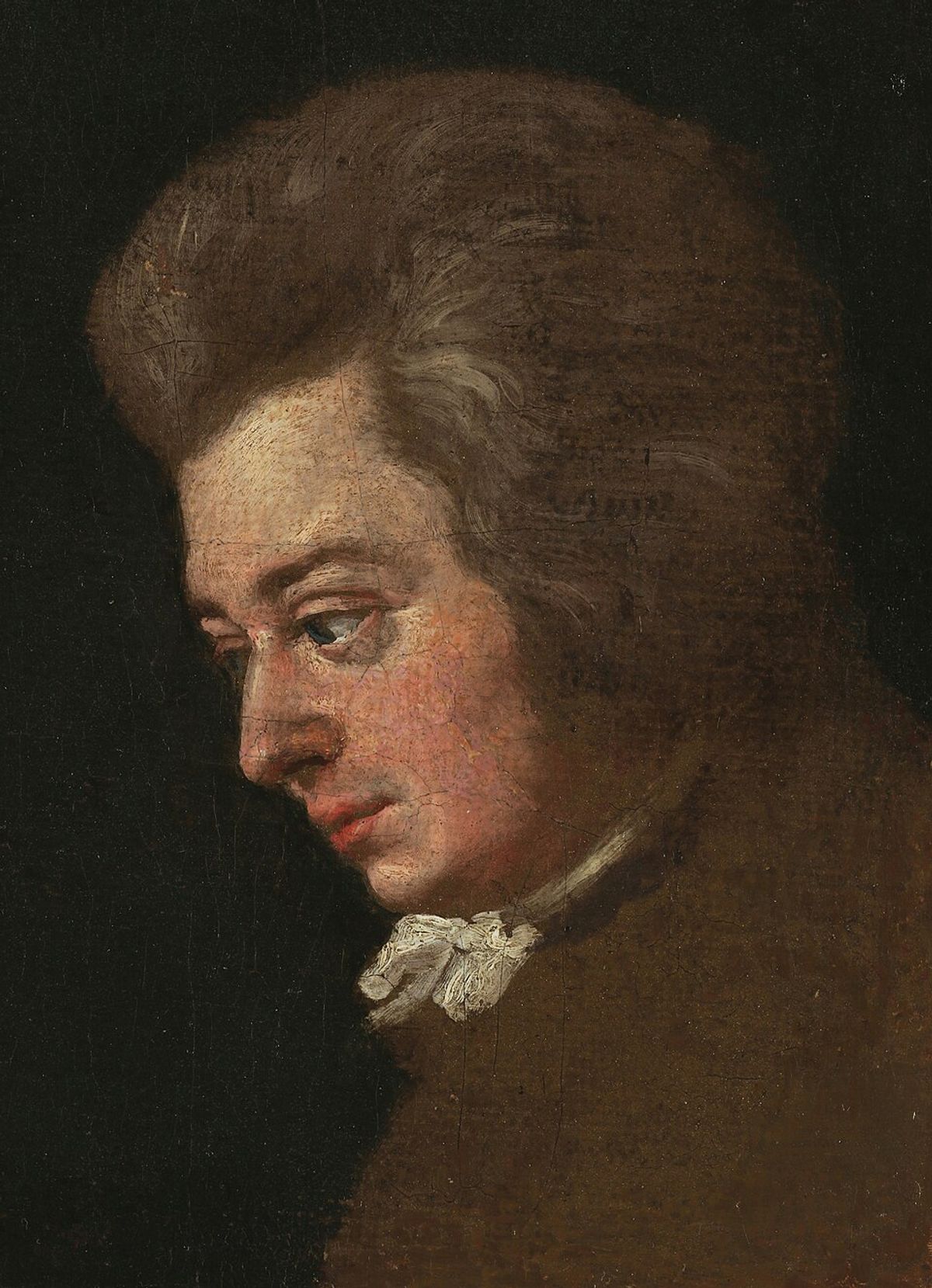
Wolfgang Amadeus Mozart composed his Piano Concerto No. 13 in C major (K. 415) in Vienna during 1782–83, shortly after establishing himself there as a freelance musician[1]. He had moved to Vienna in 1781 after leaving his position in Salzburg, determined to pursue an independent career. Mozart’s early years in Vienna were marked by rapid success: by the end of 1781 he won a famous piano competition before Emperor Joseph II (defeating Muzio Clementi) and was soon acclaimed as Vienna’s finest keyboard player[2]. In July 1782 his German opera Die Entführung aus dem Serail (The Abduction from the Seraglio) premiered to great success, further boosting his reputation[2]. This was a vibrant period in Vienna’s cultural life under Joseph II, who encouraged public concerts and German-language opera; politically, the Enlightenment ideals were in the air, and Vienna’s nobility and bourgeoisie were keen patrons of music. Amid this climate, Mozart—newly married in 1782 and facing the realities of earning a living without a court salary—turned to composing piano concertos as a way to captivate the public and attract students and patrons.




As an Amazon Associate we earn from qualifying purchases.
Mozart wrote Piano Concerto No. 13 as part of a set of three piano concertos (K. 413, 414, 415) intended for his own subscription concerts in Vienna[3]. These were among the first concertos he composed after settling in the city, crafted to showcase himself as composer-pianist in the public concert scene. He organized these concerts (or “academies”) himself – renting venues, hiring orchestras, and selling tickets – an entrepreneurial approach that was still novel in the early 1780s[4]. Concerto No. 13 in C was likely first performed on 23 March 1783 at Mozart’s benefit concert in the Burgtheater, with the composer at the piano[5]. Emperor Joseph II was reportedly in attendance and delighted by the work, which one report called a “truly imperial concerto” due to its grand C-major character[6]. Notably, Mozart aimed these concertos at both connoisseurs and the wider public – as he famously wrote to his father, they strike “a happy medium between what is too easy and too difficult; they are very brilliant, pleasing to the ear, and natural without being vapid,” containing passages to satisfy experts “written in such a way that the less learned cannot fail to be pleased”[7]. In 1783 Mozart even advertised these three concertos for sale in manuscript by subscription, stressing that they could be performed either with full orchestra or in a chamber version, thereby appealing to professional and amateur musicians alike[8].
Instrumentation
Concerto No. 13 is scored for solo piano (Mozart himself would have played a fortepiano of the day) and an orchestra of pairs of oboes, bassoons, horns, trumpets, timpani, and strings[9]. This full scoring in C major, including trumpets and drums, gives the concerto a ceremonial brightness characteristic of Mozart’s grand works in that key. However, a distinctive feature of this concerto (and its companion concertos K. 413 and K. 414) is that Mozart designed it to be playable with reduced forces. In the announcement for their publication, he explained that the concertos “can be performed with a large orchestra with wind instruments or merely a quattro,” meaning a string quartet accompaniment (with harpsichord or piano) instead of full orchestra[9][8]. In practice, the string parts were enriched enough that the piece remains effective even without winds; Mozart himself noted that a performance could simply use a string quartet (often augmented by a doubled bass line) to accommodate smaller venues or ensembles[8]. Modern performances occasionally follow this chamber version, highlighting the music’s intimate side.
Interestingly, Mozart’s inclusion of trumpets and timpani in K. 415 may have been a later addition motivated by pragmatism. According to one account, after Emperor Joseph II heard the concerto at its premiere, Mozart scheduled a repeat performance a few weeks later and learned the Emperor would attend again. Not wanting to bore the monarch with the same experience, Mozart “added trumpets and drums to spruce up the piece” for the second hearing[10]. This tweak underscores Mozart’s practical showmanship; the resulting version with its festive brass and percussion is the one that has come down to us. The ability to adapt the scoring – from a lean quartet of strings up to a full orchestral palette with bright fanfare-like trumpets – is a notable feature of this concerto’s instrumentation. It reflects both the economic realities of Mozart’s time (offering flexibility for performances in different settings) and his awareness of the dramatic effect that instrumentation can have on the music’s character.


As an Amazon Associate we earn from qualifying purchases.
Wolfgang Amadeus Mozart’s Piano Concerto No. 13 in C major, K. 415, performed by Daniel Barenboim, piano and conductor, with the Vienna Philharmonic:
Form and Musical Character
The concerto follows the typical three-movement Classical concerto structure (fast–slow–fast), but within this framework Mozart offers unique twists and vivid character. In general, all of Mozart’s Viennese piano concertos are conceived as quasi-dramatic dialogues between the soloist and orchestra[11]. No. 13’s home key of C major is significant: Mozart often reserved C major for music of a ceremonial, brilliant character, marked by radiant sonorities and even military flourishes[12]. Indeed, this work shares a festive spirit with his later C-major concertos (Nos. 21 and 25) and the “Jupiter” Symphony, all pieces that project a confident, celebratory tone[12]. At the same time, Mozart introduces subtle sophistication in the musical design to engage the listener on multiple levels, fulfilling his intent to please both the “learned” and the casual audience.
Movement I. Allegro – The opening movement is in sonata-allegro form and begins in an unusual manner for a C-major concerto: softly and contrapuntally. The orchestra introduces a gentle principal theme in a quiet, fugato style (imitative entries of the theme), a restrained opening reminiscent of Mozart’s later C-major Concerto No. 21[13]. This subdued fugato opening soon gives way to a brighter tutti, and the orchestral exposition presents a “mixed bag” of thematic ideas, some of which make only a single appearance[14]. In fact, Mozart’s structure here departs from the most orthodox sonata form: the opening orchestral section contains a surprising amount of material that never recurs later in the concerto[14]. When the solo piano enters, it does not merely restate the orchestral themes; instead, after a brief pause, Mozart has the piano introduce new melodic material, and it only echoes the very beginning of the first theme in passing[14]. The development section largely focuses on the new ideas introduced by the soloist, with only a brief foray into the primary theme[14]. Likewise, the recapitulation is handled imaginatively: the pianist actually opens the recapitulation with what was originally its own solo-section theme, and Mozart even wrote out a cadenza for this movement that pointedly contains no reference to the concerto’s main opening theme[15]. These choices, while subtle, give the movement an open-ended, almost conversational feel – as if the music is exploring multiple perspectives rather than strictly obeying textbook symmetry. The overall character is lively and elegant, with brilliant passagework for the piano, but some critics have noted that the profusion of ideas can make the movement feel slightly diffuse after the piano’s entrance[16].
Movement II. Andante – The middle movement, in F major, provides an intimate contrast to the festive outer movements. Mozart originally envisioned a very different slow movement – he first sketched a serious Adagio in C minor[17]. This would have been a dark, tragic interlude (C minor being a key Mozart used for pathos), but he ultimately abandoned that draft. Instead, he composed a gentler Andante in the warm key of F major, opting for a simple A–B–A (ternary) form[17]. The Andante unfolds as a quietly flowing cantabile piece, essentially song-like in character. The main theme is a graceful, unhurried melody which reappears ornamented differently each time, showcasing Mozart’s art of tasteful variation in repeated themes[17]. The orchestration in this movement is particularly refined: even without the wind instruments (if performed “a quattro”), the string writing carries delicate interplay. For example, Mozart gives the second violins and violas intertwining lines at the opening, and at one point the first violins sustain an unusually high G to crown the texture, creating a hushed shimmer at the start of the B section[17]. Such touches lend the Andante a translucent, intimate quality. Overall, the movement is lyrical and poised, providing a brief respite of sweetness. It is “quietly flowing” music, as one commentator described, with an elegance that would have charmed audiences and likely was more fitting to Viennese taste than a somber minor-key adagio.

As an Amazon Associate we earn from qualifying purchases.
Movement III. Allegro – The finale is a lively rondo that surprises the listener with its blend of cheerfulness and haunting beauty. It begins in 6/8 time with the piano alone cheerily announcing the main theme, a lilting tune that has a rustic, dance-like charm[18]. The orchestra answers by repeating this theme and then adds its own follow-up: an “attractive five-measure phrase” that extends the cadence, grounding the jovial mood[18]. At this point, Mozart does something unexpected – the tempo shifts to 2/4 and the music veers into C minor, introducing a completely new episode in the middle of the rondo[18]. Here the piano spins out a melancholy aria over a pulsing accompaniment, a sudden moment of pensiveness and drama. Intriguingly, this dolorous C-minor episode is actually built on the same “serious” musical material that Mozart had initially composed (and set aside) for the discarded C-minor slow movement[19]. By transplanting it into the finale, Mozart effectively weaves a brief emotional shadow into an otherwise bright piece. The stark contrast makes the return to C major all the more effective: after this heartfelt minor-key reverie, the original rondo theme returns, bringing back the sunshine. In the final section, all the earlier themes and moods are revisited in altered form (“restated in different dress,” as one program note describes it[18]). Notably, Mozart does not end with bombast; instead, the concerto finishes in an unconventional whisper. In the closing bars, the vivacious 6/8 theme dies away softly “against murmuring strings,” and the work concludes with a delicate pianissimo drumroll on the timpani as its final punctuation[20]. This quiet, enigmatic ending – the music simply fading out in C major – is highly unusual for a Mozart finale and leaves the audience in a state of wonder. Commentators have observed that “there is nothing like it in any other Mozart finale”[20]. The effect is that of a joyful day closing at dusk: festive pomp subsiding into a gentle, lyrical farewell. Overall, the finale’s mixture of brilliance and introspection encapsulates the concerto’s dual nature – it entertains with graceful tunes and virtuosity, yet also invites deeper reflection in its unexpected detour through C minor.
Reception and Legacy
At its first appearances in 1783, Piano Concerto No. 13 seems to have been well received, if not sensationally famous. Mozart’s own benefit concert on 23 March 1783 – where he likely premiered the work – was, by his account, a success (“the theatre was very full and I was received…so cordially…with a regular torrent of applause,” he wrote of that concert)[21]. The presence and approval of Emperor Joseph II at the concerto’s performances gave it a prestigious aura; the Emperor’s reported delight led contemporaries to nickname it “kaiserlich” or “imperial,” underscoring the work’s grand C-major splendor[6]. Mozart himself was clearly proud of this set of concertos (Nos. 11–13) and confident in their blend of artistry and accessibility[7]. He even provided written-out cadenzas (unusual for him) for at least one of the concertos in this group, indicating he took care to present them at their best[22]. During Mozart’s lifetime, these early Viennese concertos helped establish his fame as a composer-performer in a competitive musical capital. They were published in 1783 in Vienna and circulated in both orchestrated and chamber forms, suggesting they found a market among professional orchestras and amateur salon players alike[3][8].

As an Amazon Associate we earn from qualifying purchases.
In the long run, however, Concerto No. 13 has occupied a somewhat ambiguous place in Mozart’s oeuvre. It is sometimes overshadowed by the later piano concertos Mozart wrote in the mid-1780s, which are often considered his masterpieces in the genre. Scholars and critics have historically had mixed opinions on No. 13’s musical coherence. Notably, the influential musicologist Cuthbert Girdlestone and others commented that the first movement’s profusion of ideas and the somewhat episodic piano writing make the whole “less than the sum of its parts.” They argue that after the promising fugato opening and majestic orchestral buildup, the entry of the piano leads to a loss of structural tightness[16]. Analyst Arthur Hutchings likewise felt that the piano’s interpolated passages do not integrate seamlessly with the orchestral material, contributing to an overall weaker impression for this concerto’s opening movement[16]. Such critiques have led No. 13 to be regarded as one of Mozart’s lesser-known concertos – a work of considerable charm and interesting experiments, yet not singled out as often as, say, the dramatic No. 20 in D minor or the beloved No. 21 in C major.
That said, modern appreciation for K. 415 has grown with the revival of Mozart’s works on historical instruments and in context. Its unique features – the flexible orchestration, the refined slow movement, and especially the finale’s poetic fade-out – are now recognized as signs of Mozart’s creativity and boldness during his early Vienna years. Performers today often enjoy the opportunity to play this concerto either with full orchestra (savoring the bright fanfares of the trumpets and drums) or in the more intimate chamber version, as Mozart allowed. The work has been recorded and performed by major pianists (though it remains less frequently programmed than the later concertos), and it continues to delight listeners with its mix of brilliance and subtlety. In retrospect, Piano Concerto No. 13 stands as an important stepping stone in Mozart’s concerto output: it bridges the galant style of his Salzburg past with the deeper sophistication of his Vienna masterpieces. While it may not achieve the symphonic grandeur of his final concertos, No. 13 in C major offers a fascinating snapshot of Mozart in 1783 – a composer balancing public appeal with innovation, writing music that could charm an emperor in his loge yet still experiment with form and expression in original ways. It remains a lively, intriguing concerto, worthy of its place in the great series of Mozart’s piano concertos and valued for the particular colors and ideas it contributes to that repertoire.


As an Amazon Associate we earn from qualifying purchases.
Sources:
Mozart’s letters and contemporary documents, as cited in program notes and musicological analyses[7][14][16]; Willard J. Hertz (2006) program note[23][18]; Neue Mozart-Ausgabe and Wiener Zeitung archives on K. 415’s publication[8]; C.M. Girdlestone, Mozart’s Piano Concertos[16]; Mozart’s biography (New Grove/Wikipedia) for historical context[2].
[1][9][13][16] Piano Concerto No. 13 (Mozart) - Wikipedia
https://en.wikipedia.org/wiki/Piano_Concerto_No._13_(Mozart)
[2] Wolfgang Amadeus Mozart - Wikipedia
https://en.wikipedia.org/wiki/W._A._Mozart
[3][4][7][8][11][12][14][15][17][18][19][20][22][23] Wolfgang Amadeus Mozart, Piano Concerto No. 13 in C Major, K. 415
http://sllmf.org/archive/notes_for_469.html
[5][21] Performing in Vienna - Mozart's Experience of the Concert Hall in 1783 – London Mozart Players
https://www.londonmozartplayers.com/concerts-in-vienna/
[6] Mozart im Klavierland | Raum&Klang - Styriarte 2025
https://styriarte.com/en/productions/mozart-im-klavierland
[10] Levin Promises Lively Account of Mozart Concerto - The Boston Musical Intelligencer
https://www.classical-scene.com/2015/01/08/levin-promises-lively-account-mozart-concerto/