Divertimento No. 14 in B♭ major, K. 270
de Wolfgang Amadeus Mozart
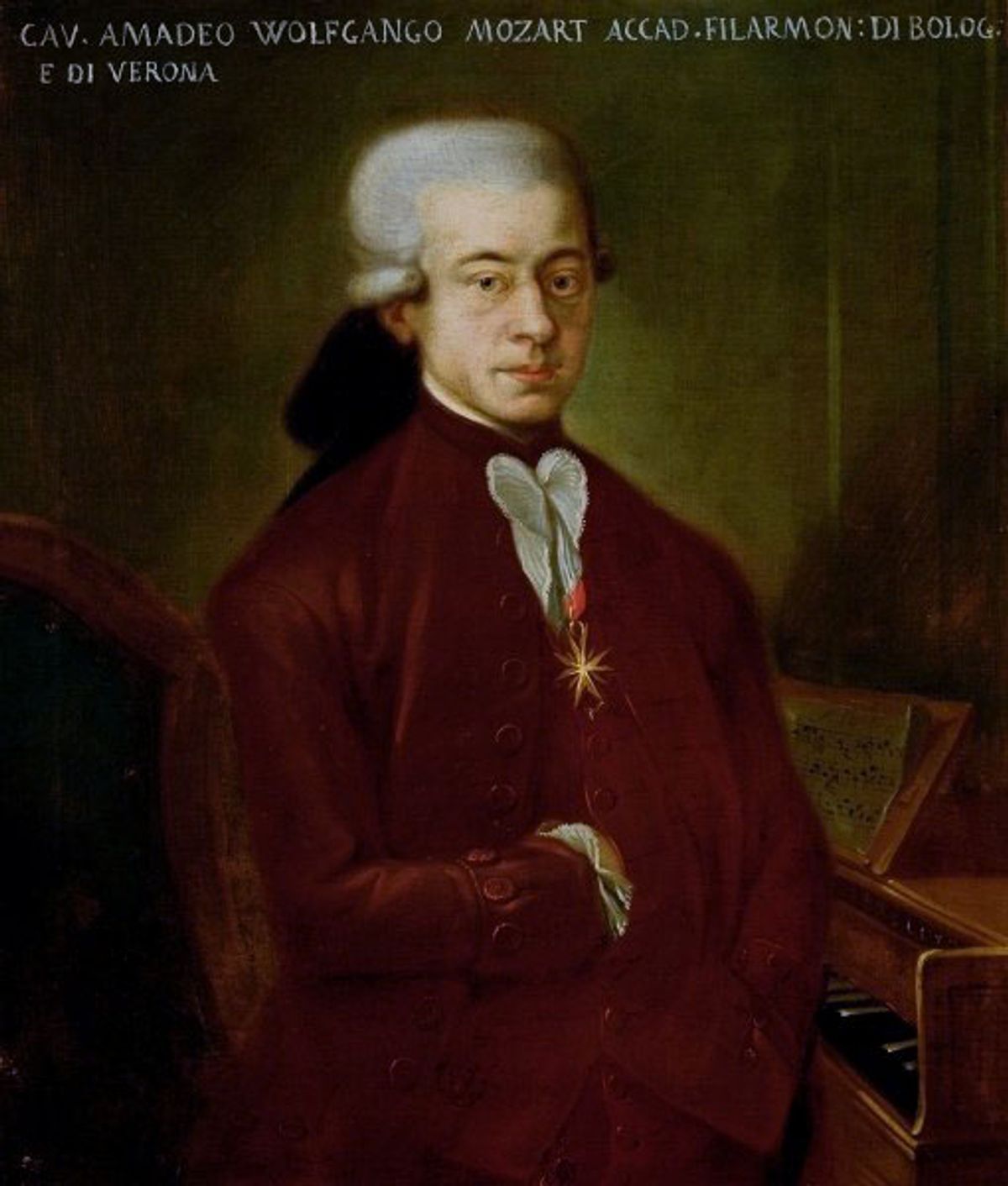
Mozart’s Divertimento No. 14 in B♭ major, K. 270 (January 1777) is one of his most finely wrought Salzburg wind divertimenti, written for a compact sextet of pairs—oboes, horns, and bassoons. Though intended for convivial entertainment rather than the concert hall, it shows a 21-year-old composer turning “background” music into a lively conversation among six distinct voices.
Background and Context
In Salzburg in the mid-1770s, Mozart’s professional life was shaped by court routine, ecclesiastical demands, and the aristocratic taste for outdoor and social music—Tafelmusik (table music) and serenading pieces designed to accompany gatherings rather than to dominate them. Wind ensembles were particularly practical for such occasions: they projected well in the open air and drew on the excellent local tradition of court and civic wind players.





As an Amazon Associate we earn from qualifying purchases.
K. 270 belongs to a small cluster of Salzburg divertimenti for six winds (two oboes, two horns, two bassoons), composed across several years and often discussed as a coherent “set” within Mozart’s early wind output.[1] In these works Mozart writes within clear social functions—dance, procession, pleasant conversation—yet consistently exceeds mere utility. The best moments of K. 270 are not “symphonic” in scale, but they are unmistakably Mozartian in their economy: a few bars can establish character, tension, and release with the ease of operatic dialogue.
What makes this divertimento especially worth hearing today is its balance of charm and craft. Mozart avoids the monotony that can haunt occasional music by treating each instrument as a personality: oboes for brilliance and articulation, horns for harmonic glow and outdoor color, and bassoons not only as bass support but as witty partners capable of melodic prominence.[2]
Composition and Premiere
The work is generally dated to January 1777 and associated with Salzburg, consistent with both catalogue tradition and editorial commentary in the Neue Mozart-Ausgabe materials.[3] Unlike certain large serenades written for specific ceremonies, K. 270 is not securely tied to a single named occasion in the surviving documentation. That absence is typical for many Salzburg divertimenti: they were functional, frequently performed, and not always treated as “events” needing formal archival traces.
Even so, the music suggests a practical performing world. The scoring fits the kinds of wind bands Mozart knew intimately in Salzburg—players capable of elegance, rhythmic verve, and clean articulation, but working with the technical and tonal constraints of Classical-era instruments (notably the natural horns).[1] In short, this is a piece designed to succeed immediately in performance, and its directness is part of its sophistication.
Instrumentation
Mozart scores K. 270 for a standard Salzburg wind sextet:[2]
- Winds: 2 oboes
- Brass: 2 natural horns (in B♭)
- Winds (low): 2 bassoons
The ensemble is deceptively economical. With no flutes and no clarinets, Mozart relies on the oboes for sparkle and the horns for harmonic breadth; the bassoons anchor the texture but are also available for comic timing, sudden agility, and (at strategic moments) unexpected lyrical weight.
Form and Musical Character
K. 270 is in four movements, following a compact divertimento plan that alternates brisk, sociable outer movements with a more singing central span and a dance movement.[2]
- I. Allegro molto (B♭ major)
- II. Andantino (E♭ major)
- III. Menuetto (B♭ major)
- IV. Presto (B♭ major)
I. Allegro molto
The opening Allegro molto announces itself with the bright public confidence one expects in B♭ major—an ideal “wind” key, friendly to the harmonic series of horns and resonant for oboes. Rather than writing block chords and fanfares alone, Mozart builds a conversational texture: short motives bounce between pairs, and the bassoons do more than supply root notes—they clarify phrase endings and nudge the rhythmic momentum forward.
II. Andantino
The Andantino shifts into a warmer E♭ major sound-world, creating that classic divertimento contrast: a slower movement that is not tragic, but cantabile (songful). Here Mozart’s gift for melody supported by economical harmony is central. The reduced palette of six winds encourages transparent voicing—no thick string cushion—and Mozart responds with lines that are simple enough to float in the air, yet carefully balanced so that color changes (oboe to bassoon, horn underlay to horn echo) register as expressive events.
As an Amazon Associate we earn from qualifying purchases.
III. Menuetto
The Menuetto restores the social frame: this is music that can accompany movement—literal dancing, or the more general choreography of an evening gathering. Mozart’s wind writing often treats the minuet as a place to display instrumental character rather than symphonic weight. The oboes articulate the dance step with crispness; the horns broaden the sound into something ceremonial; the bassoons supply both buoyancy and grounding.
IV. Presto
The finale, Presto, is where K. 270 most strongly justifies its reputation among Mozart’s Salzburg wind pieces. It is compact, fast, and good-humored—music that sounds as if it should be effortless, though it demands tight ensemble coordination. The writing also confirms Mozart’s instinct that a divertimento can end with a wink rather than a grand peroration: a quick, bustling close that leaves the listener smiling and the players pleasantly challenged.[2]
Reception and Legacy
K. 270 does not enjoy the celebrity of Mozart’s later Vienna wind serenades (above all the “Gran Partita”, K. 361/370a), yet it occupies an important position in his development: it shows how, well before Vienna, Mozart could create formally satisfying, characterful wind music for practical Salzburg use.[1]
Modern listeners sometimes underestimate such divertimenti because of their original function as entertainment. But that very function is part of their artistry. K. 270 is Mozart writing for real players, real spaces, and real social time—compressing wit, elegance, and expertly judged sonority into a piece that can charm a casual audience while rewarding attentive listening. For performers, it remains a model of Classical wind writing: clear, balanced, idiomatic, and—when played with alert phrasing—far more than pleasant background.
[1] Overview of Mozart’s five Salzburg divertimenti for six winds (context, grouping, general notes).
[2] IMSLP work page for Divertimento in B♭ major, K. 270 (instrumentation, movement list, score sources incl. NMA scan).
[3] Digital Mozart Edition (Mozarteum) PDF: New Mozart Edition VII/17/1 “Divertimentos and Serenades for Wind” (editorial dating notes incl. K. 270).