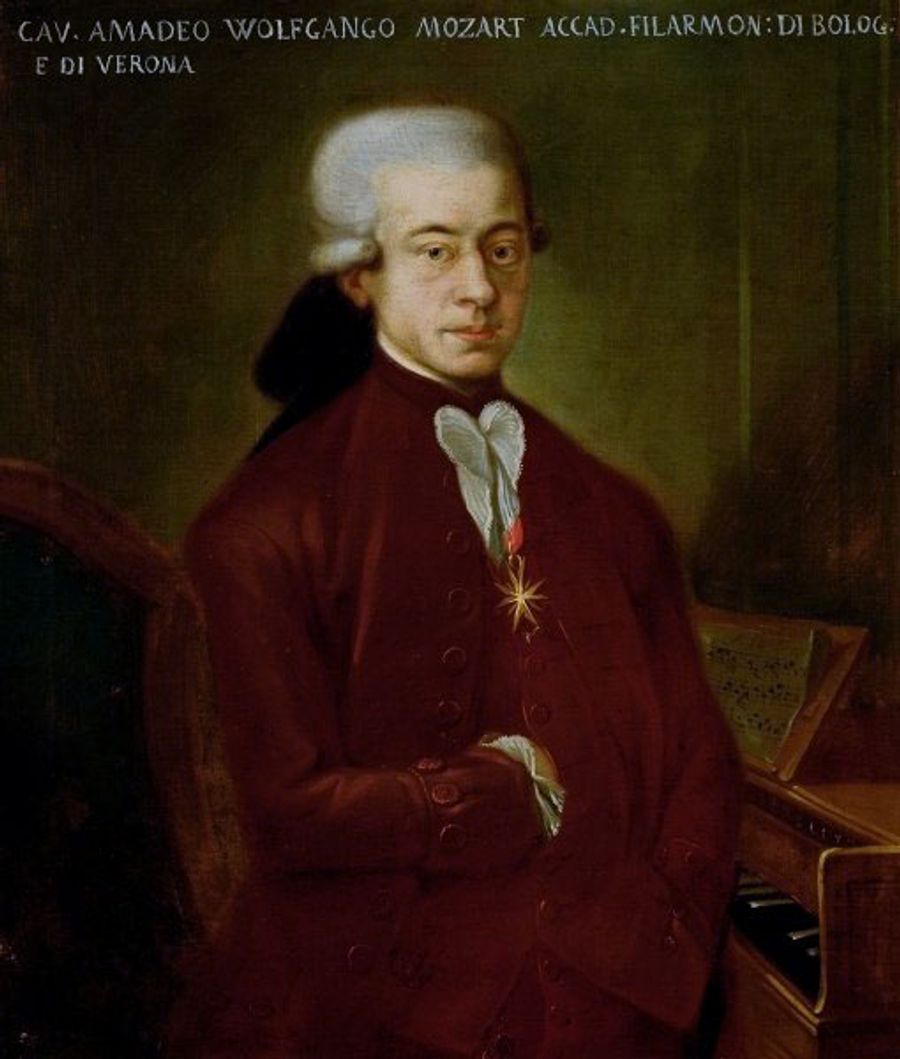
Kyrie in E♭ major (fragment; completed by M. Stadler), K. 322
von Wolfgang Amadeus Mozart

Mozart’s Kyrie in E♭ major (K. 322) is a surviving torso of a Mass movement from his Mannheim period (1778–79), left incomplete in draft form and later supplied with a completion by Abbé Maximilian Stadler. Even in fragmentary state, it shows Mozart—aged 22—thinking on an expansive, orchestral scale in sacred style.
What Is Known
The Kyrie in E♭ major, K. 322 (also catalogued as K. 296a), survives as an incomplete single movement—best understood as the opening of an otherwise lost or unrealized Mass project from Mozart’s Mannheim stay (1778). The surviving sources preserve enough of Mozart’s musical draft that Abbé Maximilian Stadler (1748–1833), a later friend and colleague, could supply a performable completion after Mozart’s death.[1]
As an Amazon Associate we earn from qualifying purchases.
Modern catalog and edition records consistently treat the work as a fragment, while also transmitting a practical scoring suitable for late-18th-century festive church music: SATB choir with oboes, bassoons, horns and trumpets in E♭, timpani, strings, and organ/continuo.[2]
Musical Content
What survives is a compact, ceremonial Kyrie design in E♭ major, where choral writing is supported by a bright “church-orchestral” palette—trumpets and timpani lending public, processional weight, while winds reinforce the harmony and color the choral textures.[2] The manuscript’s very existence in Mannheim is suggestive: in 1778 Mozart was absorbing the city’s famed orchestral sound, and even in sacred idiom he appears drawn to broader sonority and clear-cut, symphonic gesture—ambitions that Stadler’s completion attempts to carry through to a coherent close.[1]
[1] Carus-Verlag work page: Kyrie in E flat major, KV 322 — fragment completed by Maximilian Stadler; scoring and brief editorial description.
[2] IMSLP work page: Kyrie in E-flat major, K.322/296a — basic catalog data and instrumentation; public-domain score scan information.


