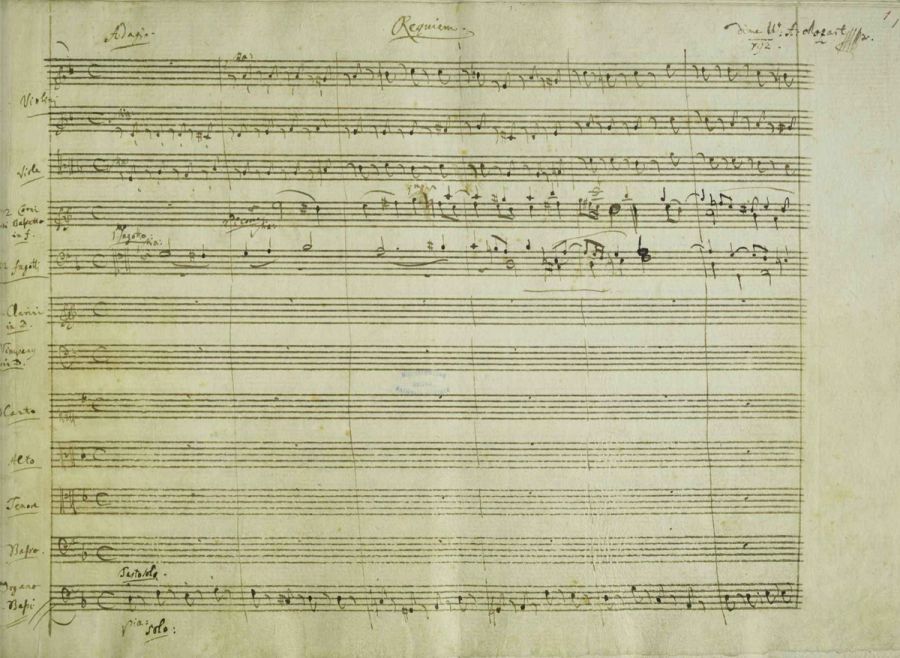
- Numero Köchel
- K9 626 | K6 626
- Genere
- Musica sacra
- Forma
- Messe e Requiem
- Tonalità
- D Minor
- Data
- Ottobre–Dicembre 1791
- Luogo
- Vienna
- Età
- 35
Il Requiem in re minore, K. 626, di Mozart rimase incompiuto alla sua morte nel 1791. Commissionato dal conte Franz von Walsegg e poi completato da Franz Xaver Süssmayr, è tuttora avvolto da storie e leggende. Scopri la commissione, l’ultimo anno di Mozart e il completamento dell’opera.
Una commissione misteriosa
Nell’estate del 1791, Wolfgang Amadeus Mozart ricevette una proposta insolita: una Messa da Requiem (una Messa per i defunti) da comporre nel più stretto riserbo[1]. Un enigmatico messaggero vestito di nero gli consegnò una copia rilegata del testo latino del Requiem (il testo liturgico standard della Messa esequiale), insieme a un biglietto che insisteva perché il compositore non cercasse di conoscere l’identità del committente[1]. Mozart, cronicamente a corto di denaro, rimase incuriosito e lusingato da quella commissione anonima e l’accettò senza esitazioni[1]. Ricevette subito un pagamento generoso – le fonti divergono, ma si parla di una somma iniziale tra 50 e 100 ducati – un aiuto provvidenziale per un compositore sempre in difficoltà economiche[2][3]. L’insistenza del patrono sull’anonimato aggiungeva un’aura di mistero: Mozart accettò di non fare domande e, in cambio, ebbe mano libera su tempi e stile del brano.
Solo più tardi la storia avrebbe rivelato che il committente segreto era il conte Franz von Walsegg, un giovane nobile austriaco[4]. La moglie ventenne di Walsegg era morta il 14 febbraio 1791 e lui desiderava un Requiem per onorarne la memoria nel primo anniversario della scomparsa[5]. Il conte era noto per commissionare opere a compositori celebri e poi tentare di farle passare come proprie in esecuzioni private[6]. Questo spiega la segretezza: Walsegg inviò intermediari (tra cui il cosiddetto “messaggero grigio” o vestito di nero) affinché Mozart restasse ignaro di chi avesse ordinato il pezzo[6]. Per Mozart, tuttavia, la transazione fu semplice: un incarico ben pagato in un anno in cui aveva disperatamente bisogno di entrate[7]. Qualunque scrupolo potesse nutrire verso una commissione così “da cappa e spada” veniva compensato dal sollievo economico e dalla lusinga di essere scelto per un lavoro tanto monumentale.
L’ultimo anno: la vita di Mozart nel 1791
Il 1791 fu per Mozart un vortice di attività creativa e tensione personale. A 35 anni aveva alle spalle alti e bassi recenti. Dopo alcuni anni economicamente difficili, finalmente assaporava un po’ di successo: quello stesso anno vide la conclusione di due opere, La Clemenza di Tito (composta per l’incoronazione dell’imperatore Leopoldo II a Praga) e Die Zauberflöte (Il flauto magico), che debuttò a Vienna a fine settembre 1791[8]. Queste opere – una seria opera italiana destinata alla corte, l’altra un singspiel tedesco intriso di simbolismo massonico – impegnarono Mozart durante l’estate e l’inizio dell’autunno. Solo dopo la prima de Il flauto magico, il 30 settembre, poté dedicarsi pienamente al Requiem commissionato[9]. Ma a quel punto Mozart era fisicamente ed emotivamente allo stremo[10].
La salute del compositore era delicata da tempo e il ritmo frenetico del 1791 la peggiorò. Inoltre era da poco diventato di nuovo padre – la moglie Constanze partorì il loro sesto figlio nel luglio 1791 – e il peso di mantenere una famiglia giovane gravava su di lui. Le lettere di Mozart di quel periodo rivelano insieme entusiasmo per i progetti e ansia per denaro e malattia[11]. Sperava che scrivere una grande opera sacra potesse rafforzare la sua reputazione e forse procurargli un ambito incarico alla cattedrale di Santo Stefano a Vienna (un posto che teneva d’occhio)[2]. Così, nonostante l’enorme mole di lavoro, Mozart accolse la commissione del Requiem come un’occasione vantaggiosa sia sul piano economico sia su quello professionale.
Entro l’autunno del 1791, però, i testimoni notarono che Mozart aveva un aspetto malsano – pallido ed esausto, con gonfiori e febbri persistenti[10]. Egli stesso era consapevole del declino. Eppure continuò ostinatamente a comporre. Gli amici ricordarono poi la sua concentrazione quasi ossessiva sul Requiem in quelle ultime settimane, come se avvertisse che il tempo stava per scadere[12][13].
«Sto scrivendo un Requiem per me stesso»
Mentre Mozart lavorava al Requiem in ottobre e novembre 1791, il progetto sembrò avvolgersi in un velo d’inquietudine. Secondo Constanze e altri a lui vicini, Mozart cominciò a parlare del pezzo in termini lugubri, convinto che l’anonimo messaggero fosse un presagio del proprio destino[14]. «Ho l’impressione di stare scrivendo il Requiem per me stesso», avrebbe detto Mozart[15]. Questa confessione agghiacciante, ripetuta in forme diverse da varie fonti, è diventata una delle leggende più durature legate al Requiem. Lascia intendere che, mentre la salute peggiorava, Mozart arrivasse a credere di star componendo letteralmente la propria Messa funebre.
Constanze raccontò in seguito che il marito si sentiva perseguitato dalla misteriosa commissione. In una conversazione, Mozart le avrebbe detto che lo strano messaggero grigio gli sembrava uno spettro mandato ad annunciare la sua morte[16][17]. Parlò di «pensieri molto strani» collegati alla visita di quel forestiero[18]. Con l’aggravarsi della malattia, Mozart divenne superstizioso: «Sono fin troppo consapevole… la mia fine non tarderà ad arrivare: di certo qualcuno mi ha avvelenato! Non riesco a liberarmi da questo pensiero», scrisse a Constanze in un momento di disperazione[19][20]. (È importante notare che questa frase risale al 1789, durante una precedente malattia, ma mostra la tendenza di Mozart a immaginare una causa sinistra per i suoi sintomi[20].) Dichiarazioni simili alimentarono poi le voci di un avvelenamento, anche se gli storici moderni attribuiscono la morte a cause naturali. All’epoca, però, l’ossessione di Mozart per la morte era del tutto reale. Constanze si allarmò a tal punto da sottrargli per breve tempo il manoscritto del Requiem, sperando di attenuare le sue angosce; ma Mozart non riuscì a stare lontano a lungo dal “suo” Requiem[21][22].
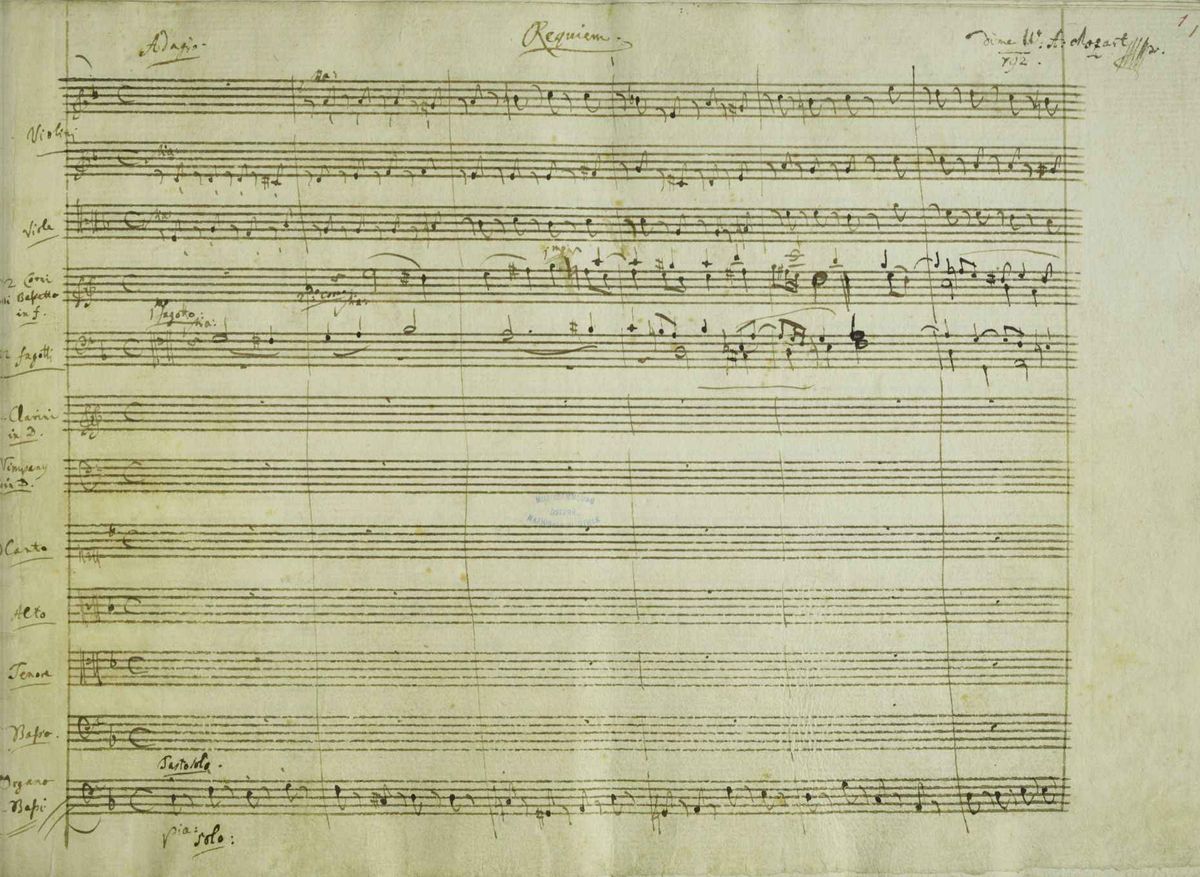
Un dettaglio di una pagina del manoscritto del Requiem di W.A. Mozart, K 626 (1791), con l’intestazione scritta da Mozart per il primo movimento.
Tra ottobre e novembre, il compositore lavorò ogni volta che le forze glielo permisero. Operò perlopiù dal letto, mettendo in partitura i movimenti a frammenti. Portò a compimento integralmente l’Introitus («Requiem aeternam») e abbozzò la complessa fuga corale del Kyrie[23]. Poi affrontò la Sequenza della Messa (il drammatico Dies Irae, Rex tremendae, Confutatis, ecc.) e parti dell’Offertorio. Ma stava diventando troppo debole per terminare il lavoro. La celebre «Lacrimosa» – un movimento le cui prime otto battute, percorse da figure piangenti degli archi, sono tra le pagine più toccanti mai scritte da Mozart – nel suo abbozzo si interrompe dopo poche misure, come se il compositore non fosse letteralmente più in grado di proseguire[23]. Quel frammento si sarebbe rivelato l’ultima musica annotata da Mozart.
Gli ultimi giorni e la morte di Mozart
Alla fine di novembre 1791, Mozart era gravemente malato. Secondo resoconti contemporanei, il 20 novembre si allettò con febbre alta, estrema spossatezza e dolorosi gonfiori agli arti[11]. Nonostante questi sintomi (oggi ricondotti a febbre reumatica o a una patologia renale, anche se la causa esatta resta dibattuta[24]), la sua mente restò concentrata sul Requiem. Il 4 dicembre 1791, forse intuendo un breve miglioramento, invitò alcuni amici intimi e familiari nella sua camera da letto per cantare con lui alcune parti dell’opera in corso[25]. Nel pomeriggio si raccolsero intorno al letto del compositore malato ed eseguirono, in piccolo organico, le sezioni già completate. Mozart stesso tentò di unirsi, pare cantando la parte di contralto della Lacrimosa o di un’altra sezione[26]. Ma, secondo il racconto, davanti a quella musica straziante e alla consapevolezza che forse non l’avrebbe mai finita, Mozart scoppiò in lacrime e non riuscì più a cantare[26]. Fu una scena tragicamente “operistica” quanto qualunque cosa avesse scritto: il compositore-genio, indebolito e in lacrime, circondato da una musica di lutto che ormai credeva destinata a sé.
Quella notte le condizioni di Mozart peggiorarono rapidamente. Nelle prime ore del 5 dicembre 1791, poco dopo la mezzanotte, Wolfgang Amadeus Mozart morì nel suo appartamento viennese, con Constanze al suo fianco. Aveva 35 anni[27]. Il Requiem rimase incompiuto sulla scrivania. Al momento della morte, solo il primo movimento (Introitus) era interamente orchestrato e completo in partitura; il Kyrie e gran parte della Sequenza e dell’Offertorio esistevano soltanto come parti vocali e linee di basso con indizi d’orchestrazione, e la Lacrimosa si interrompeva bruscamente dove Mozart si era fermato pochi giorni prima[23]. Le sezioni finali del Requiem (Sanctus, Benedictus, Agnus Dei) non erano ancora state scritte.
La morte di Mozart fu uno shock per il mondo musicale viennese. Si diffuse la voce che fosse stato avvelenato – teoria alimentata anche dalle stesse parole cariche di paura di Mozart e dall’insorgere rapido della malattia[20]. (Antonio Salieri, compositore di corte, venne persino accusato falsamente dai pettegoli di aver tramato contro Mozart: un’accusa che Salieri respinse con forza[28].) In realtà non esiste alcuna prova di omicidio; la maggior parte degli studiosi oggi ritiene che Mozart sia morto per cause naturali, con la febbre reumatica acuta come una delle ipotesi principali[24]. Fu sepolto in una tomba semplice nel cimitero viennese di Sankt Marx, come era consuetudine per chi apparteneva alla sua classe sociale. In una cerimonia commemorativa poco dopo la morte, le parti già esistenti del Requiem furono eseguite in suo onore – un presagio commovente di come quella musica, commissionata da uno sconosciuto, sarebbe davvero diventata il requiem di Mozart.
Il completamento del Requiem incompiuto
Mozart morì lasciando il Requiem incompleto e il misterioso committente ancora in attesa. Per la giovane vedova Constanze Mozart, la priorità divenne rapidamente salvare la commissione. Aveva ricevuto un anticipo consistente e l’accordo prevedeva che l’opera fosse consegnata completa per ottenere il saldo. Constanze temeva che, se il conte avesse saputo che Mozart era morto e che il Requiem era incompiuto, avrebbe potuto rifiutare di pagare il resto – o addirittura pretendere indietro il denaro[29]. Disperata nel tentativo di mettere al sicuro il futuro economico della famiglia, Constanze si mosse in fretta per far completare il Requiem in segreto.
Si rivolse dapprima a un collega di Mozart, Joseph Eybler, per capire se fosse disposto ad assumersi l’incarico[30]. Eybler riuscì a orchestrare alcune sezioni rimaste incompiute (in particolare parti della Sequenza), ma alla fine non se la sentì di portare a termine la composizione. Constanze si rivolse allora a Franz Xaver Süssmayr, un compositore venticinquenne che era stato allievo e assistente di Mozart[31][32]. Süssmayr aveva aiutato Mozart in compiti minori per La Clemenza di Tito e conosceva intimamente lo stile dell’ultima fase mozartiana[33]. Secondo un suo resoconto successivo, Mozart avrebbe persino discusso con lui alcuni aspetti del Requiem negli ultimi giorni[34]. Sebbene altri compositori viennesi, a quanto pare, rifiutassero la richiesta di Constanze – per modestia o per timore del confronto con il genio di Mozart[34] – Süssmayr accettò di completare la partitura.
Lavorando con gli abbozzi e le indicazioni lasciate da Mozart, Süssmayr colmò i vuoti del Requiem. Compose interamente il Sanctus, il Benedictus e l’Agnus Dei, e completò la Lacrimosa oltre la battuta 8[35][36]. Cucì inoltre il finale riprendendo la fuga del Kyrie di Mozart come Communio (Lux aeterna), concludendo così l’opera in modo ciclico. All’inizio del 1792, Süssmayr aveva prodotto una partitura completa del Requiem. Con un tocco di furtiva teatralità, falsificò perfino la firma di Mozart sul manoscritto e lo datò 1792, imitando la grafia di Mozart affinché il lavoro consegnato apparisse del tutto autentico[37].
Lo stratagemma di Constanze riuscì. Il Requiem completato fu presentato al conte Walsegg come ultima composizione di Mozart, senza alcun cenno al contributo di Süssmayr[14]. Il conte pagò il saldo e, per un certo periodo, credette di essere l’unico a possedere l’opera commissionata. Walsegg pare ricopiò la partitura di suo pugno e, come previsto, si preparò a presentare il Requiem sotto il proprio nome in un concerto commemorativo per la defunta moglie[38]. Constanze, però, era determinata a far attribuire il merito al marito (e a trarre ulteriore beneficio dalla fama dell’opera). Organizzò discretamente un’esecuzione pubblica del Requiem completo prima che Walsegg potesse presentarlo. Il 2 gennaio 1793, appena un anno dopo i funerali di Mozart, si tenne a Vienna un grande concerto di beneficenza a favore di Constanze, in cui il Requiem di Mozart fu eseguito integralmente[38]. Il concerto fu organizzato dal barone Gottfried van Swieten, influente mecenate di Mozart, e vide la partecipazione del pubblico viennese e dell’élite musicale[38]. Secondo tutte le testimonianze fu un successo e fissò il Requiem, nell’immaginario pubblico, come il canto del cigno di Mozart. (Un resoconto suggerisce persino che Antonio Salieri – ben lontano dal complottare contro Mozart – possa aver diretto l’orchestra in quell’occasione, offrendo il suo sostegno per onorare il collega scomparso[39].)
Con quel beneficio viennese del 1793, il segreto era ormai sostanzialmente svelato. Il piano di Walsegg di spacciare l’opera per propria fu vanificato dal fatto che molti già conoscevano il Requiem di Mozart e l’avevano ascoltato in esecuzione[14]. Ciononostante, Walsegg procedette e organizzò un’esecuzione privata il 14 dicembre 1793 nella sua tenuta di Wiener Neustadt, con il Requiem suonato in memoria della moglie, due anni dopo la morte[40]. Una targa a Wiener Neustadt ricorda quell’occasione, associando il nome di Walsegg al Requiem. In seguito, Constanze fece anche pubblicare il Requiem nel 1799 a nome di Mozart, assicurando ulteriormente la gloria postuma dell’opera (e consentendo a Constanze di continuare a guadagnarvi)[41]. Per decenni il pubblico non seppe nulla del ruolo di Süssmayr; Constanze inizialmente alimentò la “pia finzione” che ogni nota del Requiem fosse di Mozart, consapevole che un «ultimo capolavoro di Mozart» avrebbe suscitato molto più interesse (e guadagni) rispetto a un lavoro completato da un allievo[41]. Solo molti anni dopo – nel 1839 – Constanze riconobbe finalmente pubblicamente il contributo sostanziale di Süssmayr al completamento del Requiem[42].
Leggenda e realtà: il Requiem di Mozart e Amadeus
Le circostanze drammatiche del Requiem di Mozart – la commissione anonima, la morte del compositore, la segretezza e gli stratagemmi – hanno alimentato molti miti e leggende. In nessun luogo sono state messe in scena con maggiore notorietà che nel film Amadeus (1984), vincitore dell’Oscar, diretto da Miloš Forman e tratto dalla pièce di Peter Shaffer. Amadeus intreccia una storia avvincente in cui il rivale di Mozart, Antonio Salieri, macchinerebbe per spingere Mozart a scrivere il Requiem e, in pratica, “farlo lavorare fino alla morte”, nascondendo al contempo la propria identità sotto un lugubre mantello grigio. È un racconto irresistibile – ma si prende libertà notevoli rispetto alla verità. Shaffer stesso ammise che la sceneggiatura era «una fantasia basata sui fatti… non una biografia cinematografica di Mozart»[43]. In effetti, molti elementi della rappresentazione del Requiem in Amadeus sono inventati, intrecciati a pochi granelli di verità.
Cosa il film indovina: Amadeus restituisce correttamente il fatto che Mozart ricevette davvero una strana commissione anonima per una Messa da Requiem e che, negli ultimi giorni di vita, ne fu profondamente assorbito. Il film coglie l’ossessione febbrile di Mozart e l’idea che il Requiem diventasse, di fatto, la sua musica funebre – un’idea che affonda nelle testimonianze della famiglia di Mozart[14]. Anche l’atmosfera di mistero e timore attorno alla commissione ha un fondamento reale: Mozart davvero non sapeva chi fosse il patrono, e la figura di uno “sconosciuto mascherato” che si presenta alla sua porta fa parte della tradizione narrativa sul Requiem fin dai primi racconti di Constanze[14]. Le potenti scene finali del film, in cui un Mozart morente si sforza di finire la Lacrimosa, riflettono il pathos autentico delle sue ultime ore (con qualche licenza creativa). E, in senso poetico, come ha osservato un commentatore, «il Requiem che scrisse per uno sconosciuto diventò il suo» – Mozart morì lasciando al mondo quell’opera come epitaffio[44].
Cosa è congettura o sbagliato: La celebre rivalità tra Salieri e Mozart è enormemente esagerata nel film. In realtà Salieri aveva solo circa sei anni più di Mozart ed era un compositore rispettato a Vienna; i due erano colleghi e talvolta collaborarono anche musicalmente[45]. Lungi dall’essere nemici, avevano un rapporto cordiale: per esempio, nell’ottobre 1791 (poche settimane prima che Mozart si ammalasse), Salieri assistette a Il flauto magico e applaudì con entusiasmo a ogni numero, per la gioia di Mozart[46]. Non esiste alcuna prova dell’invidia assassina attribuita a Salieri in Amadeus. L’idea che Salieri, travestito, avesse architettato la commissione del Requiem e avvelenato Mozart proviene da una vecchia leggenda, non da fatti storici[47]. In realtà, dietro la commissione c’era il conte Walsegg, non Salieri[48], e le motivazioni di Walsegg erano opportunistiche (plagiare una composizione) più che omicide.
Anche l’espediente del film in cui Salieri, a lume di candela, aiuterebbe Mozart a trascrivere il Requiem sul letto di morte è un’invenzione. Salieri non era presente al momento della morte di Mozart e non ebbe alcun ruolo nella composizione del Requiem[39]. Se qualcuno raccolse indicazioni da Mozart nelle ultime ore, potrebbe essere stato Süssmayr – ma anche su questo le prove storiche sono fragili. Ciò che sappiamo è che Süssmayr completò la partitura dopo la morte di Mozart, lavorando sugli abbozzi e sulla propria memoria, non su una dettatura dal vivo al capezzale[49][35]. Allo stesso modo è infondata l’idea che Salieri abbia causato direttamente o indirettamente la morte di Mozart (con l’avvelenamento o spingendolo al collasso). Voci su un Salieri avvelenatore circolarono a Vienna (e lo stesso Salieri, in preda alla demenza decenni più tardi, mormorò qualcosa sull’essere l’«assassino» di Mozart)[50]. Ma si trattò di dicerie amplificate da opere creative – in particolare il dramma del 1830 di Aleksandr Puškin, Mozart e Salieri, che rese popolare il racconto del Salieri geloso che uccide Mozart[47]. Shaffer in Amadeus costruì su quel presupposto romanzesco. Gli storici, però, liquidano la teoria dell’avvelenamento come una delle tante ipotesi pittoresche. Il medico di Mozart non sospettò mai un delitto, e le analisi moderne dei sintomi riportati indicano una malattia, non un intrigo[24].
In definitiva, la vera storia del Requiem di Mozart è già abbastanza drammatica senza aggiunte: un genio gravemente malato che tenta di completare un capolavoro in circostanze bizzarre, una vedova che si affanna per proteggere l’eredità del marito, e il piano di un nobile riservato smentito dalla forza della fama postuma di Mozart. È un racconto di arte, morte e mistero che affascina il pubblico da oltre due secoli. Amadeus si prende libertà creative, ma ha fatto conoscere a milioni di persone l’immagine inquietante di Mozart che riversa l’anima nel Requiem mentre la vita gli sfugge. Il vero Mozart fece proprio questo – ma non con Salieri al suo fianco e non con un delitto nell’aria, bensì con una profonda consapevolezza della propria mortalità. Oggi, quando ascoltiamo la cupa maestà delle battute iniziali del Requiem o il terrore infuocato del suo Dies Irae, ascoltiamo le stesse note che Mozart scrisse negli ultimi giorni. Il Requiem è un requiem non solo per la moglie scomparsa del conte Walsegg, ma per Mozart stesso: un capolavoro nato dalla tragedia e il centro di una delle storie vere più intriganti della storia della musica.
//
Fonti:
Le lettere di Mozart e le memorie dei contemporanei; le interviste di Constanze Mozart negli anni 1790 (tramite i biografi Friedrich Rochlitz e Franz Niemetschek); Mozart: A Life di Maynard Solomon; Requiem (Mozart) – Wikipedia[5][14]; Classical-Music.com[1][4][8]; California Symphony[48][19][11]; West Australian Symphony Orchestra[51][20]; Residentie Orkest Hague[52][38]; Sofia Philharmonic[26][53].
- [1][4][8][10][12][13][29][31][33][35][36][40] Una commissione spettrale: la cupa leggenda del Requiem di Mozart
- [2][9][15][38][52] «Ho l’impressione di stare scrivendo il Requiem per me stesso» - Residentie Orkest - RO
- [3][5][14][16][17][18][21][22][23][37][41][47] Requiem (Mozart) - Wikipedia
- [6][7][11][19][24][25][27][28][43][44][45][46][48][50] Mozart Movie Myths - The California Symphony
- [20][32][39][51] The Many Myths of Mozart’s Requiem - WASO
- [26][30][34][42][49][53] Wolfgang Amadeus Mozart – Requiem (K.626) – Sofia Philharmonic
Spartito
Scarica e stampa lo spartito di Requiem in re minore, K. 626 – La storia da Virtual Sheet Music®.