- Köchel Number
- K9 Anh.A 55 | K6 537d
- Genre
- Vocal Music
- Form
- Lieder
- Date
- February 1788
- Place
- Vienna
- Age
- 32
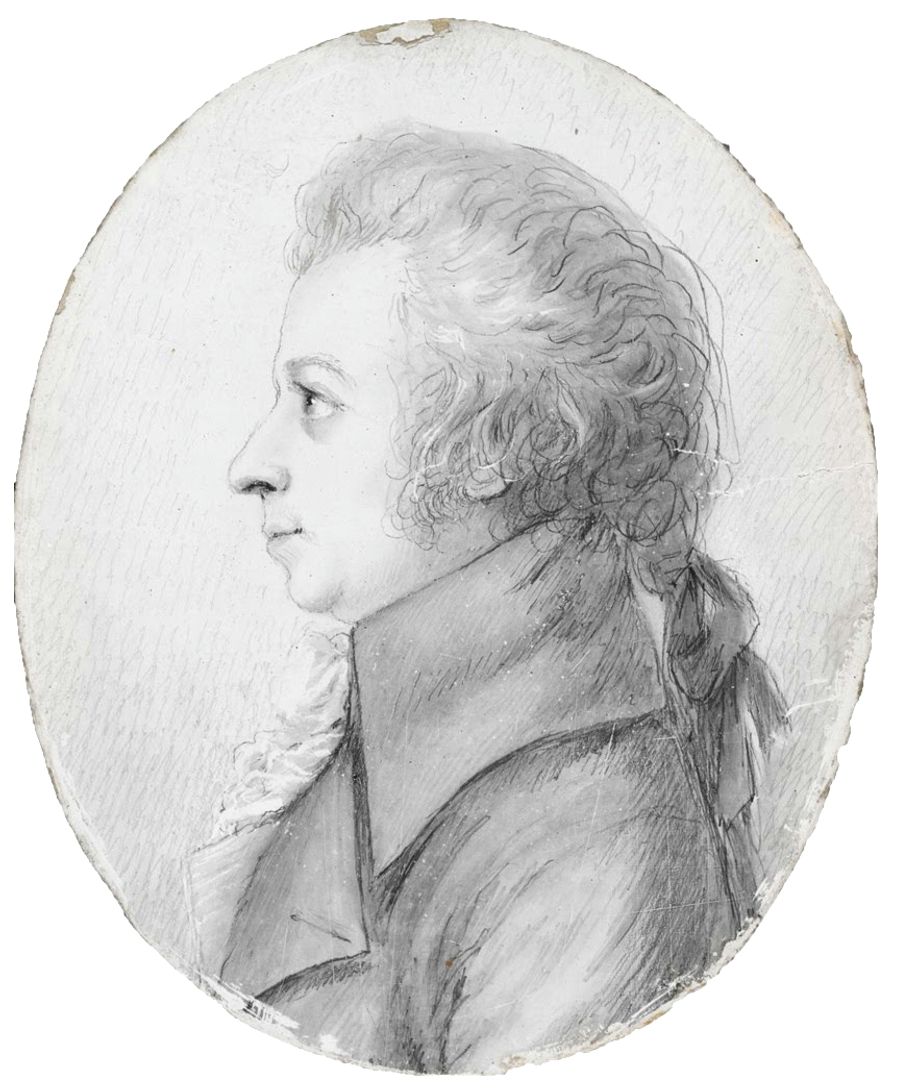
Mozart’s Arrangement of an Aria for Tenor by Carl Philipp Emanuel Bach (K. Anh.A 55) dates from February 1788 in Vienna, when the composer was 32. Modest in scale yet revealing in taste, it belongs to Mozart’s sporadic engagement with earlier and contemporary repertory through practical reworking rather than original composition.
Background and Context
In February 1788, Vienna finds Wolfgang Amadeus Mozart (1756–1791) balancing pressing practical concerns with an undimmed compositional ambition; within months he would complete the last three symphonies (Nos. 39–41). Against that backdrop, K. Anh.A 55 appears as a small, utilitarian task: an arrangement of a tenor aria by Carl Philipp Emanuel Bach (1714–1788), prepared for use in performance or private music-making rather than as a public statement.[1]
The surviving catalogue description is unusually terse—no secure key is transmitted in the standard listings, and the source situation is not widely discussed in readily accessible scholarship—so it is safest to understand the work chiefly as evidence of Mozart’s ongoing interest in stylistic translation: taking a vocal number from another composer and recasting it in a form workable for his own Viennese circle.[1]
Musical Character
What can be said with confidence from the work’s identification is limited but still suggestive. K. Anh.A 55 is a tenor item, and its classification alongside songs (Lieder) implies an intimate vocal scale rather than a large operatic scena.[1]
Within Mozart’s 1788 sound-world, such an arrangement likely required decisions about vocal declamation (how the German-language Lied-like line sits on the breath), keyboard or ensemble support (how harmony and figuration are redistributed), and Classical-period phrase balance—areas where Mozart’s craftsmanship is often most audible even in the smallest practical reworkings. In this sense, K. Anh.A 55 fits his development not through novelty, but through refinement: the same ear for clarity and expressive pacing that animates his major works of the year applied to a comparatively quiet page of music-making.
Sources
[1] Wikipedia — Köchel catalogue entry table including Anh.A 55 (Arrangement of Aria for Tenor by Carl Philipp Emanuel Bach), February 1788, Vienna.