- Köchel Number
- K9 9a | K6 5a
- Genre
- Piano Music
- Form
- Piano Pieces
- Key
- C Major
- Date
- 1764
- Place
- Salzburg
- Age
- 7
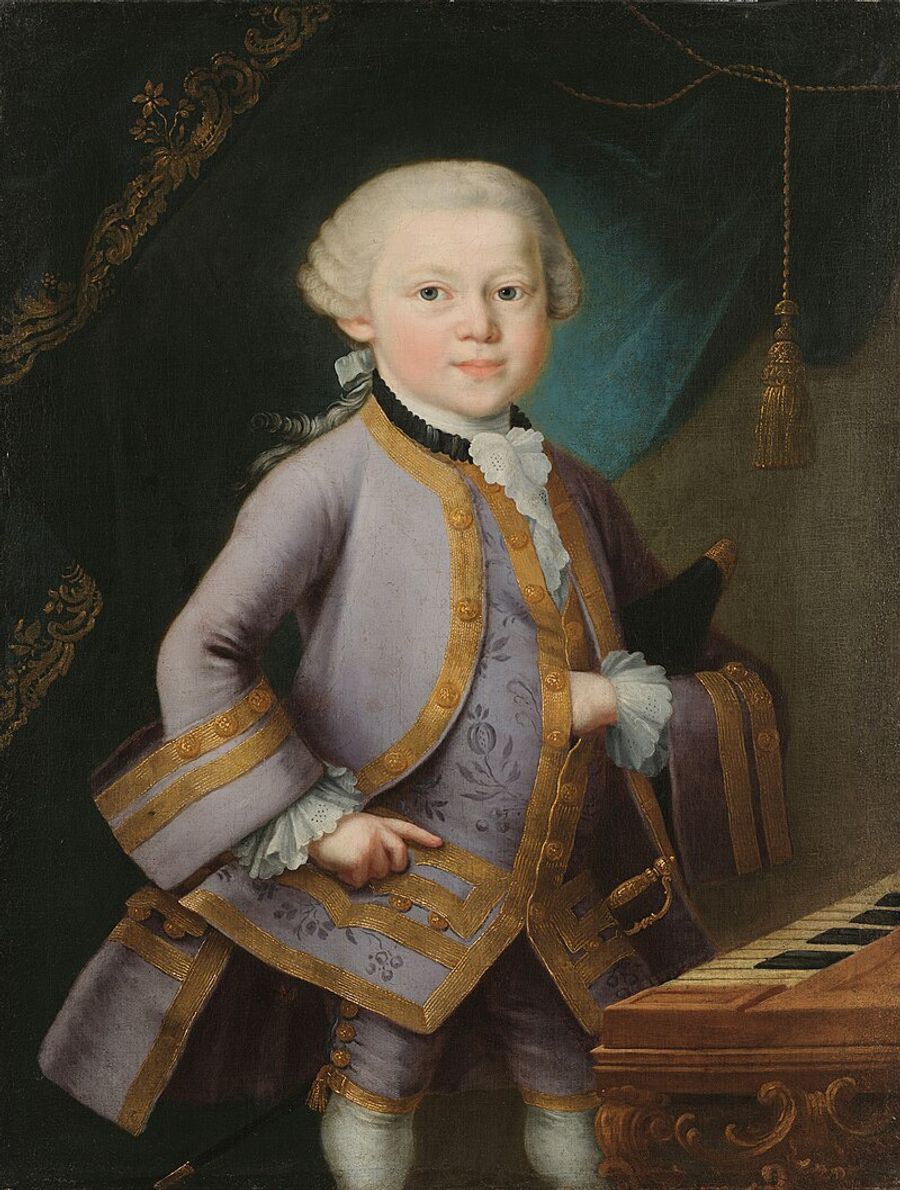
Mozart’s Allegro in C major (K. 9a) is a tiny solo keyboard piece preserved in the family’s “Nannerl Music Book,” dating from his earliest Salzburg years (often given as 1763–64). It offers a clear glimpse of the seven-year-old composer learning to shape brisk, balanced phrases at the keyboard.
Mozart's Life at the Time
In 1763, Wolfgang Amadeus Mozart (1756–1791) was living in Salzburg and was already composing short keyboard pieces for domestic use and instruction. K. 9a belongs to the group of early clavier items transmitted through the so-called “Nannerl Music Book,” the household notebook associated with Maria Anna (“Nannerl”) Mozart’s keyboard studies and the family’s musical routine.[1]
Musical Character
Notated simply as a clavier piece in C major, K. 9a is a brief, lively movement in an Allegro manner—music that sits comfortably under small hands and favors straightforward, two-phrase symmetry. The writing is mainly in two parts, with the right hand projecting short, upbeat motives while the left supplies basic harmonic support (often in broken-chord or stepwise patterns), pointing toward the galant style Mozart absorbed at home.[2] In miniature, it rehearses essentials of Classical keyboard rhetoric: clear cadences, quick harmonic rhythm, and a sense of “going out and coming back” that anticipates larger sonata-allegro thinking—without yet attempting the thematic contrast or developmental pressure of Mozart’s mature works.[1]