- Köchel Number
- K9 75 | K6 75
- Genre
- Orchestral Music
- Form
- Symphonies
- Key
- F Major
- Date
- Spring 1771
- Place
- Salzburg
- Age
- 15
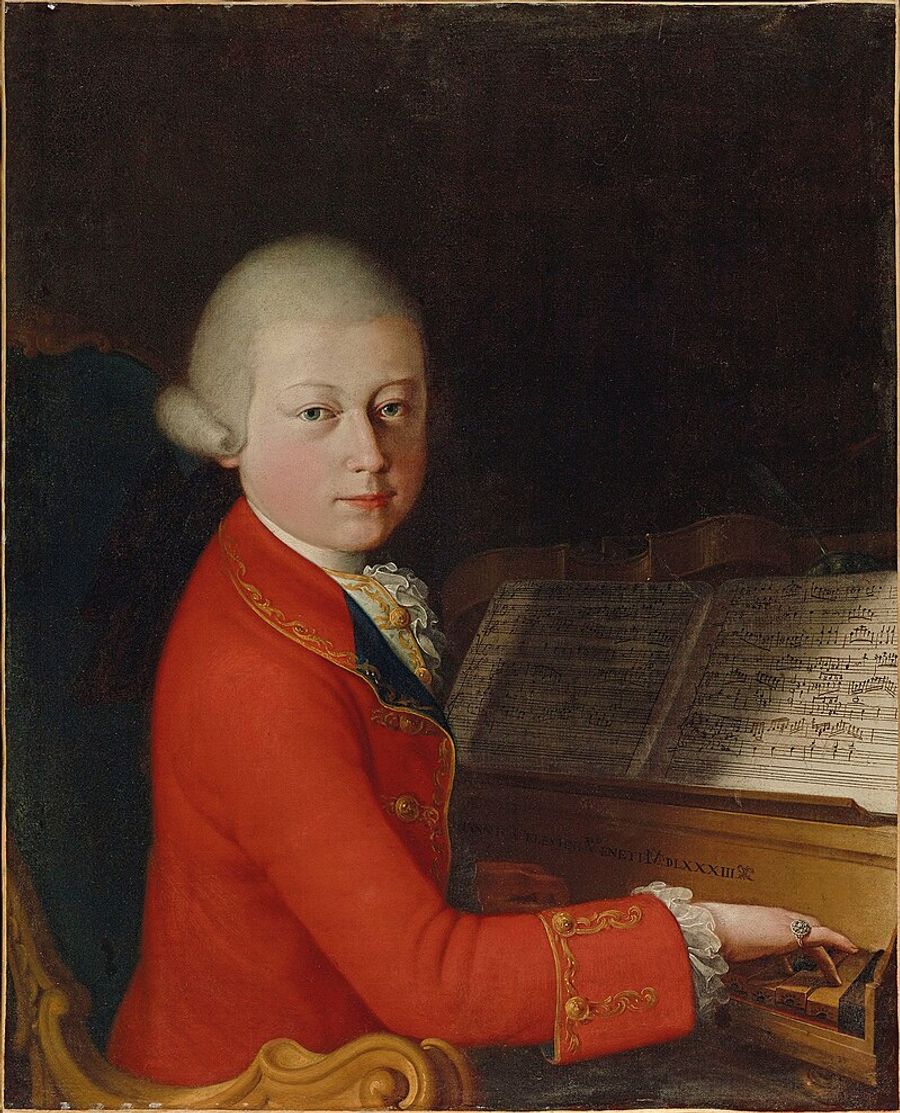
The Symphony in F major (K. 75), sometimes labeled “Symphony No. 42,” is a four-movement work traditionally placed in Mozart’s Salzburg output of 1771, when he was fifteen. Its attribution has long been treated as uncertain, yet the piece survives in performable sources and has remained in circulation as a “doubtful” early symphony.
Background and Context
In the summer of 1771 Wolfgang Amadeus Mozart (1756–1791) was back in Salzburg between Italian journeys, writing quickly and pragmatically for the musical demands of the Prince-Archbishop’s court and related concerts. K. 75 is generally dated to this Salzburg period and is often discussed alongside the compact early symphonies that document Mozart’s rapid assimilation of Italianate overture style into a more “four-movement” Central European plan.[1]
At the same time, modern reference works frequently flag K. 75 as a work of doubtful authenticity: its provenance is not fully straightforward, and scholars have been cautious about treating it as securely Mozart’s in the same sense as the best-attested early symphonies.[2]
Musical Character
The symphony is laid out in four movements—Allegro, Menuetto – Trio, Andantino, Allegro—and calls for a modest Salzburg orchestra: winds (2 oboes) with brass (2 horns in F, used in the first and last movements) and strings.[3][1]
What is most distinctive “on the page” is the ordering of the inner movements: the Menuetto – Trio comes second rather than in the more typical third position.[2] This puts dance rhetoric early, so that the later Andantino can function less as a conventional “slow middle” and more as a brief lyrical pause before the final Allegro closes the work with renewed forward motion.
Place in the Catalog
Whether or not the symphony is ultimately accepted as fully authentic, K. 75 fits musically into Mozart’s Salzburg apprenticeship around 1770–71: concise gestures, clear formal outlines, and a practical orchestral palette designed for the players at hand.[1][3] Heard in that light, it can be approached as a small but instructive document of the young composer’s symphonic workshop—while remaining, in attribution, a carefully bracketed “doubtful” entry.[2]
Sources
[1] Wikipedia — "Symphony, K. 75" (overview, Salzburg dating, numbering as "No. 42" in some schemes; links to NMA materials)
[2] Wikipedia — "Mozart symphonies of spurious or doubtful authenticity" (contextualizes K. 75 as doubtful; notes atypical Minuet placement and issues of provenance)
[3] IMSLP — "Symphony No. 42 in F major, K. 75" (movement list and basic instrumentation; access to public-domain scores)