- Köchel Number
- K9 67 | K6 41h
- Genre
- Sacred Music
- Form
- Church Sonatas
- Key
- E Flat Major
- Date
- c. 1772
- Place
- Salzburg
- Age
- 15
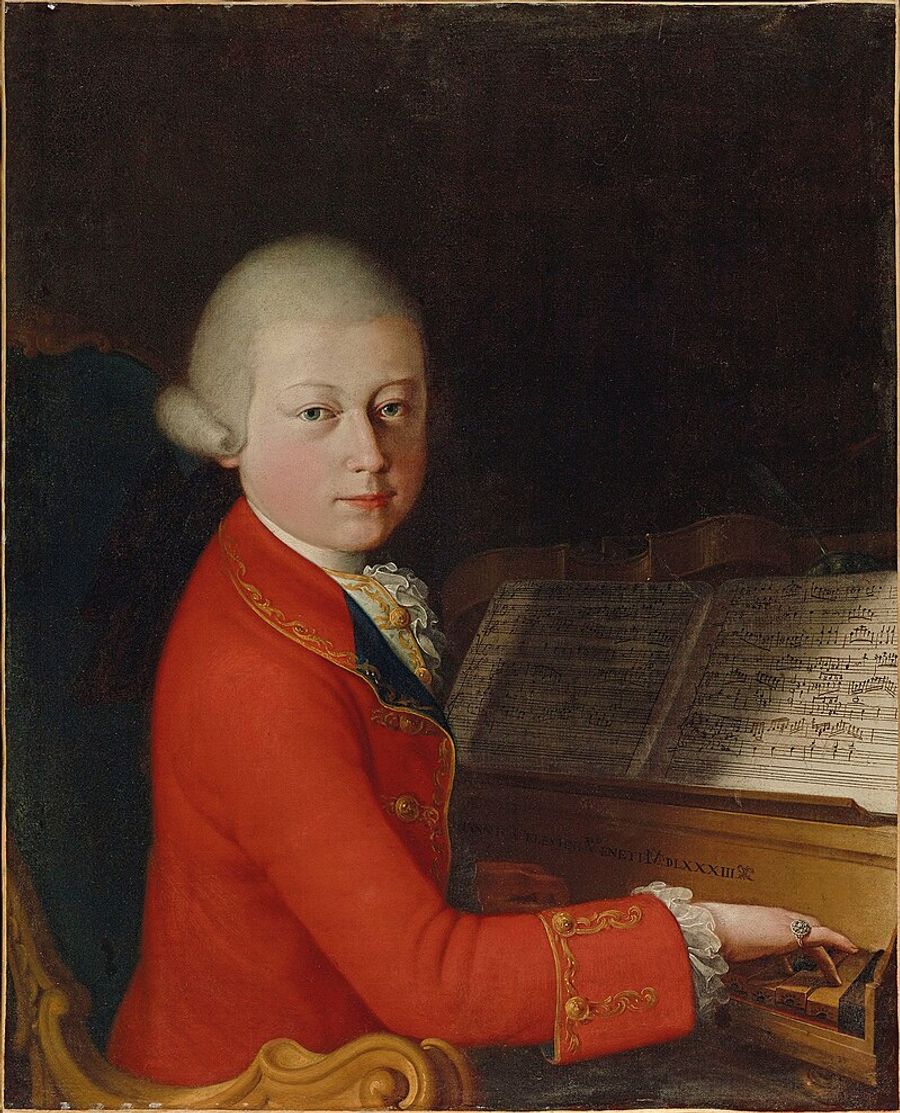
Mozart’s Church Sonata No. 1 in E♭ major (K. 67) is a compact “epistle sonata” from Salzburg, written in 1771 when the composer was only fifteen. Cast in a single movement and designed to fit a precise moment within the Mass, it distills concerto-like brilliance into a liturgical miniature—revealing how quickly Mozart could speak vividly within strict ceremonial limits.
Background and Context
In Salzburg’s court-and-cathedral culture, music was not merely ornament but a regulated part of worship, shaped by the practicalities of clergy, choir, and instrumentalists. One distinctive local practice was the insertion of a short instrumental piece at a particular point in the service—an epistle sonata—performed between the readings, effectively replacing (or supplementing) chant at that moment in the liturgy.[2]
Mozart composed a sequence of these brief church sonatas while serving the Salzburg establishment, and although they have often lived in the shadow of the Masses and Vespers, they provide unusually direct evidence of his craft as a “working” church musician. The genre demanded concision, clear tonal direction, and an immediately legible affect; yet it also offered a small stage on which the organ could step forward from mere continuo into a more characterful, sometimes even quasi-solo role.[2]
Composition and Liturgical Function
Church Sonata No. 1 in E♭ major (K. 67) belongs to Mozart’s early Salzburg sacred output and is traditionally listed first among the church sonatas. It is a single-movement piece intended for liturgical use during Mass, sized to fit the ceremonial window available—music as “functional architecture,” designed to be complete before the service moved on.[4])
The customary scoring for most Salzburg epistle sonatas is essentially a church trio-sonata texture enlarged by an organ part: two violins above a bass line (cello and double bass), with organ providing harmonic support and, in several works, an increasingly prominent voice.[4]) For K. 67 in particular, modern cataloguing and performance materials describe the ensemble as two violins, organ, and bass (cello/double bass), a lean forces that suited the cathedral’s resources and the genre’s liturgical brevity.[1]
Musical Structure
K. 67 is a small form with a large sense of purpose. Its E♭-major sound world—warm, ceremonial, and “public” without being grandiose—matches the church setting, while the writing keeps the musical argument moving with minimal digression. The texture is typically bright at the top (the two violins frequently acting in dialogue) and firmly grounded by the bass, with the organ binding the harmony and, at key moments, claiming the listener’s ear through figuration that feels more animated than mere accompaniment.[1]
What makes this early sonata worth attention is precisely its economy. In a span that could never accommodate the longueurs of a symphonic development, Mozart still suggests the essentials of Classical rhetoric: a sense of “arrival,” short-breathed contrast, and cadential clarity. One can also hear, in miniature, the Salzburg habit of fusing church utility with courtly polish—a reminder that sacred music in this environment often aimed at lucid, decorous brilliance rather than penitential severity.[2]
Reception and Legacy
Because the church sonatas were tied to a specific Salzburg liturgical custom, the genre later fell out of everyday use; nonetheless, these works have been preserved in editions and recordings as a self-contained group, valued today as glimpses of Mozart’s formative years and of the cathedral’s musical routines.[4])
In performance, K. 67 can be heard either in historically informed liturgical reconstructions or as a concert interlude—often paired with Salzburg Mass settings to recreate something of its original function. Its modest forces, clear tonal design, and poised E♭-major character make it an inviting entry point into a repertory that shows Mozart learning, at fifteen, how to make even “in-between” music sound inevitable.[1]
Sources
[1] IMSLP: score page for Church Sonata No. 1 in E♭ major, K. 67/41h (basic cataloguing, scoring as presented in editions).
[2] Köchel Verzeichnis (Mozarteum): overview essay on Salzburg church sonatas and their liturgical placement and type (used for contextual practice).
[3] Bärenreiter (preface PDF): Neue Mozart-Ausgabe/Urtext edition context for the complete church sonatas (series including K. 67).
[4] Wikipedia: overview of Mozart’s Church Sonatas (epistle sonata function, typical scoring, genre fate).