- Köchel Number
- K9 654 | K6
- Genre
- Orchestral Music
- Form
- Serenades, Cassations & Divertimenti
- Key
- C Major
- Date
- 1771
- Age
- 15
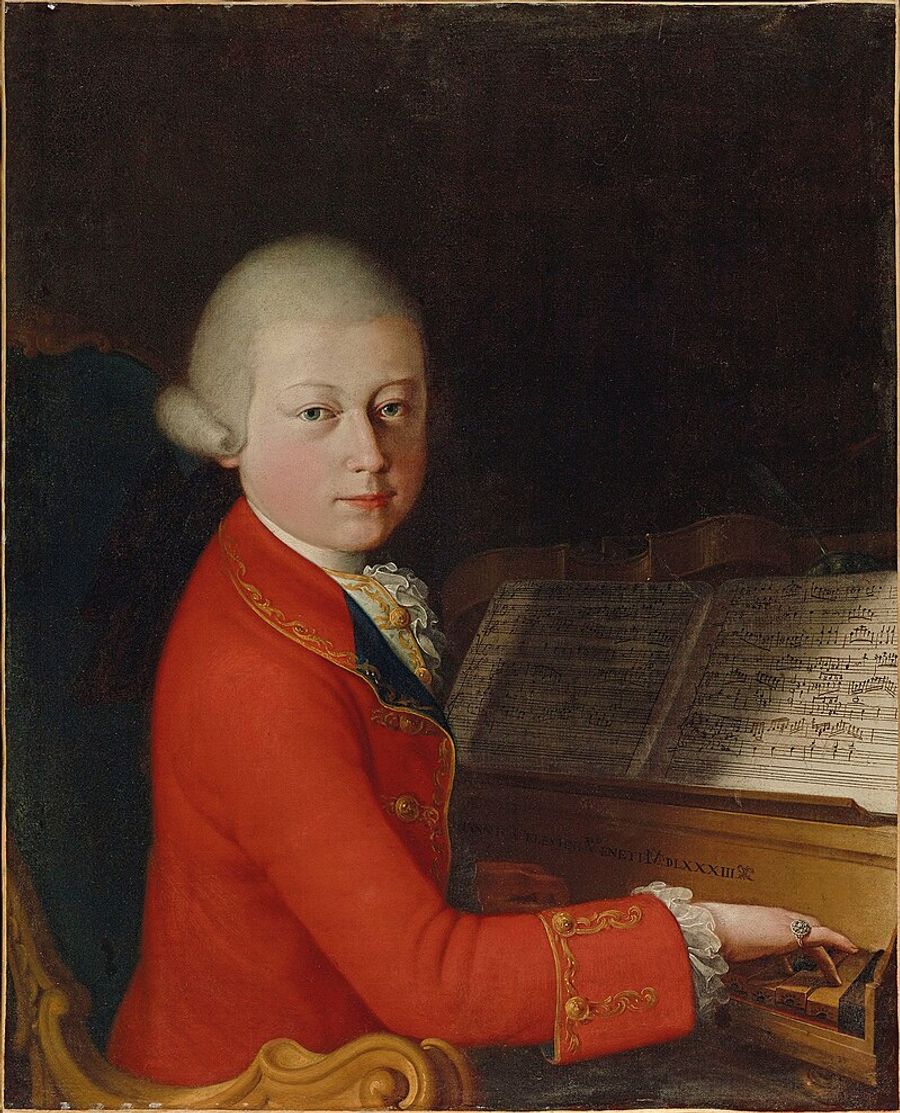
The Offertory O supremum coeli Numen (K. 654) is a short sacred piece in C major that has been attributed—uncertainly—to the 15-year-old Wolfgang Amadeus Mozart (c. 1771). Surviving documentation is scant, and modern reference sources treat both the attribution and even the work’s basic classification with caution.
Background and Context
K. 654 circulates under the Latin incipit O supremum coeli Numen and is sometimes labeled an Offertory—music intended for the Offertorium portion of the Mass—yet its transmission is obscure enough that modern cataloguing has not fully settled its identity or destination. The International Mozarteum Foundation’s online Köchel catalogue lists the work under this title and number, but without readily accessible source details on its public-facing entry page, reinforcing the sense that the piece rests on a thin documentary basis.[1]
The year usually attached to K. 654 is 1771, when Mozart was 15 and moving between Salzburg and northern Italy in the wake of his first Italian journey (late 1769 to early 1771) and before the third Italian trip later in 1772. In that teenage period, Mozart produced both liturgical music (for Salzburg’s ecclesiastical institutions) and a large amount of functional instrumental writing; the ambiguity around K. 654—sacred label versus instrumental “serenade” type classifications in some databases—fits, at least superficially, the practical, occasion-driven character of his output at that age.
Musical Character
Because the principal sources, scoring, and musical text for K. 654 are not widely circulated in modern editions and are not described in detail in standard, easily verifiable reference discussions, any account of its instrumentation or formal layout would risk claiming more than the evidence supports. What can be stated securely is limited to the work’s customary identification as an Offertory in C major and its status as a doubtful attribution in the Mozart corpus.[1]
In practical listening terms, K. 654 is best approached as a tentative witness to Mozart’s early style rather than a firmly anchored document of his Salzburg church practice: if it is genuine, one would expect the clear periodic phrasing and diatonic brightness typical of his early C-major ceremonial pieces; if it is not, its value lies in showing how readily late-18th-century sacred “occasional” idioms could be mistaken for Mozart’s—an error that has affected a number of works traditionally circulated under his name.[2]