- Köchel Number
- K9 628 | K6
- Genre
- Piano Music
- Form
- Works for Two Pianos & Piano Four Hands
- Key
- C Major
- Date
- 1764–1765
- Place
- London
- Age
- 8
Mozart’s Divertimento in C major for piano four hands (K. 628) is a lost juvenilium from his London years, generally dated to 1764–65, when he was eight. Although later catalogues transmit the title and scoring, the work itself does not survive, and its authenticity has been questioned in modern Mozart scholarship.
Mozart's Life at the Time
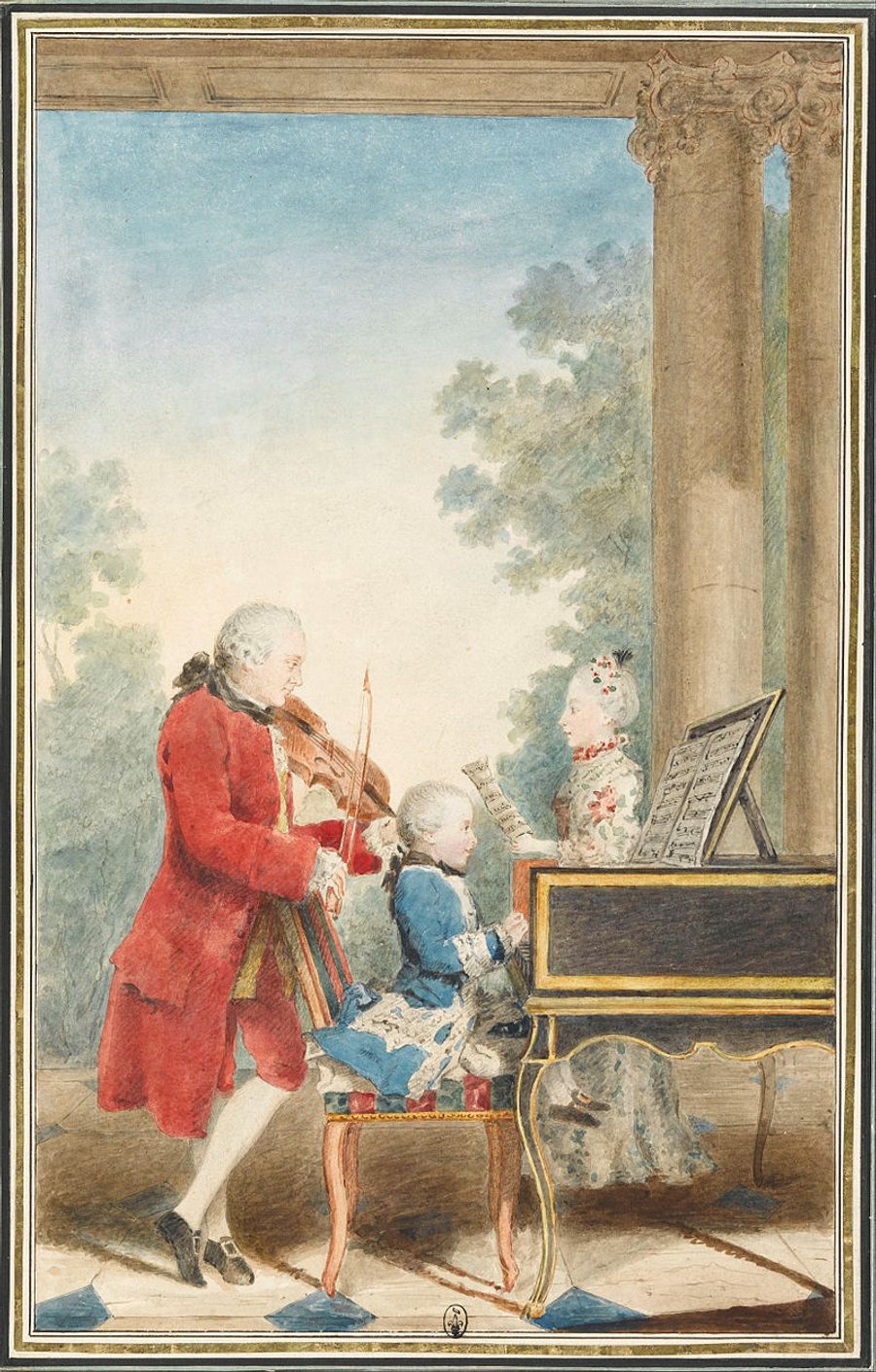
In 1764 the Mozart family was in London as part of the celebrated European tour that brought the child-composer to public attention, with Wolfgang Amadeus Mozart (1756–1791) appearing as both performer and improviser. The Köchel Verzeichnis places this lost four-hand Divertimento in London, 1764–65, during the period when Mozart and his sister Maria Anna (“Nannerl”) were beginning to play together at one keyboard—an unusually novel format for the time [1]. Within that London context, a short C-major entertainment piece for two players would have suited domestic music-making as much as the family’s public demonstrations of precocious skill.
Musical Character
Because no score is extant, specific musical description—movement plan, themes, or formal design—cannot responsibly be reconstructed. What can be said is limited to the catalogue profile: a completed Divertimento in C major for clavier (keyboard) four hands, transmitted as lost [1]. In editorial terms it is best treated as a doubtful or at least insecurely documented attribution, despite its presence in historical listings: without surviving musical text, stylistic verification is impossible, and the title divertimento itself may reflect later cataloguing habit rather than Mozart’s own wording.
Sources
[1] Internationale Stiftung Mozarteum, Köchel-Verzeichnis entry for K. 628 (status, key, dating, transmission).