“Laßt uns mit geschlungnen Händen” (K. 623a) in C major — doubtful final chorus to K. 623
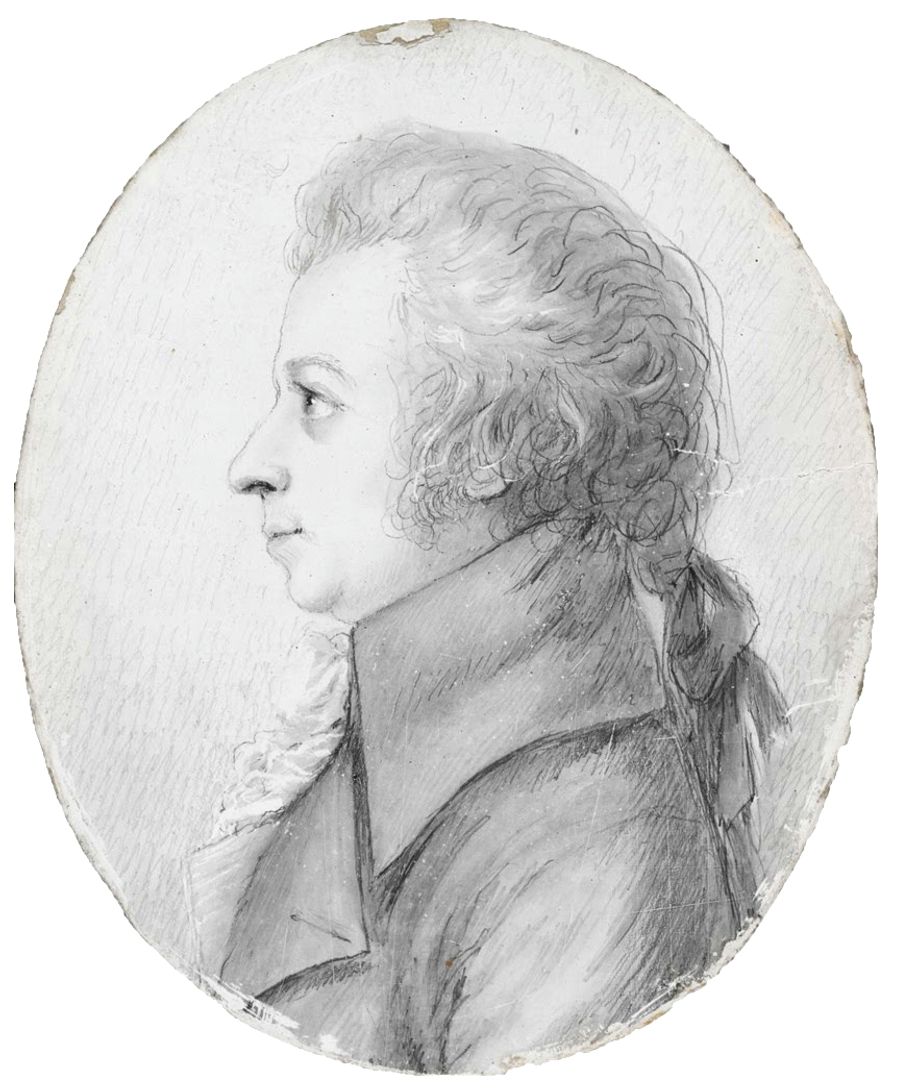
- Köchel Number
- K9 623a | K6 623a
- Genre
- Supplement
- Form
- Supplement
- Key
- C Major
- Date
- November 1791
- Place
- Vienna
- Age
- 35
“Laßt uns mit geschlungnen Händen” (K. 623a) is a short German Masonic song in C major, transmitted in Vienna in 1792 as a bound-in appendix to the first printed edition of Mozart’s Masonic Cantata, K. 623. Although long associated with Mozart’s final year (1791, Vienna), its attribution is disputed, and the New Mozart Edition treats it as a work of doubtful authenticity.
Background and Context
In 1791, Wolfgang Amadeus Mozart (1756–1791) was in Vienna at the height of his late style—writing, among other works, the Masonic Cantata Laut verkünde unsre Freude, K. 623, for the consecration of a new lodge temple on 17 November 1791. The song “Laßt uns mit geschlungnen Händen” (K. 623a) has often been linked with this event as an intended “closing” item, yet the earliest traceable source is not a performance document or autograph, but a posthumous first printed edition of K. 623 issued in Vienna by Joseph Hraschanzky in 1792, into which K. 623a was bound in some copies. It is not included in Mozart’s autograph of K. 623 and was not entered in his own work catalogue—facts that keep the piece at the margins of the securely documented late Mozart. [1]
Musical Character
What survives is a compact, strophic, hymn-like setting in C major for solo voice, male-voice chorus, and keyboard (clavier), the kind of straightforward lodge repertory designed for communal singing rather than virtuoso display. [2] The text projects fraternal union and moral uplift—“joined hands,” friendship, truth, and virtue—aligning with the ethical rhetoric typical of late-18th-century Masonic song culture. 3(https://imslp.org/wiki/Bundeslied%2C_K.623a_%28Mozart%2C_Wolfgang_Amadeus%29
Stylistically, the music’s public, chordal directness can feel compatible with Mozart’s late ceremonial manner; however, modern editorial commentary judges doubts about Mozart’s authorship “fully justified,” and alternative attributions (including Johann Anton Holzer) have been proposed without conclusive documentary proof. [1]
Sources
[1] New Mozart Edition (NMA), Series X/29/3: Works of Dubious Authenticity — editorial discussion of sources and authenticity for KV 623a, including the 1792 Hraschanzky print and the absence from Mozart’s autograph/catalogue.
[2] Köchel Verzeichnis (Mozarteum) work entry for KV 623a (“Zum Schluss der Loge” / “Lasst uns mit geschlungnen Händen”) — scoring and classification as work of doubtful authenticity.
[3] IMSLP work page for “Bundeslied, K. 623a” (alternate title “Lasst uns mit geschlungnen Händen”) — basic catalog data, scoring, and German text as transmitted in editions.