- Köchel Number
- K9 601 | K6 601
- Genre
- Orchestral Music
- Form
- Dances & Marches
- Date
- 5 February 1791
- Place
- Vienna
- Age
- 35
Mozart’s 4 Minuets (K. 601) are a compact set of orchestral dance pieces, composed in Vienna on 5 February 1791, in the final year of his life. Written for practical social performance rather than the concert hall, they nevertheless distill late-style finesse—especially in their brisk thematic turns, clean orchestral balances, and the elegant economy with which Mozart can make “small” music sound fully finished.
Background and Context
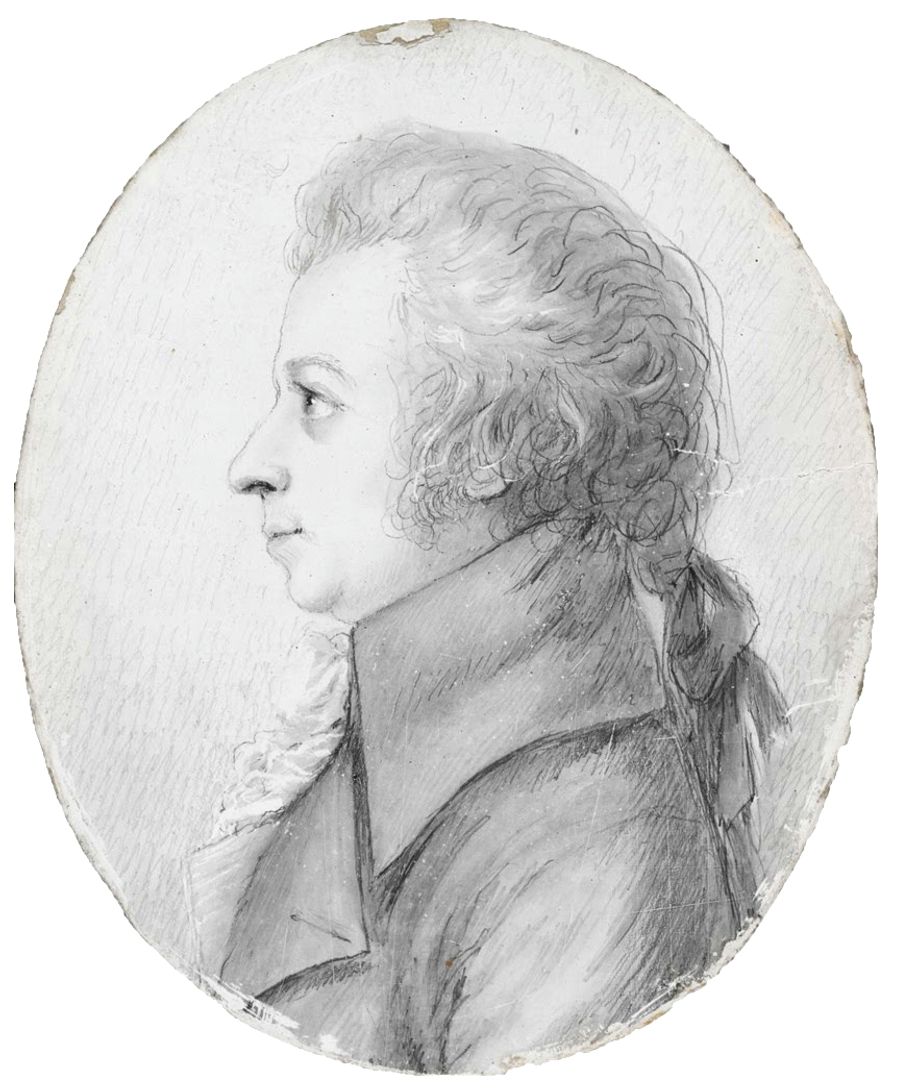
In early 1791 Wolfgang Amadeus Mozart (1756–1791) was thirty-five, living in Vienna, and—despite the myth of an uninterrupted “late masterpiece” trajectory—still working in a mixed economy of genres. Alongside large commissions and theatrical plans, he continued to supply the city’s appetite for functional entertainment music: dances, contredanses, and minuets intended for public balls and courtly-social occasions.
The 4 Minuets (K. 601) belong to a tight cluster of dance collections Mozart produced in January and February 1791, including the 6 Minuets K. 599 and the 2 Minuets K. 604, as well as several sets of German dances (notably K. 600, K. 602, K. 605). These works remind us that Mozart’s Viennese career was not only about operas and concertos; it also involved writing music that had to “work” immediately—rhythmically clear, playable by available forces, and attractive on first hearing.
Why do these pieces deserve attention today? Precisely because they show Mozart’s late craft in miniature. In a minuet, there is little space for developmental argument; distinction must come from proportion, orchestral color, and a sense of character—areas where Mozart’s imagination remains startlingly fresh even under practical constraints.
Composition and Premiere
K. 601 is dated 5 February 1791 and located in Vienna in modern catalogues. That same day Mozart also completed other dance sets (including K. 602 and K. 603), suggesting a concentrated bout of “production” aimed at immediate seasonal use. The dating of K. 601 within this February 1791 dance sequence is corroborated by catalog listings that place it alongside K. 599 (23 January 1791) and K. 604 (12 February 1791). [1] [2]
Documentation for a single “premiere” is typically thin for such functional dance music: minuets were often played as part of a larger evening’s sequence, not announced as standalone concert items. What matters musically is that these four pieces are conceived as orchestral dances (not merely keyboard miniatures), shaped for ensemble articulation and color.
Instrumentation
Sources describe K. 601 as orchestral minuets. The scoring circulated in several practical guises in the late eighteenth and nineteenth centuries (a normal situation for dance repertory), but catalog and rental listings point to a Classical orchestra with winds and brass rather than strings alone.
A representative orchestral roster, as given in orchestra-catalog listings for Minuets, Four, K. 601, is:
- Woodwinds: 2 flutes, 2 oboes, 2 bassoons
- Brass: 2 horns, 2 trumpets
- Strings: violins I & II, viola, cello, double bass
(Orchestra catalog metadata often compresses this into a numeric “set” format; the practical takeaway is that Mozart is writing for the full, festive dance-band palette available in Vienna.) [3]
Even in a genre associated with polite uniformity, this kind of instrumentation matters: trumpets brighten cadences and lend ceremonial weight; bassoons reinforce the bass line with a reedy clarity that helps dancers feel the beat; winds, used sparingly, can make a trio or reprise register as a new “scene.”
Form and Musical Character
Each minuet typically follows the period’s standard dance design:
- Minuet: two repeated sections
- Trio: contrasting middle (often lighter in scoring or more pastoral in tone)
- Da capo: return of the minuet (usually without written-out repeats)
Within that shared template, Mozart’s individuality is heard in how quickly he can establish a profile. A minuet theme must be memorable but not disruptive; the best ones imply a personality—courtly, rustic, sly, affectionate—while staying metrically reliable.
Across K. 601 as a set, listeners can focus on three hallmarks of Mozart’s late dance writing:
1. Economy with bite. Mozart often builds phrases from small, speakable motives—little turns, arpeggiations, upbeat figures—that feel inevitable. The art lies in placing them so the ear perceives balance rather than banality. 2. Cadential theater. Even simple dominants and tonic returns can feel like “events” when orchestral color is timed well: a wind answering phrase, a brass-lit arrival, or a sudden thinning of texture before a cadence. 3. Trio as character shift. The trio is rarely “bigger”; it is different. In late eighteenth-century practice it might lean more rustic (ländler-like), more legato, or more transparent, offering dancers a change of atmosphere before the familiar minuet returns.
In short, K. 601 is not “symphonic” in argument, but it is symphonic in discipline: the music wastes nothing, and the orchestration is chosen for clarity and effect.
Reception and Legacy
Mozart’s orchestral dances have lived a double life. Historically, they were made to be used—played at balls, adapted to varying ensembles, and replaced when fashions shifted. That very practicality helped them survive in print and arrangement: K. 601 appears in collected issues of Mozart minuets and in modern score libraries and catalogues, often grouped with K. 599 and K. 604 as part of the same 1791 Viennese dance tranche. [1]
In the modern concert world, these pieces are understandably overshadowed by the monumental late works of 1791 (La clemenza di Tito, Die Zauberflöte, the Clarinet Concerto). Yet K. 601 repays attention in two ways. First, it clarifies Mozart’s working reality: a late Viennese month could include both high art and high-function craft. Second, it demonstrates how much expressive meaning Mozart could embed in a “minor” genre. Hearing these minuets as orchestral miniatures—rather than as background antiques—restores their original point: they are designed to move bodies, yes, but also to delight ears with poise, color, and wit.
Sources
[1] IMSLP: Zwölf Menuette, K.599, 601, 604 (includes dating context for K. 601 within the 1791 minuet sets).
[2] IMSLP: Pml/Legge Mozart catalogue (listing K. 601 as 4 Minuets for Orchestra, dated 5 February 1791, Vienna).
[3] Luck’s Music Library Orchestra Catalog PDF (catalog entry for “Minuets, Four, K-601” with orchestral set/instrumentation shorthand).