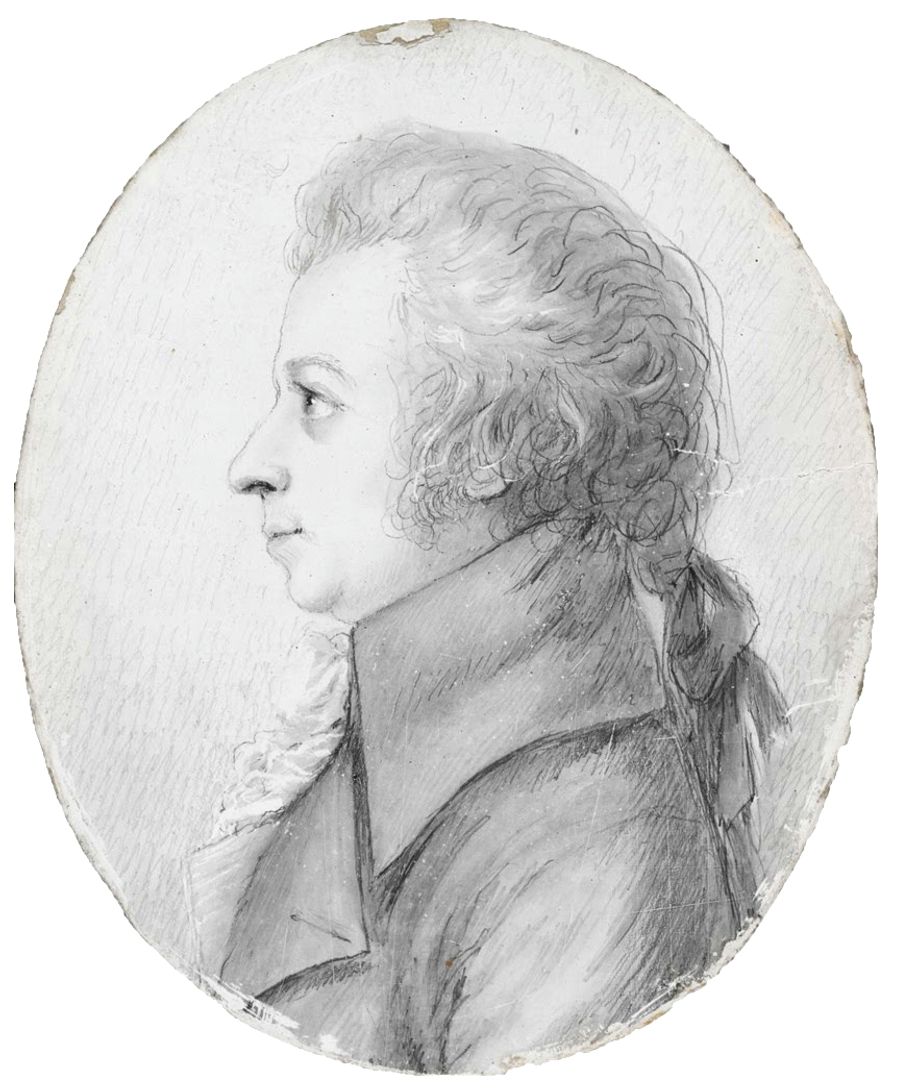
- Köchel Number
- K9 568 | K6 568
- Genre
- Orchestral Music
- Form
- Dances & Marches
- Key
- C Major
- Date
- 24 December 1788
- Place
- Vienna
- Age
- 32
Mozart’s 12 Minuets (K. 568) are a compact set of orchestral dance pieces written in Vienna in 1788, when the composer was 32. Though designed for social function rather than the concert hall, they show Mozart treating “occasional” music with the same clarity of line and ear for color that animates his greatest works.
Background and Context
Vienna in the late 1780s demanded dance music with a regularity that can be hard to imagine from a modern concert perspective. Alongside operas, chamber works, and symphonies, Wolfgang Amadeus Mozart (1756–1791) supplied minuets, German dances, and contredanses for courtly and public festivities—music intended to be used (for dancing, for procession, for ceremonial display), yet capable of delighting listeners who were not on the floor.
The 12 Minuets in C major, K. 568 belong to this practical world. They are not a single continuous “work” in the symphonic sense, but a grouped sequence of brief movements—each typically a minuet with a contrasting trio section—designed to be selected, reordered, and repeated as needed. Their relative obscurity today says more about changing musical habits than about their craftsmanship: they are miniature essays in balance, scoring, and the art of creating variety within strict time and phrase constraints.
Composition and Premiere
K. 568 is securely placed in Mozart’s Vienna year of 1788 1. The International Mozarteum Foundation’s Köchel catalogue entry identifies the set as Zwölf Menuette (Twelve Minuets) and preserves the original scoring as transmitted in sources and cataloguing tradition 2. A precise premiere date is not firmly established in the way it is for Mozart’s subscription concerts or opera openings; dance sets of this kind typically entered performance as part of court or civic events rather than as standalone “first performances.” In that sense, K. 568 represents one of Mozart’s most direct points of contact with the everyday musical life of his city—music written to be immediately serviceable.
Instrumentation
One reason K. 568 deserves attention is its full, festive orchestral palette—far beyond what one might expect from the label “minuet.” The scoring is given in the Mozarteum catalogue (including the characteristic clarini—high natural trumpets—plus timpani) 2, and it is mirrored in modern reference presentations of the score 3.
- Winds: piccolo, 2 flutes, 2 oboes, 2 clarinets, 2 bassoons 3
- Brass: 2 horns, 2 trumpets (clarini) 23
- Percussion: timpani 23
- Strings: violins I & II, viola, cello, double bass (basso/continuo line as the foundation) 2
This is “dance music” that can sound ceremonial and orchestral in the grand manner—music that can project across a large room, articulate rhythm for dancers, and still offer quick flashes of instrumental personality.
Form and Musical Character
Each individual number is concise, but the set as a whole offers a gallery of solutions to a single problem: how to keep a triple-meter court dance fresh across multiple successive pieces.
The minuet as a flexible Viennese genre
The classical minuet typically unfolds in balanced phrases (often four- and eight-bar units), with clear cadences and a strong sense of periodic design. In performance practice, the trio provides contrast (lighter scoring, different register, a change in instrumental “center of gravity”), after which the minuet returns—an architectural simplicity that invites subtle invention.
Within that frame, Mozart varies:
- Orchestral color: shifting which instruments “speak first,” and how the winds comment on, double, or compete with strings.
- Texture: from unison/parallel writing that sharpens rhythmic definition to more conversational scoring that suggests chamber music within an orchestral body.
- Accent and lift: tiny rhythmic displacements and upbeat figures that keep the dance buoyant without disturbing its courtly poise.
Why these minuets sound “bigger” than their size
Modern listeners often meet Mozart’s dance music through arrangements or isolated excerpts, which can flatten its purpose. Heard as orchestral pieces, K. 568 shows Mozart using bright public sonorities—notably trumpets and timpani—to give even short forms a sense of occasion 23. The effect is not symphonic development, but a kind of rhetorical projection: each minuet makes its point quickly, with a clear profile and a decisive cadence.
The sequence also illustrates a broader Mozartian habit: even when writing utilitarian music, he avoids mere formula. The variety across twelve numbers is itself a compositional achievement—one that rewards attentive listening in the same way that a set of well-cut epigrams can, each turning similar materials toward a slightly different expressive end.
Reception and Legacy
K. 568 has never occupied the canonical place of Mozart’s late symphonies or concertos, yet it persists in the repertoire as part of the larger body of his dances and marches—music that performers and historians increasingly value as evidence of how Vienna actually sounded in Mozart’s day. The survival and circulation of the work in printed editions and public-domain archives has also encouraged later re-scoring and adaptation, a typical fate for dance collections designed for flexible use 3.
In the end, the set’s significance is twofold. Historically, it reflects Mozart’s participation in a living Viennese tradition of orchestral dance music; aesthetically, it shows how much grace, wit, and instrumental imagination he could compress into a minute or two of impeccably turned triple time. K. 568 may not be “famous,” but it is unmistakably Mozart: social music elevated by compositional intelligence.
Sources
[1] Wikipedia (Köchel catalogue) entry listing K. 568 as “12 Minuets,” dated 24 December 1788, Vienna, age 32.
[2] International Mozarteum Foundation, Köchel Verzeichnis: KV 568 “Twelve minuets” (catalogue entry and original scoring line).
[3] IMSLP work page for *12 Minuets, K. 568* (general info and instrumentation details).