Mozart’s “Symphony No. 37” in G major — the K. Anh.A 53 Introduction to Michael Haydn’s Symphony No. 25
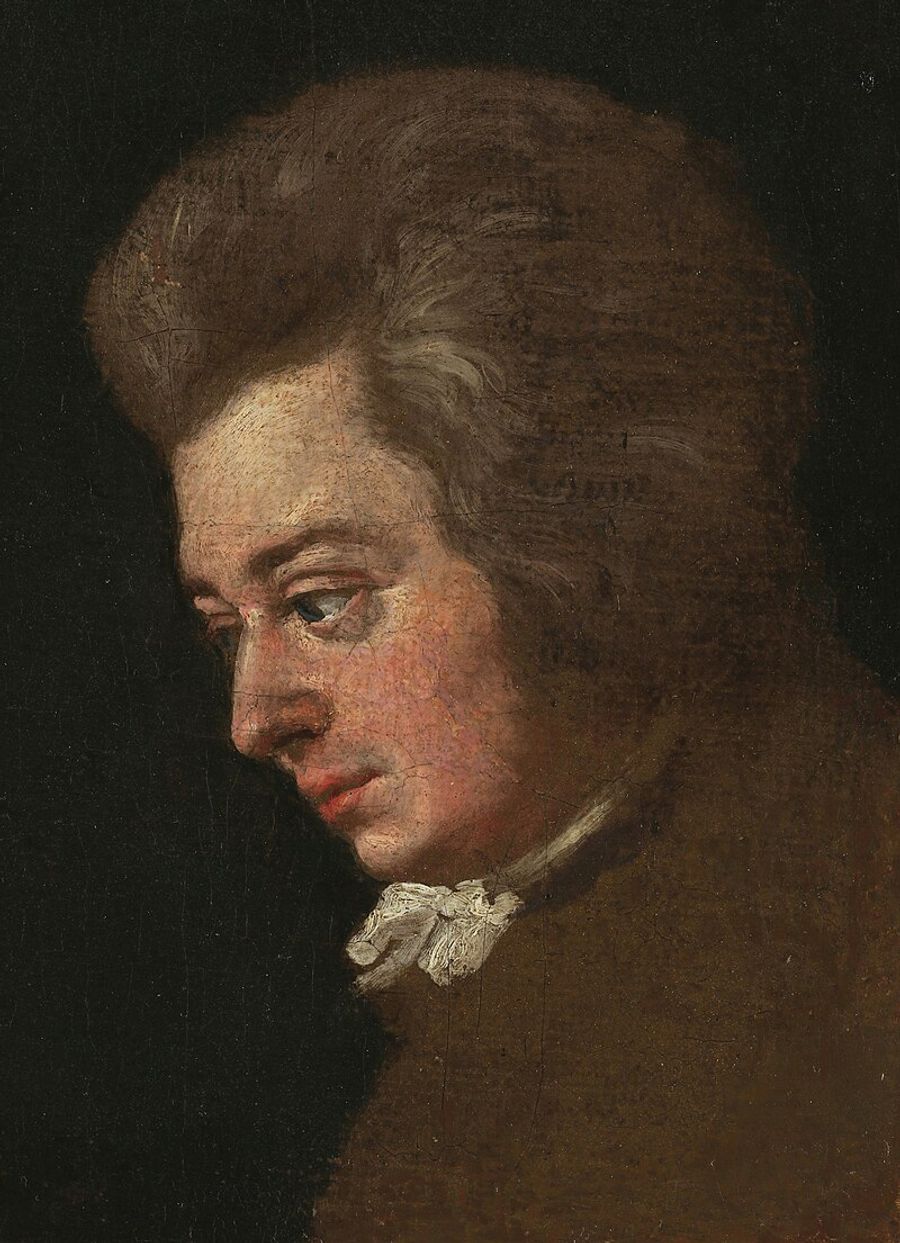
- Köchel Number
- K9 Anh.A 53 | K6 425a
- Genre
- Orchestral Music
- Form
- Symphonies
- Key
- G Major
- Date
- Late 1783–1784
- Place
- Vienna
- Age
- 27
Mozart’s so‑called Symphony No. 37 in G major (K. Anh.A 53) is, in modern scholarship, not a “lost” symphony at all, but a fascinating hybrid: a short slow introduction by Mozart (written in 1783) prefixed to a full symphony by Michael Haydn (MH 334/Perger 16). Heard complete, it offers a rare glimpse of how music circulated, was copied, repurposed, and—sometimes—misattributed in the late 18th century.
Background and Context
The work long printed and performed as Mozart’s Symphony No. 37 in G major survives as a reminder that Classical-era repertory was not always transmitted under the tidy conditions modern listeners expect. After Mozart’s death, a symphony score found among his papers was catalogued as his (it entered the Köchel catalogue and was numbered “37” in older Mozart symphony lists), yet later scholarship showed that the three principal movements are in fact Michael Haydn’s Symphony No. 25 in G major (MH 334/Perger 16), completed in 1783. Mozart’s authentic contribution is a brief, stately slow introduction—an Adagio maestoso—which he composed to precede Haydn’s opening Allegro.[1])[2])
That this combination still merits attention is not merely as a bibliographic curiosity. It highlights Mozart’s esteem for Michael Haydn (Joseph Haydn’s younger brother and a leading Salzburg composer) and illustrates a practical, performance-minded aspect of Mozart’s musical life in the early Vienna years: selecting existing orchestral works, preparing parts, and tailoring a program with an added movement that frames the whole. The result is a compelling “threshold” piece—twenty-odd bars of Mozartian ceremonial rhetoric that changes the listener’s point of entry into Haydn’s symphony.[3]
Composition and Premiere
Mozart wrote the Adagio maestoso introduction in Vienna in 1783 (Mozart was 27). In the Köchel catalogue it is now placed among doubtful/spurious items as K. Anh.A 53, precisely because it is not an independent four-movement Mozart symphony but an addition to another composer’s work.[4]
The remaining movements belong to Michael Haydn’s G‑major symphony (MH 334), dated 23 May 1783.[2]) In older Mozart cataloguing and editions, the combined work appears under Mozart’s symphony numbering (hence “No. 37”), an attribution overturned by later source study (commonly associated with the Michael Haydn cataloguer Lothar Perger, who clarified the authorship in the early 20th century).[1])
In practical terms, performers today usually encounter the piece in one of two ways: either as Michael Haydn’s symphony alone, or as Haydn’s symphony preceded by Mozart’s introduction (the historically influential “No. 37” configuration). IMSLP’s publication history usefully documents how long the combined version circulated under Mozart’s name.[5])
Instrumentation
Because Mozart’s contribution is an introduction intended to dovetail with Haydn’s first movement, it uses the same Classical orchestra as the underlying symphony.
- Winds: 2 oboes
- Brass: 2 horns
- Strings: violins I & II, viola, cello, double bass
This “lean” scoring is characteristic of many early-1780s Salzburg/Vienna symphonies: flexible for court and civic ensembles, bright in outdoor or ceremonial contexts (horns), and clear enough for intricate string writing without the heavier sonorities of trumpets and timpani.[1])
Form and Musical Character
Heard as traditionally performed (Mozart + Haydn), the work consists of four movements—though only the first, slow preface is by Mozart.
- I. Adagio maestoso (Mozart introduction, K. Anh.A 53)
- II. Allegro con spirito (Michael Haydn)
- III. Andante (Michael Haydn)
- IV. Finale: Presto (Michael Haydn)[1])[2])
I. Adagio maestoso — Mozart’s frame
Mozart’s introduction is brief (around 20 measures in modern descriptions) but highly “public” in tone: block harmonies, dotted rhythms, and a rhetorical pacing that signals entry into a substantial orchestral argument rather than the more immediate curtain-raising typical of many mid-century symphony openings.[3]
What makes it distinctive is its dramaturgy. Mozart does not merely provide a neutral slow tempo; he creates an atmosphere of expectancy—an overture-like threshold—so that Haydn’s Allegro con spirito arrives as a release of accumulated tension. Even for listeners who know the authorship, the ear registers a subtle shift of accent: Mozart’s slow introduction suggests Viennese concert grandeur, while Haydn’s subsequent movement speaks in the more directly “symphonic” dialect of Salzburg.
II–IV. Michael Haydn’s symphony (with Mozart’s gateway)
Michael Haydn’s Allegro con spirito is the real first movement: energetic and classically balanced, with a thematic economy that suits the modest orchestra. The Andante offers contrast through lyricism and transparent string writing, while the Presto finale brings concise brilliance rather than extended development—an ending that works especially well after Mozart’s weighty opening gesture.[2])
In sum, the combined piece can be enjoyed on two levels at once: as a fine Michael Haydn symphony (still underperformed compared to the mainstream Viennese canon), and as a mini-case study in Mozart’s ability to characterize a work with just a few bars—an art he also practiced in opera introductions and in slow introductions to later concert works.
Reception and Legacy
The “Symphony No. 37” story is essentially a reception history in miniature. For decades the symphony’s presence among Mozart materials encouraged the assumption of Mozartian authorship; editions and recordings reinforced that belief, and the number “37” stuck in concert programming.[1])
Modern cataloguing corrects the record by identifying Mozart’s true contribution as the Adagio maestoso introduction and assigning the rest decisively to Michael Haydn.[4] Yet the piece’s continuing life—often still performed with Mozart’s introduction attached—suggests that the hybrid has an aesthetic logic of its own. Mozart’s added opening is not a mere appendage: it changes the symphony’s first impression, lending a touch of ceremonial gravity and a sense of occasion that listeners readily accept as a satisfying “way in.”
For Mozart’s output, K. Anh.A 53 occupies an unusual but revealing corner: it is neither a youthful symphony nor a mature Viennese masterpiece, but a glimpse of Mozart as editor, arranger, and pragmatic concert musician—someone who could honor another composer’s work while subtly reframing its rhetoric. For Michael Haydn, the episode is a backhanded compliment: his symphony was good enough to travel under Mozart’s name, and strong enough to hold the stage even after the authorship was set right.
Sources
[1] Wikipedia — overview of the misattributed 'Mozart' Symphony No. 37 in G major and the modern attribution to Michael Haydn with Mozart’s introduction
[2] Wikipedia — Michael Haydn: Symphony No. 25 in G major (MH 334/Perger 16), including date and relationship to Mozart’s introduction
[3] Digital Mozart Edition (Mozarteum) — Neue Mozart-Ausgabe, Series X Supplement, preface PDF containing editorial notes on KV6 Anh.A 53 and the short introduction
[4] Köchel-Verzeichnis (Mozarteum Salzburg) — catalogue entry for the Michael Haydn symphony in G (MH 334) linked with Mozart’s K. Anh.A 53 context
[5] IMSLP — Michael Haydn Symphony No. 25 (MH 334): publication notes and long history of circulation as a Mozart symphony with Mozart’s introduction