Trio for Soprano, Tenor and Bass in G major, “Liebes Manndel, wo ist’s Bandel?”, K. 441 (“Das Bandel”)
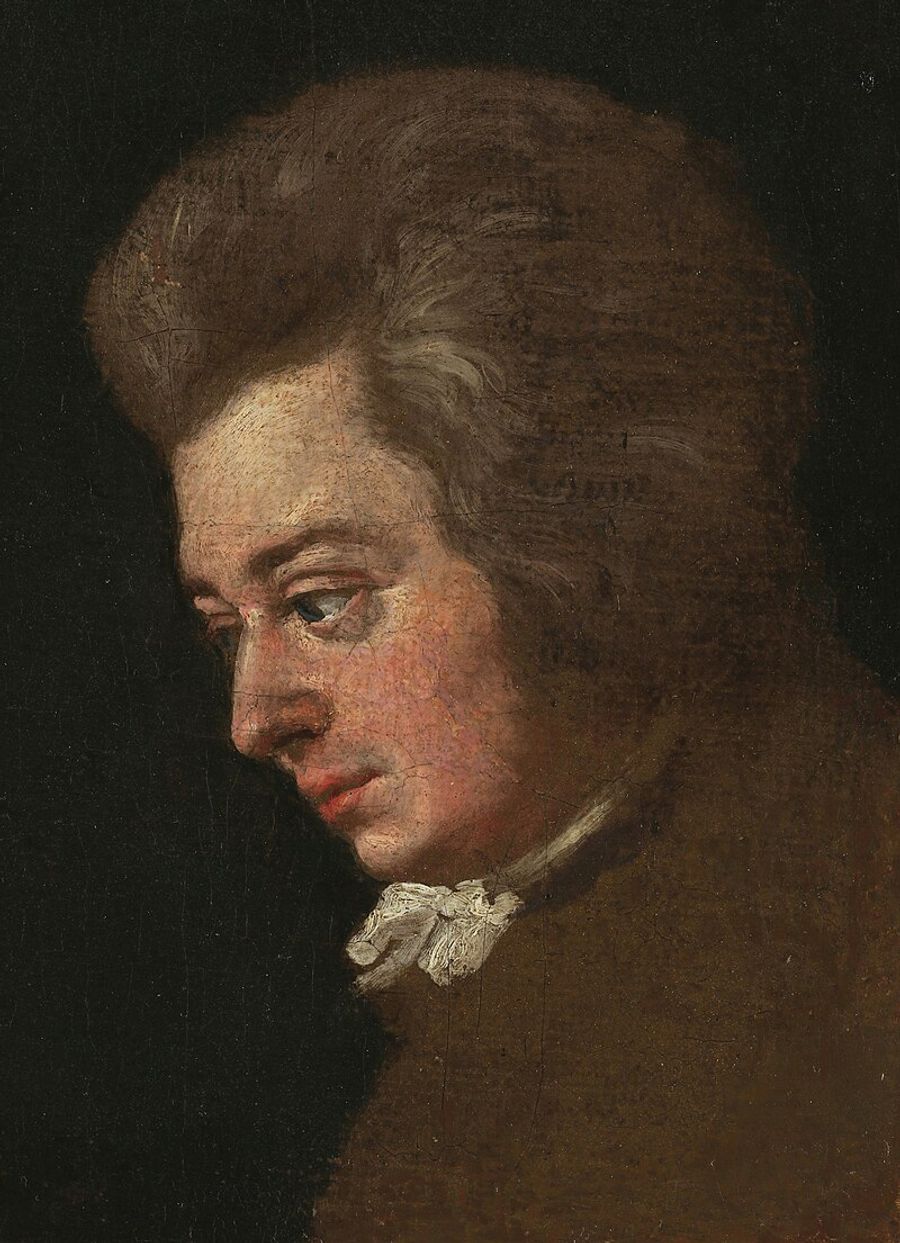
- Köchel Number
- K9 441 | K6 441
- Genre
- Vocal Music
- Form
- Notturni & Polyphonic Works
- Key
- G Major
- Date
- 1783
- Place
- Vienna
- Age
- 30
Mozart’s “Liebes Manndel, wo ist’s Bandel?” (K. 441) is a small-scale secular trio in G major, probably composed in Vienna in 1786, that turns a domestic mishap into chamber comedy. Though modest in scope, it shows Mozart’s gift for characterful vocal writing and conversational ensemble texture in miniature.
Background and Context
In Mozart’s Vienna, music-making at home—among friends, after dinner, or in the salon—was not a separate “minor” sphere so much as an extension of social life. “Liebes Manndel, wo ist’s Bandel?” (K. 441), also known as “Das Bandel” (“The Ribbon”), belongs to this intimate world: a humorous terzet (Terzett, a trio for voices) for soprano, tenor, and bass with string accompaniment (two violins, viola, and bass). The Köchel catalogue classifies it among Mozart’s part-songs and small vocal ensembles, a group largely associated with private Viennese occasions rather than the theatre or church.[1]
Later tradition attached the piece to an anecdote in which Constanze Mozart cannot find a ribbon (hatband) while the couple are dressing to go out; their friend Gottfried von Jacquin joins the banter, and the three “celebrate” the ribbon’s rediscovery in song. While the story survives in posthumous print culture, its very plausibility captures the genre: a comic snapshot designed for performance by a specific circle rather than for public posterity.[2] Indeed, the work’s vocal designations in some sources—Constanze (soprano), Mozart (tenor), and Jacquin (bass)—underline its social specificity.[3]
Dating is a small scholarly puzzle. The Internationale Stiftung Mozarteum’s Köchel entry places the work across 1786–1787, and it is often linked to Vienna as its natural habitat.[1] Earlier attributions to 1783 circulated for a long time, but paper studies associated with Alan Tyson have been used to argue for 1786—fitting the piece neatly into Mozart’s extraordinarily busy year of Le nozze di Figaro and the great Vienna piano concertos, while reminding us that not every inspired page was destined for the big stage.[3]
Text and Composition
The text is in Viennese dialect German, and Mozart is frequently named as its author—another sign of a work made “inside” a friendship circle rather than commissioned from a professional poet.[1] The very title phrase (roughly, “Dear husband, where is the ribbon?”) frames the piece as spoken theatre: a call across the room rather than a formal lyric.
Surviving sources indicate an accompanied version (strings, with later keyboard reductions in circulation). Modern access to the score—through archival and collected-edition pathways—reinforces its status as a small but “real” work with a transmission history: the piece appears in scholarly editions and is available in public-domain scans, including the Neue Mozart-Ausgabe materials and earlier collected editions.[4])
Musical Character
What makes K. 441 worth attention is how expertly Mozart compresses dramatic ensemble thinking into a few minutes. Rather than treating the three voices as a blended chorale, he writes them as agents in dialogue: quick exchanges, overlapping entrances, and moments where one part comments while another drives the action—techniques familiar from opera buffa ensembles, translated into a domestic key.
The scoring for soprano, tenor, and bass is also telling. It provides a full vocal spectrum, enabling Mozart to suggest character contrasts (bright upper voice, mediating tenor, grounded bass) with minimal means. In performance, the humor often lies not in “jokes” on the page but in timing: conversational rhythms, emphatic repetitions, and the affectionate escalation from everyday problem to mock-heroic conclusion.
Within Mozart’s broader output, “Das Bandel” sits alongside canons, part-songs, and notturno-style miniatures that illuminate his Viennese social networks. These works show a composer who did not reserve invention for public masterpieces: even a lost ribbon could become an occasion for deft vocal counterpoint, theatrical pacing, and the unmistakable Mozartean instinct for making speech sing.
Sources
[1] Internationale Stiftung Mozarteum, Köchel catalogue entry for KV 441 (“Das Bandel”): dating, key, genre grouping, and basic work data.
[2] Boston Baroque program note (Martin Pearlman) describing the traditional anecdote and intended voice roles; notes strings accompaniment and comic purpose.
[3] Wikipedia article summarizing the work, including the Viennese-dialect text, designated voice roles, and the Tyson paper-based dating argument toward 1786.
[4] IMSLP work page for *Das Bandel*, K. 441: score availability, instrumentation notes, and publication/edition references (including NMA materials).