“Del gran regno delle amazzone” (K. 434): Mozart’s Unfinished Terzet from a Lost Italian Stage Project
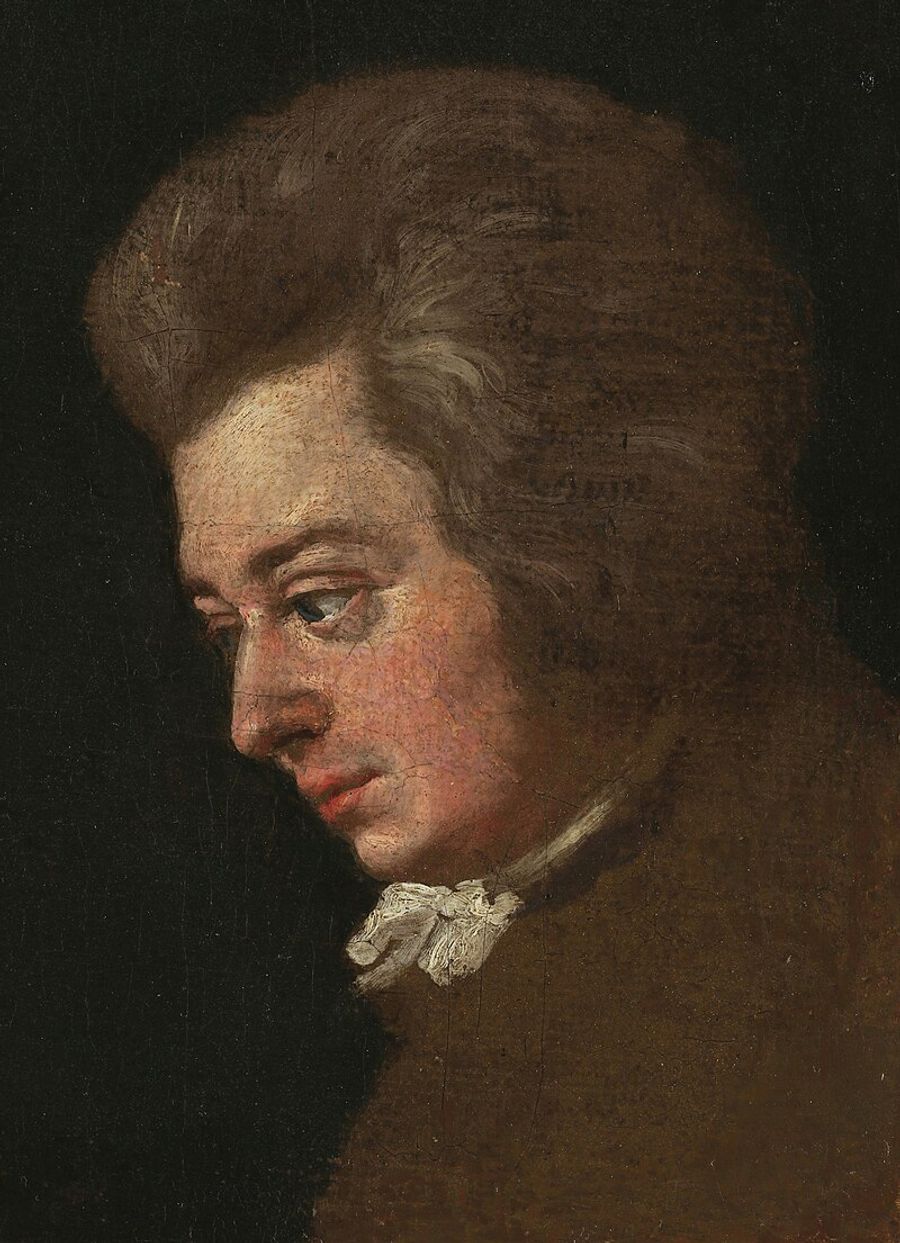
- Köchel Number
- K9 434 | K6 480b
- Genre
- Opera & Stage Music
- Form
- Arias, Scenes, Ensembles & Choirs
- Date
- Late 1785
- Place
- Vienna
- Age
- 29
Mozart’s “Del gran regno delle amazzone” (K. 434; also catalogued as K.⁶ 480b) is an unfinished Italian ensemble from Vienna, drafted in 1785–86 and preserved only in fragmentary form. Scored unusually for tenor, two basses, and orchestra, it offers a tantalizing glimpse of Mozart’s theatrical instincts at age 29—compressed into a standalone number that never reached a complete stage context.
Background and Context
Vienna in the mid-1780s was Mozart’s most fertile theatrical environment: between commissions, benefit concerts, and the city’s constant appetite for Italianate stage entertainment, a composer could find himself drafting numbers for projects that later vanished, were altered, or simply stalled. “Del gran regno delle amazzone” (K. 434) belongs to that shadow world of Viennese theatre—authentic Mozart, transmitted in sources, yet explicitly uncompleted in the Köchel catalogue maintained by the Internationale Stiftung Mozarteum.[1]
What survives is identified in the New Mozart Edition’s online catalogue of fragments as a terzet for tenor, two basses and orchestra, confirming that this is not a conventional concert aria but a dramatic ensemble number—music that presupposes characters, situation, and onstage interplay.[2] Its text is attributed to Giuseppe Petrosellini, a prominent Italian librettist of the period; the Mozarteum catalogue links the words to Il regno delle amazzoni (Act I, Scene 1), hinting at a specific theatrical source even if the larger work is not part of Mozart’s finished operatic canon.[1]
Text and Composition
The opening line—“Del gran regno delle amazzone” (“Of the great kingdom of the Amazons”)—immediately places the scene in the 18th-century taste for exotic or pseudo-mythological settings, the same imaginative territory that comic opera often used to sharpen satire, disguise social critique, or simply provide theatrical color. In the Mozarteum catalogue, the work’s sources include an autograph score dated 1785, and the entry also points to a related sketch (Skb 1785b/02), suggesting Mozart tested ideas for the number as part of a broader drafting process.[1][3]
Although your catalog data lists the key as “N/A,” the surviving musical sources commonly identify the fragment as B♭ major.[4] This aligns well with Mozart’s frequent use of B♭ major for music that can project warmth and public brightness—useful traits for an opening scene or a number designed to establish a theatrical world quickly.
Instrumentation (as transmitted)
- Winds: 2 oboes, 2 clarinets, 2 bassoons[1]
- Strings: violins I & II, viola, cello & double bass[1]
- Voices: tenor, bass I, bass II[2]
Musical Character
Even as a fragment, “Del gran regno delle amazzone” is distinctive for its voice-type dramaturgy. A tenor matched against two basses is an inherently theatrical setup: it encourages contrasts of register and authority, and it invites comic or confrontational dialogue (whether the tenor is outnumbered, negotiated with, or tested by the bass pair). Mozart repeatedly exploited such vocal casting for characterization in ensembles; here, the scoring suggests a miniature stage situation built into the sound itself, rather than an aria meant simply for display.
The orchestration is also telling. The inclusion of clarinets—by the mid-1780s increasingly central to Vienna’s orchestral palette—places the piece firmly within Mozart’s mature sound world and gives the ensemble a darker, rounder middle color than oboes alone would provide.[1] That matters in a terzet, where clarity of text must coexist with blended timbre; clarinets can both support vocal lines and soften the edges of a busy texture.
Why does the piece deserve attention today? Precisely because it is incomplete: it reveals Mozart in process, drafting dramatic music for a specific theatrical premise and voice combination, then leaving us with an unfinished but highly suggestive artifact. In a year otherwise dominated (in the public imagination) by piano concertos and the steady march toward Le nozze di Figaro, K. 434 reminds listeners that Mozart’s Viennese theatre work was not only the sequence of famous operas. It also included experiments, commissions, and aborted starts—smaller dramatic forms in which his operatic imagination could flare up in just a few pages.[2]
Sources
[1] Internationale Stiftung Mozarteum (Köchel catalogue): K. 434 entry with authenticity status, dating, key, instrumentation, sources, and text author attribution.
[2] Digital Mozart Edition (Neue Mozart-Ausgabe online): Table of contents for NMA X/30/4 (Fragments), listing K. 434 as a terzet for tenor, two basses and orchestra.
[3] Internationale Stiftung Mozarteum (Köchel catalogue): Skb 1785b/02 sketch entry linked to K. 434 (facsimile/transcription metadata).
[4] IMSLP: work page for “Del gran regno delle amazoni” K. 434/K.⁶ 480b, including key (B♭ major), fragment status, and instrumentation details as catalogued on the page.