String Quartet No. 15 in D minor, K. 421 — Mozart’s ‘Haydn’ Quartet in a tragic key
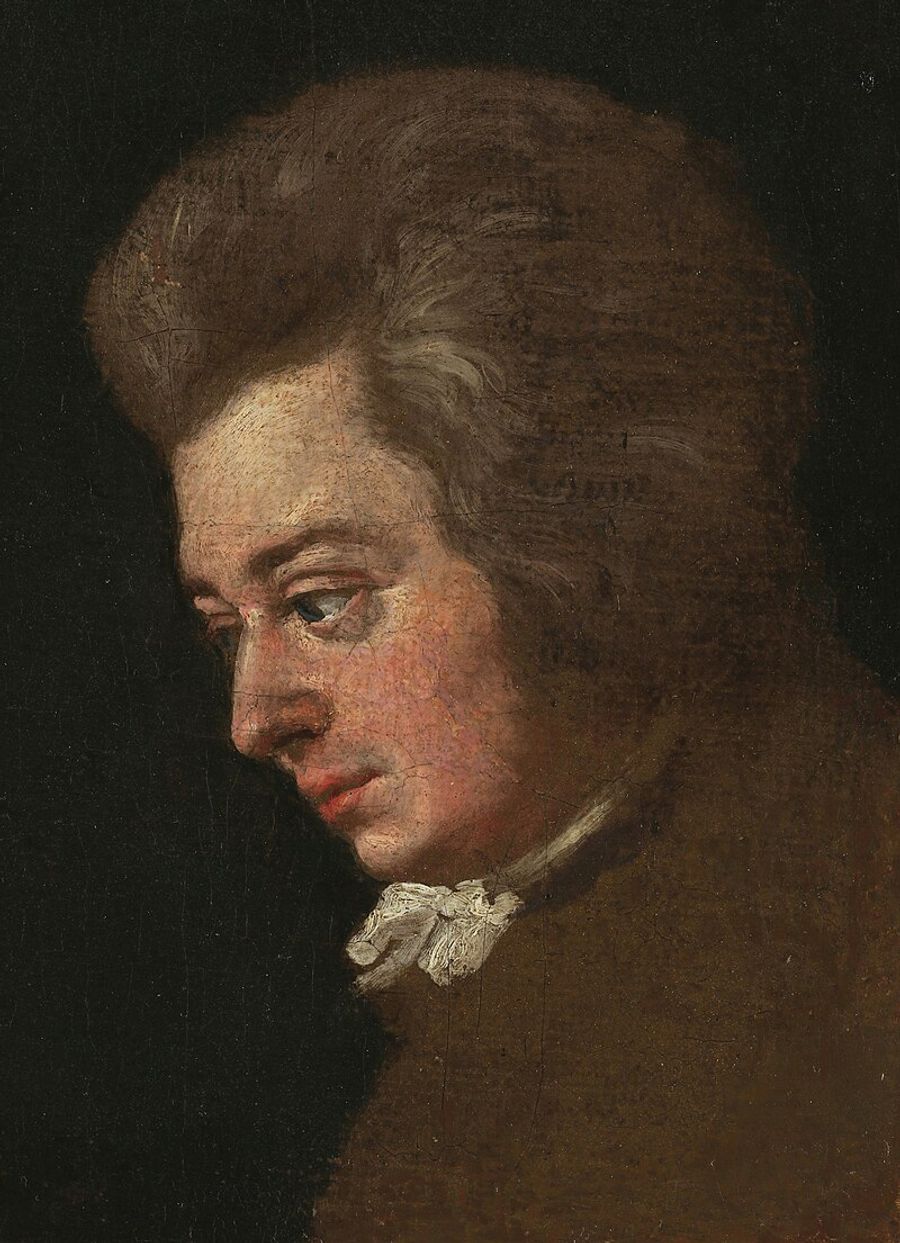
- Köchel Number
- K9 421 | K6 417b
- Genre
- Chamber Music
- Form
- String Quartets & Wind Quartets
- Key
- D Minor
- Date
- June 1783
- Place
- Vienna
- Age
- 27
Mozart’s String Quartet No. 15 in D minor, K. 421 (1783) is the only minor-key work in the set of six quartets he later dedicated to Joseph Haydn, and it remains one of his most searching essays in chamber music. Written in Vienna when Mozart was 27, it fuses Haydn-like contrapuntal discipline with a distinctly operatic intensity—music that sounds less like salon entertainment than like drama without words.
Background and Context
When Wolfgang Amadeus Mozart (1756–1791) settled into Viennese life in the early 1780s, he found himself at the center of a city that treated chamber music not merely as diversion, but as a kind of connoisseur’s sport: a place where experienced amateurs and professionals read difficult quartets at home and judged—quickly—whether a composer truly understood the genre’s “conversation.” The six string quartets Mozart wrote between late 1782 and 1785 (K. 387, 421, 428, 458, 464, 465) belong to this world, but they also stand slightly apart from it: they are ambitious works of study, experiment, and artistic self-fashioning, cultivated in the presence of Joseph Haydn (1732–1809), whose Op. 33 quartets had effectively reset the terms of the genre a decade earlier.[1]
K. 421 is the set’s dark exception. D minor is one of Mozart’s most rhetorically charged keys—often reserved for music with a public, even “tragic” profile (one thinks of the later Piano Concerto No. 20, K. 466, or the Requiem, K. 626). In a string quartet, however, the key carries a different kind of force: the intensity is not amplified by winds, trumpets, or timpani, but concentrated into four individual lines that must persuade purely through their dialogue. K. 421’s drama is therefore intimate rather than monumental—closer to a tense stage scene than to a symphonic storm.
An additional layer of human texture comes from a late anecdote, reported by Constanze Mozart to Vincent and Mary Novello during their Mozart “pilgrimage” in 1829: she claimed that Mozart wrote this quartet while she was in labour with their first child, Raimund Leopold, born on 17 June 1783.[2] Whether one takes this literally or as a memory shaped by family storytelling, the tale has proved irresistible—not because it “explains” the music, but because it frames K. 421 as the product of a household in extremis, with creative concentration and ordinary life occupying the same room.
Composition and Dedication
Mozart composed K. 421 in Vienna in 1783, during the period when the first three of the eventual “Haydn” set were taking shape.[2] The quartets were not published immediately as a coherent cycle; rather, Mozart let them accumulate until he could present them as a major artistic statement. Only in 1785 did the Viennese firm Artaria issue all six as a set (Mozart’s Op. 10), formally dedicated to Haydn.[3]
The dedication itself is an unusually personal act for the period. Composers routinely dedicated printed music to aristocratic patrons; dedicating a commercial publication to another composer—especially the most celebrated quartet composer alive—was both affectionate and daring. In the dedication text (dated 1 September 1785), Mozart famously calls the quartets his “six children,” describing them as the fruit of a “long and laborious” effort before entrusting them to Haydn’s protection.[4]
Artaria announced the publication of the set on 17 September 1785 in the Wiener Zeitung, and Leopold Mozart reported that his son received 100 ducats for the rights—an unusually concrete reminder that even works of high aspiration had to survive within Vienna’s music market.[5] Yet the commercial story has a revealing coda: sources associated with the set’s reception later complained that the engraving was error-prone—evidence that Mozart’s refined quartet writing placed real pressure on the production standards of eighteenth-century music printing.[5]
Form and Musical Character
K. 421 is in four movements, and Mozart’s expressive strategy can be heard as a sustained negotiation between opera and counterpoint: between the urge to sing and the urge to argue.
- I. Allegro (D minor)
- II. Andante (F major)
- III. Menuetto: Allegretto (D minor) — Trio (D major)
- IV. Allegretto ma non troppo (D minor)[6]
I. Allegro (D minor)
The opening is disarmingly vocal: a long-breathed idea that seems almost to begin mid-sentence. Yet the movement quickly reveals that “lyricism” here is unstable. Instead of presenting a confident first theme and then decorating it, Mozart repeatedly lets the musical ground shift beneath the listener—through sudden dynamic contrasts, restless accompaniment figures, and a persistent sense that cadences arrive only to be questioned.
One fruitful way to hear this movement is as a study in quartet hierarchy. Haydn’s mature quartets had made equality of voices a central value, but equality can mean different things: cooperative conversation, competitive debate, or a brittle politeness that hides conflict. In K. 421, Mozart often writes as if the first violin’s singing line must be continually answered—sometimes supported, sometimes contradicted—by the inner voices, especially the viola. The result is not simply “four-part writing,” but four psychological roles in motion.
II. Andante (F major)
After the first movement’s tension, the F-major Andante offers relief—though not innocence. Its calm is carefully composed, not natural: a poised surface that can feel like a cultivated mask. Mozart’s gift in slow movements is his ability to let the simplest melodic shapes imply unspoken subtext, and K. 421’s Andante is exemplary in that respect. The conversational texture is especially telling: the accompaniment patterns often behave like stage business, quietly shaping how the “speaker” (whoever has the melody) is heard.
In performance, ensembles face a genuine interpretive decision here: should the movement be treated as consoling (a genuine oasis), or as ambiguous (a pause in the drama, but not an escape from it)? The score supports both readings, which helps explain why the movement can sound almost classical and “objective” in one interpretation, and quietly confessional in another.
III. Menuetto: Allegretto (D minor) — Trio (D major)
Mozart’s choice to cast the minuet in D minor is itself expressive: this is not the courtly minuet of social grace, but a minuet that feels like ritual—measured steps under strain. The writing leans into the genre’s built-in tension between dance regularity and harmonic bite, and the movement’s severity is intensified by Mozart’s handling of phrase endings, which can feel clipped or pointed rather than rounded.
The Trio, in D major, changes the lighting. But it is not a carefree interlude: the major mode sounds hard-won, and the texture’s apparent simplicity can come across as deliberately “public,” as if the music briefly performs reassurance.
IV. Allegretto ma non troppo (D minor)
The finale is the quartet’s most discussed movement, because it declines to deliver the kind of virtuoso, affirmative ending that eighteenth-century audiences might have expected after such a charged opening. Instead, Mozart writes a set of variations that keep returning to D minor’s stubborn gravity.[6]
What makes these variations so unsettling is how “objective” the procedure can seem—variation as craft—while the affect remains raw. Mozart varies not only melody and figuration, but the distribution of agency among the instruments: at moments the first violin appears to lead; elsewhere, the inner voices seize the argument; elsewhere still, the cello’s grounding role becomes almost fatalistic. This is chamber music as moral psychology: the theme is subjected to experience, and it does not emerge transformed into triumph.
Reception and Legacy
The long arc of K. 421’s reputation rests on a paradox: it is both exceptionally learnèd and immediately communicative. The quartet’s counterpoint and motivic working show Mozart absorbing Haydn’s procedures at the highest level, yet its expressive world feels unmistakably Mozartean—closer to the theater than to the study. That duality is precisely what later listeners, critics, and performers have valued in the “Haydn” set as a whole: they are works in which technique is not displayed for its own sake, but made to speak.
Historically, the quartets also became emblematic of a new kind of composer-to-composer lineage. By dedicating them to Haydn, Mozart helped define the quartet not as aristocratic ornament but as a serious genre with a tradition—something one could inherit, challenge, and extend.[1] That idea mattered enormously in Vienna’s later quartet culture (Beethoven above all), where writing quartets became a public claim to compositional stature.
For modern performers, K. 421 remains a touchstone precisely because it resists a single “correct” temperament. Some ensembles emphasize its classical poise—balanced tempos, transparent textures, and the sense of an argument conducted with restraint. Others lean into the work’s sharp edges, treating the D minor as an invitation to play with astringent tone, risky silences, and almost operatic rubato. The best performances persuade by making the quartet’s key feature audible: not merely darkness, but volatility—a music that can sing, withdraw, and strike within the space of a few measures.
Sheet Music
Download and print sheet music for String Quartet No. 15 in D minor, K. 421 — Mozart’s ‘Haydn’ Quartet in a tragic key from Virtual Sheet Music®.
Sources
[1] Cambridge Core (book PDF): Introduction to a Cambridge volume on Mozart’s ‘Haydn’ quartets (context and significance of the set).
[2] Digital Mozart Edition (Mozarteum): New Mozart Edition commentary PDF on string quartets (includes Constanze/Novello labour anecdote and editorial context).
[3] National Library of Australia catalogue entry noting original publication of the six ‘Haydn’ quartets by Artaria (Vienna, 1785).
[4] Emily Green (Cornell eCommons PDF): discussion of dedications and reception; cites Mozart’s 1 Sept 1785 dedication text (‘six children’ / ‘long and laborious’).
[5] Wikipedia: overview of the ‘Haydn’ Quartets (publication announcement in Wiener Zeitung, payment of 100 ducats; later engraving-error anecdote).
[6] Wikipedia: String Quartet No. 15 in D minor, K. 421 (movement list and general work overview).