- Köchel Number
- K9 42 | K6 35a
- Genre
- Sacred Music
- Form
- Oratorios, Sacred Singspiels & Cantatas
- Key
- C Major
- Date
- 1767
- Place
- Salzburg
- Age
- 11
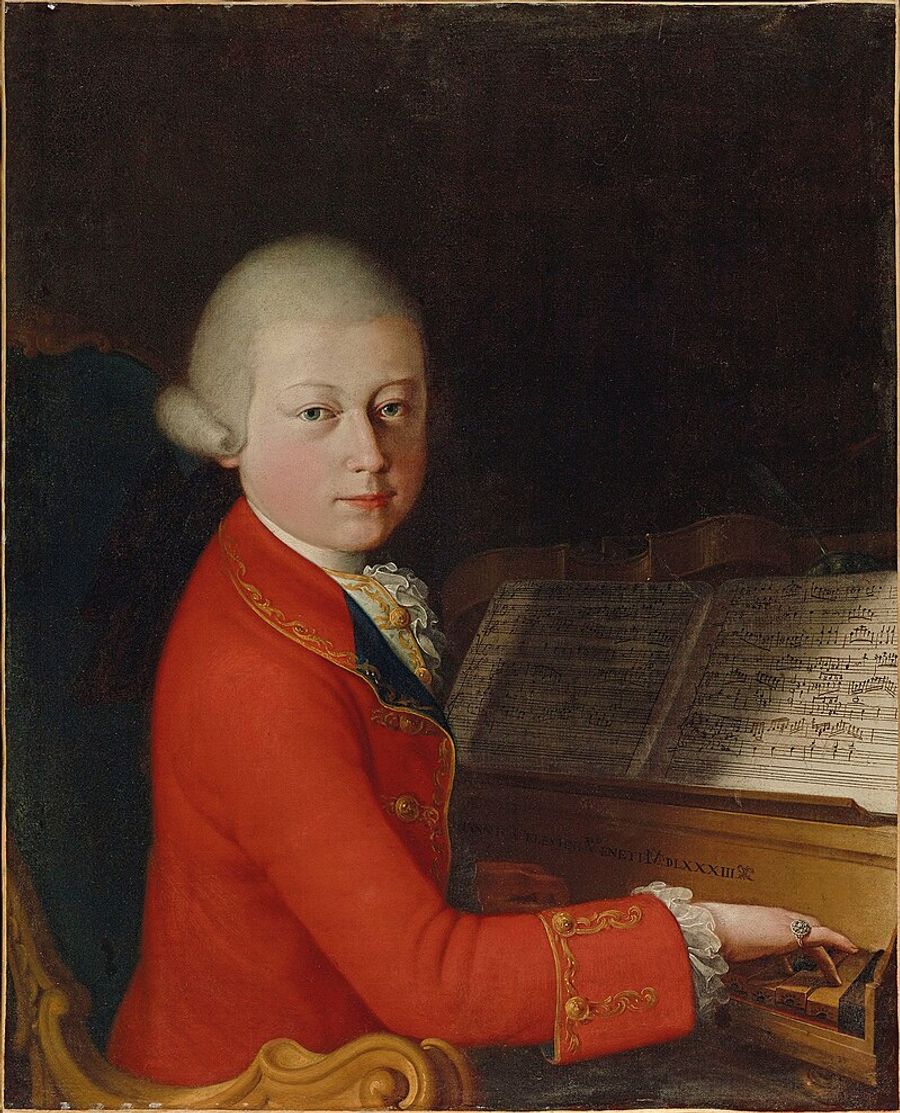
Mozart’s Grabmusik (“Burial Music”), K. 42 (K. 35a), is a short Passion cantata in C major, written in Salzburg in 1767 when the composer was only eleven. Scored for two soloists and chorus with modest orchestra, it shows the boy Mozart already thinking theatrically in sacred music—shaping German text with recitative, aria, and choral writing.
Mozart's Life at the Time
In 1767, the eleven-year-old Wolfgang Amadeus Mozart (1756–1791) was back in Salzburg after the family’s extensive travels and was writing both church music and stage-tinged sacred works for local use.[1] Grabmusik belongs to that Salzburg context: a Holy Week (Karwoche) devotional piece connected with the Holy Sepulchre tradition, where music could be heard alongside meditation at Christ’s “tomb.”[2]
Musical Character
Grabmusik is a German sacred cantata (“Cantata on the Holy Grave of Christ”) in C major, laid out in eight sections that alternate solo and choral writing.[1] Its forces are intimate rather than grand—soprano and bass soloists with mixed chorus (SATB) and an orchestra centered on strings, two horns, and (optionally) two oboes.[1]
The work’s dramatic core is dialogic: the text sets a conversation between a Soul and an Angel, so that recitative-like declamation can turn quickly into aria reflection, then widen into communal chorus.[2] Even in this early score, Mozart’s instinct for affekt (the musical “affect” or emotional-rhetorical stance) is evident in his careful matching of musical gesture to the oratorical content—a trait the Neue Mozart-Ausgabe editor already notes as characteristic in this piece.[3]
Sources
[1] IMSLP work page with basic catalogue data (key, movements/sections, scoring) and links to sources for K. 42/35a.
[2] Reference overview of the work’s genre/occasion and dialogue concept (Soul and Angel).
[3] Digital Mozart Edition (Neue Mozart-Ausgabe, Cantatas I/4/4) English preface remarks on KV 42/35a, including performance/practice and textual-affective orientation.