- Köchel Number
- K9 Anh.A 46 | K6 405
- Genre
- Vocal Music
- Form
- Lieder
- Date
- 1782
- Place
- Vienna
- Age
- 26
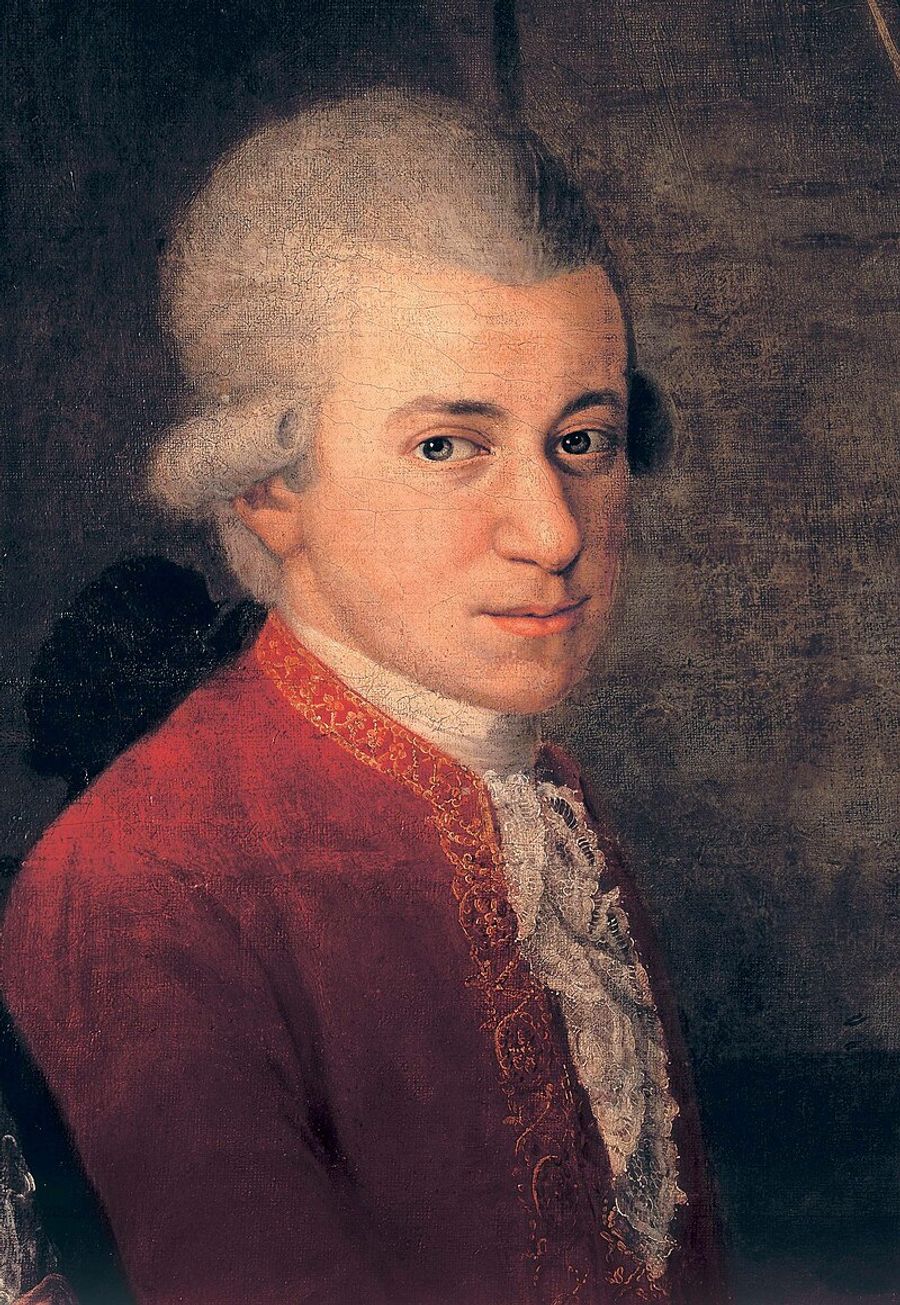
Mozart’s Arrangement of 5 Fugues by J. S. Bach (K. Anh.A 46), dating from 1782 in Vienna, transcribes five fugues from Bach’s Well-Tempered Clavier for string quartet. Made when Mozart was 26, it reflects his intensive, practical study of Baroque counterpoint in the months after his arrival in the imperial capital.
Background and Context
In Vienna in 1782, the 26-year-old Wolfgang Amadeus Mozart (1756–1791) immersed himself in the music of Johann Sebastian Bach and other “learned” composers as part of his broader effort to deepen his contrapuntal craft—an interest documented in his correspondence from this period, and closely associated with private music-making circles in the city [2]. The Mozarteum’s work entry for K. Anh.A 46 dates the set to 1782 and describes an extant autograph score, indicating that at least the compilation and scoring in its transmitted form belong to Mozart’s Viennese years [1].
Musical Character
K. Anh.A 46 is a set of five Bach fugues arranged for string quartet (two violins, viola, cello) [1]. The individual pieces are explicitly linked to fugues from Das Wohltemperierte Klavier, and the Mozarteum catalogue identifies the sources as BWV 871, 876, 878, 877, and 874 [1]. One example (the second fugue) is traced to BWV 876 and is given as E♭ major in the catalogue, underscoring that the set preserves Bach’s tonal design while translating keyboard counterpoint into four clearly differentiated string voices [3]. As chamber music, the arrangement invites a listener to follow subject entries and strettos with unusual clarity: lines that can blur under fingers on a keyboard become conversational strands distributed across the ensemble.
Sources
[1] Internationale Stiftung Mozarteum (Köchel Verzeichnis): work entry for KV Anh. A 46, including date (1782), instrumentation (string quartet), autograph transmission, and BWV correspondences.
[2] Boston Baroque program note: Mozart’s 1782 Bach/Handel studies in Vienna (van Swieten circle) and the context for his fugue arrangements.
[3] Internationale Stiftung Mozarteum (Köchel Verzeichnis): detailed entry for KV Anh. A 46/02, linking it to BWV 876 and giving key and quartet scoring.