- Köchel Number
- K9 394 | K6 383a
- Genre
- Piano Music
- Form
- Piano Pieces
- Key
- C Major
- Date
- Early 1782
- Place
- Vienna
- Age
- 26
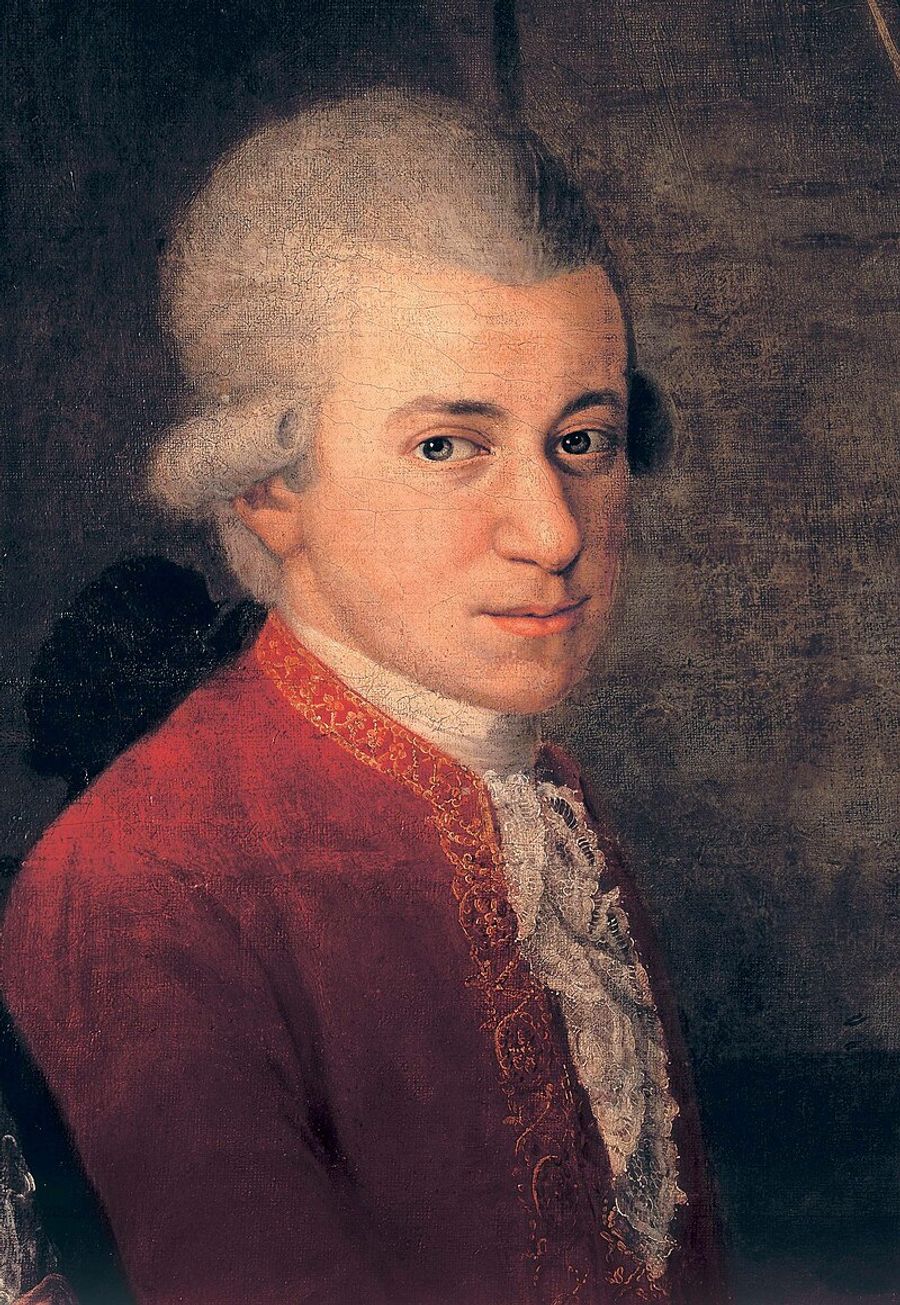
Mozart’s Prelude and Fugue in C major (K. 394), written in Vienna in 1782, is a concentrated homage to Baroque counterpoint—at once a public declaration of newly rekindled interests and a private memento of domestic music-making. Composed at age 26, it shows Mozart testing the “learned style” not as academic exercise, but as expressive drama on the keyboard.
Background and Context
In the spring of 1782, Wolfgang Amadeus Mozart (1756–1791) was newly established in Vienna and newly married to Constanze Weber. That personal and professional turning-point coincided with an intense fascination for the counterpoint of J. S. Bach and Handel—music he encountered in the circle of Baron Gottfried van Swieten, whose Sunday gatherings were devoted to these “old masters.” Mozart reported to his family that at van Swieten’s “nothing is played but Handel and Bach,” and that he was actively collecting and studying fugues [2].
K. 394 belongs to a small but telling cluster of works in which Mozart engages the Baroque not as a distant historical style, but as living technique: a way of thinking that could be absorbed into Classical rhetoric. While Mozart’s mature public persona in Vienna was that of a brilliant pianist-composer and opera man, pieces like this reveal another ambition—to make contrapuntal craftsmanship speak with immediacy at the keyboard.
Composition
Mozart dated his explanation of the work in a letter of 20 April 1782 from Vienna to his sister Marianne (“Nannerl”), sending her “a Prelude and a three-voiced Fugue” and apologizing that it was “awkwardly written” because the prelude “ought to come first” [1]. The practical reason, he says, is revealing: he composed the fugue first, and while writing it out he devised the prelude [1].
In the same letter Mozart credits Constanze as the immediate catalyst. Having heard Bach and Handel fugues brought home from van Swieten, she “fell in love with the fugues,” scolded Mozart for not writing down his improvised ones, and kept urging him until he produced this example [1]. Such testimony is unusually direct: K. 394 is not only stylistic homage; it is also a document of Mozart’s household and his self-conscious decision to fix on paper what had often been an improviser’s art.
Form and Musical Character
Despite the frequent alternative title “Fantasia and Fugue,” the work is essentially what Mozart called it: a Präludium (prelude) leading into a three-voice fugue [1]. The prelude’s opening is marked Andante maestoso, and Mozart explicitly warns against speed: unless played slowly, the entries of the subject will not be heard distinctly and the piece will lose its effect [1]. Here Mozart the showman and Mozart the pedagogue coincide—he composes a learned structure, then instructs performers in how to make it communicate.
What makes K. 394 distinctive within Mozart’s solo keyboard output is the balance it strikes between Baroque procedure and Classical pacing. The prelude functions as a rhetorical “threshold,” establishing a grave, ceremonial tone before the fugue begins; it is not mere warm-up but a framing gesture, as if a curtain is drawn back on the stricter argument to follow. The fugue itself, in three voices, demonstrates a disciplined command of invertible textures and conversational clarity: the voices retain individual profiles rather than melting into generalized harmony.
Listeners familiar with Mozart primarily as a master of melody may be surprised by the work’s stern concentration. Yet its appeal lies precisely in this compression. In a few minutes Mozart demonstrates that counterpoint can be theatrical: the tension is created not by orchestral color or operatic characterization, but by the timing of entries, the accumulation of voices, and the sense of inevitable forward motion that a well-laid subject can generate.
Reception and Legacy
K. 394 has never belonged to the standard “first tier” of Mozart’s recital repertory, perhaps because it resists the easy categories of sonata, variation set, or concert rondo. Nonetheless, it has long been valued as evidence of Mozart’s serious engagement with fugue at the moment he was absorbing Bach and Handel most intensely in Vienna [2]. Its continuing presence in scholarly and performing editions—among them the Neue Mozart-Ausgabe—underscores its firm place in the canon of authentic Mozart keyboard works [3].
For modern pianists, the piece offers a particular kind of Mozartian challenge: not brilliance in passagework, but lucidity in voicing, steadiness of pulse, and an architect’s grasp of how the fugue’s subject threads the entire texture. For modern listeners, it deserves attention as a window into Mozart’s workshop—showing how a composer celebrated for effortless grace could, when he wished, speak in the “learned style” with gravity, wit, and unmistakably Viennese poise.
Sheet Music
Download and print sheet music for Prelude and Fugue in C, K. 394 (C major) from Virtual Sheet Music®.
Sources
[1] Mozart letter excerpt (Vienna, 20 April 1782, to Marianne/Nannerl) discussing the prelude, fugue, Constanze’s prompting, and tempo note (*Andante maestoso*).
[2] Y. Tomita (Queen’s University Belfast): discussion of Mozart’s 1782 letters about van Swieten and Bach/Handel, including reference to KV 394 as “prelude and a three-part fugue.”
[3] IMSLP work page noting NMA editorial information (Neue Mozart-Ausgabe IX/27/2) and general bibliographic details for K. 394.