- Köchel Number
- K9 Anh.A 8 | K6 39
- Genre
- Concertos
- Form
- Piano Concertos
- Key
- B Flat Major
- Date
- June 1767
- Place
- Salzburg
- Age
- 11
Mozart’s Piano Concerto No. 2 in B-flat major, K. 39 is an early “student” concerto assembled from existing keyboard music rather than wholly newly composed themes. This article traces its sources in Raupach and Schobert, outlines the scoring and three-movement layout, and summarizes its reception and legacy.
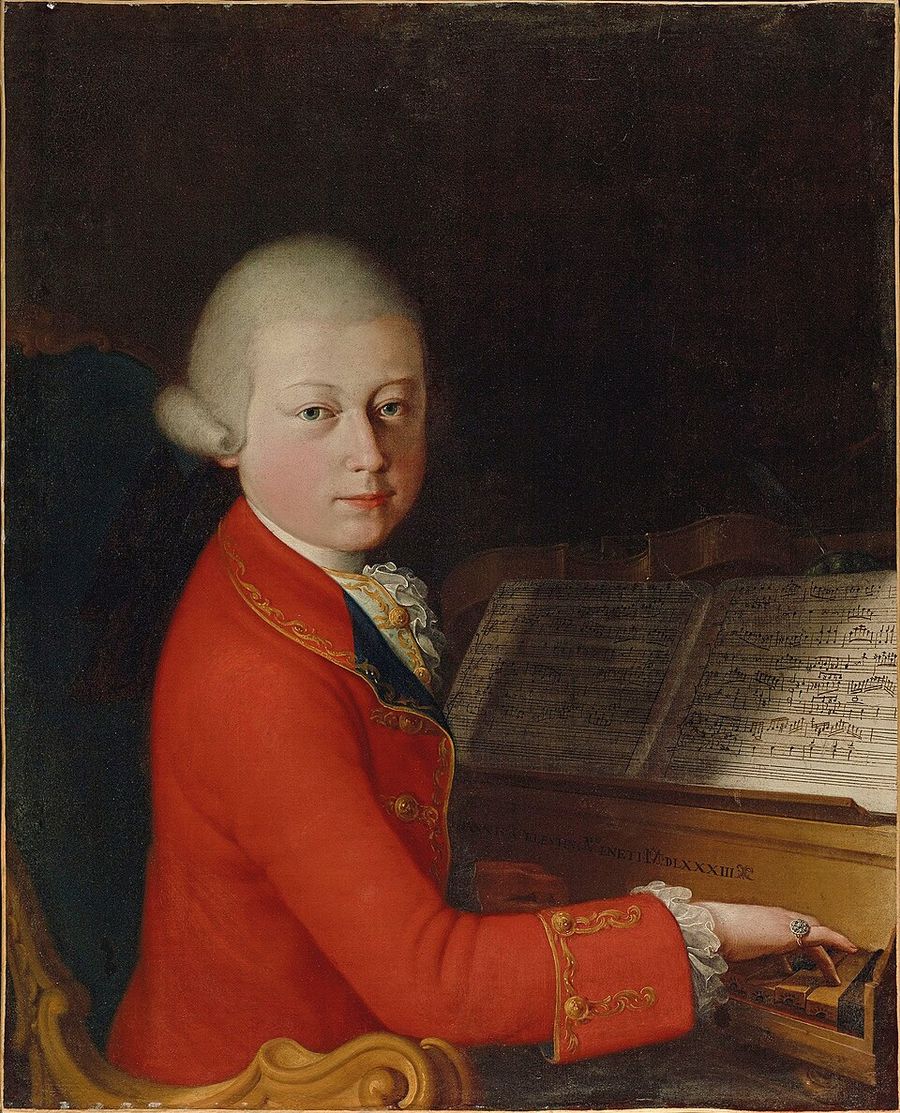
In 1767, the 11-year-old Mozart wrote his Piano Concerto No. 2 in B-flat major, K. 39 in his hometown of Salzburg[1]. This was a period of Mozart’s life right after an extensive European tour (1763–66) in which the child prodigy performed for royalty and absorbed the latest musical trends. Culturally, the mid-1760s were the height of the Enlightenment era, and music was transitioning from the ornate Baroque style to the simpler, elegant galant style. Mozart had encountered composers like Johann Schobert in Paris and Hermann Raupach in London, whose works influenced him[2][3]. Politically, Europe was at peace after the Seven Years’ War, but daily life still had its perils – notably a smallpox epidemic swept through Vienna in 1767, and young Wolfgang even contracted the disease (thankfully surviving after a harrowing illness)[4][5]. Within this backdrop, Mozart’s father Leopold guided him in creating his first concertos not as entirely original works, but as arrangements of existing music. Leopold likely saw this project as a teaching exercise to help Wolfgang learn how to structure a piano concerto[6]. In fact, Mozart’s first four piano concertos (K. 37, 39, 40, 41) were long thought to be original youthful creations, but musicologists later discovered they are pasticcios (potpourris) based on sonatas by other composers[2]. Concerto No. 2 in B♭ (K. 39), completed in July 1767, is a prime example: Mozart took keyboard pieces by contemporary composers and orchestrated them into a concerto[2]. This method allowed the young composer to practice writing for soloist and orchestra before he attempted wholly original concertos. (Leopold’s own records indicate he did not even count these early concertos as “true” compositions by Wolfgang, underscoring their pedagogical purpose[7].)
Composition and Context
Mozart’s Piano Concerto No. 2 is part of a set of four childhood concertos that he arranged at age 11. All four were written in Salzburg in 1767, with Mozart’s autograph manuscripts dated by Leopold in April (for No. 1) and July (for Nos. 2–4) of that year[8]. The works on which K. 39 is based had been published in Paris, and the Mozart family likely obtained them during their visit there in 1763–64[2]. Specifically, the musical themes in this concerto came from sonatas by two composers the Mozarts met or admired on their travels. The first and third movements of K. 39 draw from a sonata by Hermann Friedrich Raupach (Op. 1, No. 1), a German composer active in the 1750s[9]. The slow middle movement was adapted from a work by Johann Schobert (the opening movement of Schobert’s Op. 17, No. 2)[9]. Schobert was a harpsichordist in Paris whose music Leopold and Wolfgang esteemed – Mozart’s family befriended him during their Paris stay[10]. (Tragically, Schobert died later in 1767 after accidentally eating poisonous mushrooms, a grim footnote to the year Mozart arranged this concerto[11].) By selecting and reworking these pieces, Mozart learned how to handle the structure of a concerto (combining solo keyboard with orchestra) without having to invent all the themes himself[6]. Leopold Mozart likely coached Wolfgang through this process – indeed, the surviving manuscript of K. 39 is partly in Leopold’s handwriting, and he omitted these arrangements from the catalogue of Wolfgang’s works he prepared in 1768[6]. This suggests that father and son viewed K. 39 and its companion concertos as student exercises rather than full-fledged Mozart compositions at the time.
Instrumentation and Orchestration
In Mozart’s day, the term piano concerto was still something of a misnomer – the keyboard instrument used could be either a harpsichord or the early fortepiano. Mozart’s own manuscript title for K. 39 calls it a “Concerto per il Clavicembalo” (concerto for harpsichord), indicating it was intended for harpsichord soloist (though modern performances use piano). The orchestration is modest and typical of the Classical era: the concerto is scored for a small orchestra of two oboes, two horns in B-flat, and strings (violins, viola, cello, and bass), in addition to the solo keyboard part[12]. There are no clarinets, flutes, or other woodwinds – just the oboes and horns to add color to the string ensemble. Despite the limited forces, Mozart’s scoring has a few notable touches. For example, the horn parts climb to rather high notes for the period, adding brilliance to the sound[13]. The oboes typically reinforce the violins, and in slower passages they might drop out to allow a gentler tone. Overall, the instrumentation reflects the transitional time: an ensemble sufficient for a courtly chamber concerto, with the keyboard sometimes playing as a continuo (filling in harmony) and sometimes as a featured solo voice.
Another interesting aspect is how Mozart handled the solo keyboard versus orchestra writing. Because this concerto was assembled from pre-existing keyboard pieces, Mozart had to fit the orchestra around music originally written for solo harpsichord. He usually opens each movement with an orchestral ritornello – a brief introduction for the ensemble – before the piano enters with the main theme. The manuscript shows the young composer writing out these orchestral tuttis and then letting the piano take over the adapted sonata material. In places, the piano part simply doubles the orchestral melody or plays accompaniment figures, rather than the virtuosic runs and dialogues we associate with Mozart’s later concertos. This blended role of the keyboard (sometimes soloistic, sometimes just reinforcing the harmony) is a hallmark of these early concertos[14].
Form and Musical Character
The concerto follows the standard three-movement design of Classical concertos: a fast first movement, a slow second movement, and a fast finale. The movements are: I. Allegro spiritoso (B-flat major, 4/4 time), II. Andante staccato (F major, 4/4), and III. Molto allegro (B-flat major, 2/4)[12]. In terms of character, the first movement Allegro spiritoso is bright and energetic, befitting its marking “spiritoso” (spirited). It likely has a joyful, gallant character with clear melodies and a steady 4/4 pulse. The final movement Molto allegro is a short, lively conclusion – light in mood and fast-paced, bringing the concerto to an upbeat close. By contrast, the middle Andante provides a gentle, lyrical interlude. Marked “staccato,” it presumably features a delicate, detached articulation giving it a tender yet poised quality. This Andante is in F major (the dominant key of B-flat) and would sound graceful and somewhat elegant, in the style of a French romance. Notably, it is the longest movement of the three, even though it’s still concise by later standards[15]. All three movements are relatively short – the entire concerto lasts only around 12–14 minutes – and they exemplify the charming but uncomplicated style of a child prodigy’s work.
Musically, K. 39 is a pastiche of its source materials, yet Mozart stitched it together with his own touches. The first and third movements are taken from Raupach’s sonata, so they share some thematic ideas (both being based on Op.1, No.1 by Raupach)[9]. Mozart likely transposed or adjusted these themes to B-flat major and wrote orchestral parts to support them. The Andante second movement, borrowed from Schobert, introduces a somewhat more nuanced melody – Schobert’s style was known for its expressive, almost “romantic” quality for the time[16]. Mozart’s family admired Schobert’s music, and in arranging this movement Wolfgang absorbed some of Schobert’s poetic elegance[16]. Thus, in the slow movement one might hear a hint of soulful depth that foreshadows Mozart’s later lyrical gifts. Overall, the concerto’s style is galant and melodically straightforward: phrases are symmetrical, the harmony is simple (mostly staying in pleasant major keys), and the mood is lighthearted. There are no cadenzas written out by Mozart for K. 39, as far as we know, and any modern performance either omits a cadenza or inserts a brief improvised one. The emphasis is on tuneful charm rather than virtuoso display.
From a structural standpoint, Mozart’s handling of form in this youthful concerto is rudimentary but effective. Each movement essentially follows the form of the original sonata movement on which it’s based. For the fast movements, that means a kind of early sonata form or ritornello form: the orchestra states the main themes, then the solo keyboard plays them (with light development), and finally the themes return to wrap up. Because Mozart was using pre-composed material, he did not introduce a lot of new thematic ideas in the development sections or between the solo and orchestra – in fact, contemporary scholars note that these early concertos lack the abundant thematic invention of Mozart’s later works[14]. The young Mozart added a few introductory measures (sometimes called preludes) for the orchestra, but these are short and mostly just announce the key and basic theme[14]. The piano and orchestra often play in unison or octaves, and the separation between solo passages and accompaniment is less clearly defined than in mature concertos[14]. In effect, K. 39 sounds at times like a graceful keyboard sonata with string backing, rather than a dramatic contest between soloist and orchestra. Still, one can discern the embryo of Mozart’s concerto style. Musicologists have observed that the proportions of the movements – how long the opening section is relative to the rest, for example – roughly anticipate the balance found in his later concertos, just on a smaller scale[14]. The piece flows logically and pleasantly, showing that even as a child Mozart had a natural sense for form and contrast. It may not have the innovation or depth of his later masterworks, but it is tuneful and well-crafted for an 11-year-old composer. As one commentator notes, “it’s simple and straightforward, and feels a bit student-like,” yet it has “creative, unique little bits” and “wonderful undercurrents in the bass” that give hints of Mozart’s budding imagination[17].
Reception and Legacy
Mozart’s Piano Concerto No. 2 in B-flat, being a product of his childhood, did not enter the mainstream repertoire in the way his later Vienna concertos did. In Mozart’s own lifetime, these early concertos were likely used for private performances or as pedagogical pieces. We don’t have specific records of Mozart performing K. 39 in public, but he might have played it (or portions of it) to showcase his talent during visits to aristocratic patrons. Since the piece was essentially a reworking of already-published music, it wasn’t circulated or published during Mozart’s youth. In fact, Leopold Mozart never published these first four concertos, and as mentioned, he excluded them from the official list of Wolfgang’s works – implying they were not considered significant achievements but rather exercises[7]. For many decades after Mozart’s death, K. 39 and its companion early concertos remained in obscurity or were assumed to be original juvenilia without much attention. It wasn’t until musicological research in the late 19th and early 20th century that the sources of these concertos were identified, clarifying that Mozart had arranged others’ music rather than composed everything afresh.
When Mozart’s piano concertos were revived and celebrated by later generations, it was mostly the 21 original concertos (from No. 5 onward) that drew praise. Those mature works are now considered some of Mozart’s greatest achievements. By comparison, the first four concertos (including No. 2, K. 39) are regarded as minor efforts. Critics often label them as “juvenile” works – charming but slight in content[18]. For example, pianist and scholar Jan Swafford notes that Concertos 1–4 are essentially orchestrations of others’ music and calls them “juvenilia,” while Mozart’s true concerto genius only blooms with his first original concerto in 1773[18]. Indeed, Mozart himself seemed to value his first original concerto (No. 5 in D major, K. 175, written at age 17) much more – he kept performing K. 175 throughout his life, whereas there’s no evidence he returned to perform K. 39 as an adult[18].
It took some time for K. 39 to even appear in print. The complete edition of Mozart’s works in the 19th century did include these early concertos (for instance, an edition by Breitkopf & Härtel in 1877 published K. 39[19]), but they were mainly of scholarly interest. In the 20th century, as all of Mozart’s music received more study, K. 39 got a bit more exposure. It has been recorded as part of complete Mozart concerto cycles, though it’s seldom heard in live concerts. Many recordings by famous pianists skip Nos. 1–4, focusing on the masterpieces from No. 5 onward[20]. However, a few notable projects have included the early concertos. For example, Neville Marriner and Alfred Brendel recorded Concertos 1–4 with a smaller orchestra and fortepiano to capture their authentic sound, and other historically-informed performers like Ingrid Haebler and Malcolm Bilson have also recorded K. 39 on period instruments[21]. These recordings present the piece in a favorable light – not as a grand Mozart concerto, but as a graceful little work from Mozart’s childhood. Listeners today appreciate Piano Concerto No. 2 in B-flat major, K. 39, for what it is: a window into Mozart’s early development. It offers a fascinating glimpse of the young composer learning his craft – we hear him experimenting with form, working within the galant style of the 1760s, and even borrowing the notes of his elders to find his own musical voice. While K. 39 will never overshadow Mozart’s later piano concertos, it remains an endearing piece of his catalogue. Modern audiences and scholars value it for its historical context and innocent charm, and it’s occasionally featured in programs highlighting Mozart’s youthful works. As one Mozart biographer observed, these early concertos contain “traces of his later structures” and even a touch of the expressive depth that would blossom in his mature music[14][16]. In sum, Piano Concerto No. 2 in B-flat major stands as a modest but important stepping stone in Mozart’s journey – a piece born out of a child prodigy’s world of 18th-century travel, tutelage, and musical curiosity, which laid the groundwork for the genius to come.
Sources
Sources
Mozart’s Piano Concertos Nos. 1–4 (background and analysis)[2][6][12][9][14]
Mozart and Smallpox – details of Mozart’s life in 1767[4][5]
Biographical info on Johann Schobert and his influence[3][16]
“Fugue for Thought” blog commentary on K. 39 (amateur analysis)[22][23][17]
Wikipedia: Piano concertos by W.A. Mozart (reception and recordings)[18][21]
IMSLP (Mozart’s Werke edition details for K. 39, 1877)[19]
[1][2][6][7][9][12][14] Piano Concertos Nos. 1–4 (Mozart) - Wikipedia
https://en.wikipedia.org/wiki/Piano_Concertos_Nos._1%E2%80%934_(Mozart)
[3][16] Johann Schobert - Wikipedia
https://en.wikipedia.org/wiki/Johann_Schobert
[4][5] Mozart and smallpox - Wikipedia
https://en.wikipedia.org/wiki/Mozart_and_smallpox
[8] MUSIClassical notes: Mozart, Piano Concerto No 2 in Bb K 39
http://classicalnotes.blogspot.com/2015/06/mozart-piano-concerto-no-2-in-bb-k-39.html
[10][11][13][15][17][22][23] Mozart Piano Concerto no. 2 in Bb, K39 – Fugue for Thought
https://fugueforthought.de/2015/07/09/mozart-piano-concerto-no-2-in-bb-k39/
[18][20][21] Piano concertos by Wolfgang Amadeus Mozart - Wikipedia
https://en.wikipedia.org/wiki/Piano_concertos_by_Wolfgang_Amadeus_Mozart
[19] Piano Concerto No.2 in B-flat major, K.39 (Mozart, Wolfgang Amadeus) - IMSLP
https://imslp.org/wiki/Piano_Concerto_No.2_in_B-flat_major,_K.39_(Mozart,_Wolfgang_Amadeus)