Instrumental Movement (Andante) in E♭ major, K. 384B
by Wolfgang Amadeus Mozart
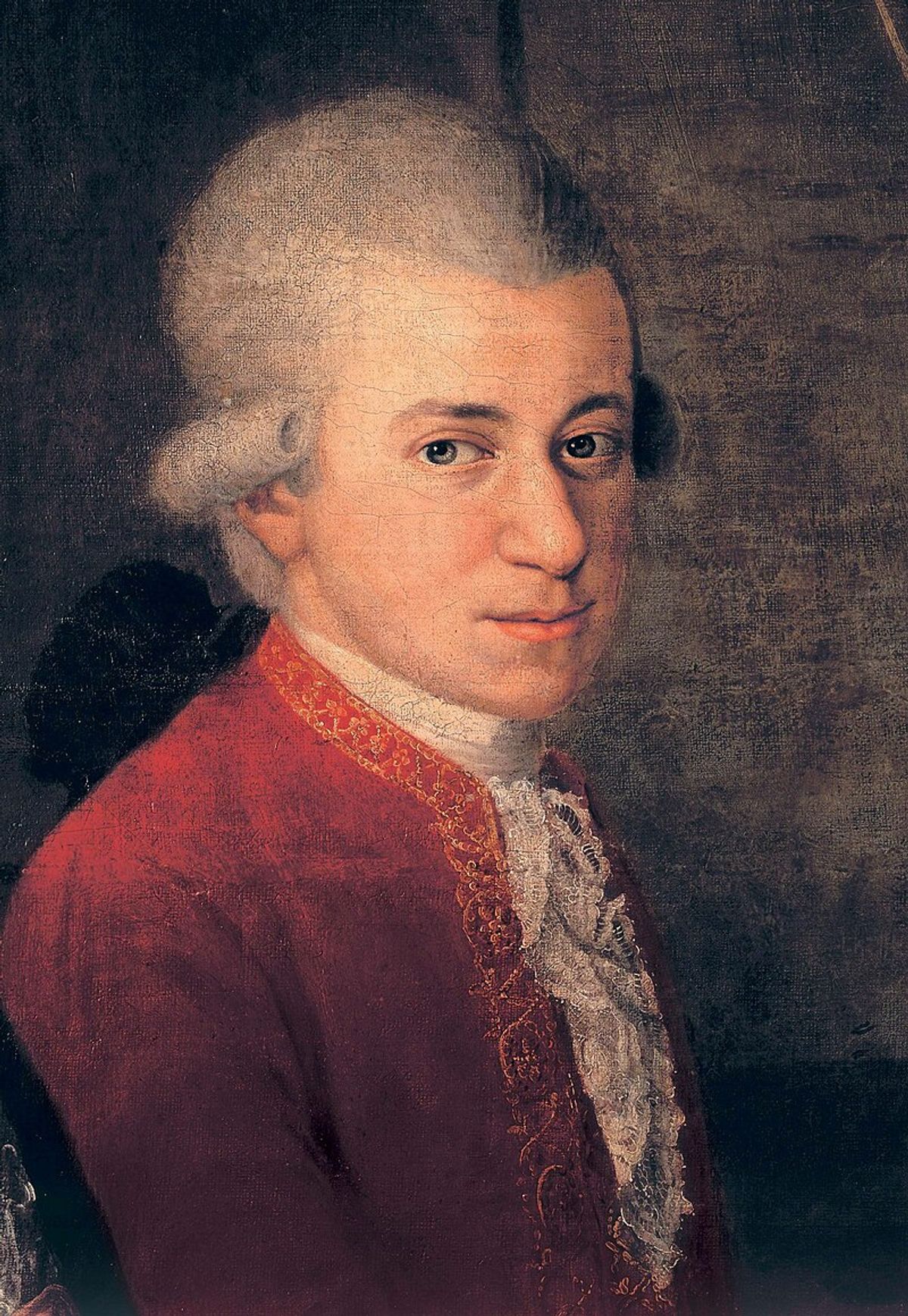
Mozart’s Instrumental Movement (K. 384B) is a short surviving Andante in E♭ major from Vienna (1782), preserved only as a fragment. Scored for an eight-part wind ensemble, it offers a glimpse of the composer’s Viennese wind writing at age 26—on a miniature scale, but with characteristically poised voice-leading.
Background and Context
In 1782, Wolfgang Amadeus Mozart (1756–1791) was newly established in Vienna and balancing public ambitions with a demanding workload that culminated, that summer, in the Burgtheater premiere of Die Entführung aus dem Serail (K. 384). Against this backdrop, K. 384B survives as an isolated orchestral (wind) movement: a brief Andante whose extant text breaks off after only a few systems, suggesting an abandoned draft rather than a self-standing concert item.[1]


As an Amazon Associate we earn from qualifying purchases.
A practical editorial caution is warranted: this work is K. 384B (uppercase “B”) in E♭ major and should not be confused with the similarly numbered K. 384b (lowercase “b”), a separate wind-band march in B♭.[2]
Musical Character
What can be described securely is what remains on the page: a single *Andante* fragment of 18 bars in E♭ major, written for 2 oboes, 2 clarinets, 2 bassoons, and 2 horns—the classic eight-part Harmonie scoring that Mozart would exploit more expansively in later Viennese works.[1]
Within that compressed span, the scoring itself is the point of interest: the doubled upper winds (oboes/clarinets) and paired bassoons allow Mozart to think in choir-like blocks—melody and countermelody above, harmonic “filling” in the middle, and a buoyant bass line—while the horns stabilize the harmony in a way that feels symphonic in intent even when the musical thought is unfinished.[1]
Place in the Catalog
K. 384B sits near Mozart’s first great Viennese successes and alongside his growing interest in wind color; as a fragment, it is best heard as a small window onto the Harmonie style he was refining in the early 1780s, rather than as a missing “numbered symphony” movement.[1]
[1] IMSLP work page: Andante in E-flat major, K. 384B — instrumentation and extent (fragment of 18 bars), composition year (1782), NMA reference.
[2] Köchel-Verzeichnis (Mozarteum) entry for K. 384b (lowercase b): March in B-flat for wind ensemble à 8 — used here only to prevent confusion with K. 384B.