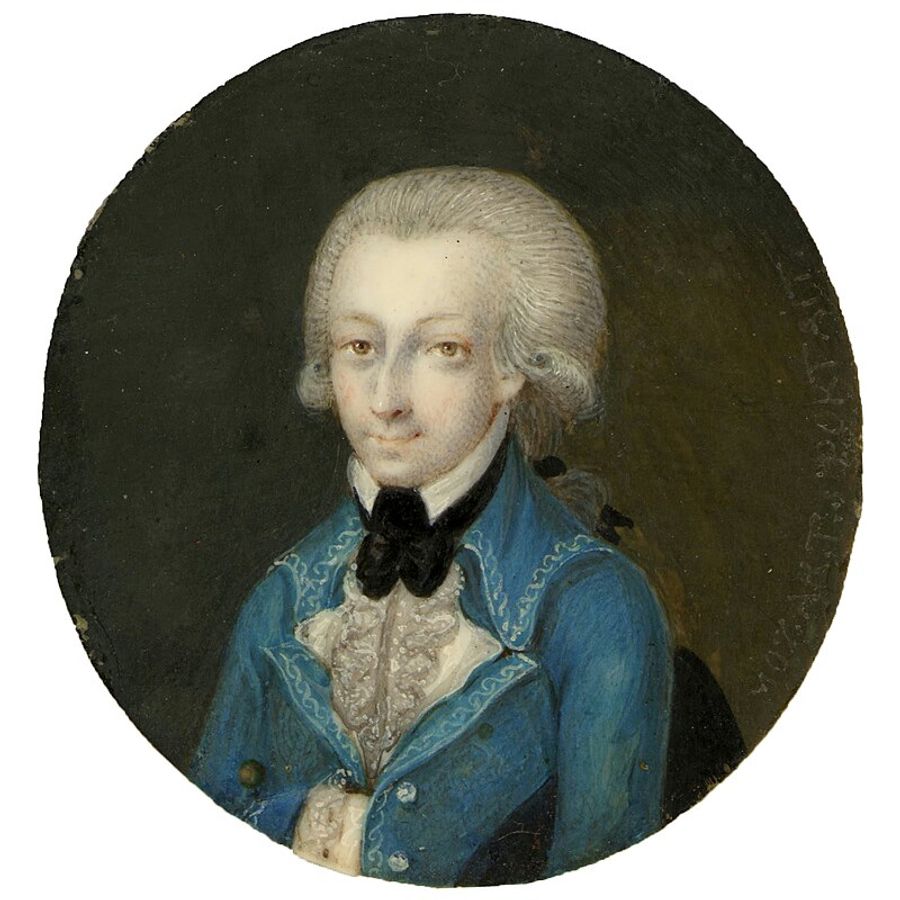
- Köchel Number
- K9 358 | K6 186c
- Genre
- Piano Music
- Form
- Works for Two Pianos & Piano Four Hands
- Key
- B Flat Major
- Date
- Spring 1774
- Place
- Salzburg
- Age
- 17
Mozart’s Sonata in B♭ major for piano four-hands (K. 358) belongs to the Salzburg years (1773–1774), when the 17-year-old composer was refining a public, brilliant keyboard style for domestic music-making as much as for display.[1] In three compact movements (Allegro–Adagio–Molto presto), it shows how imaginatively Mozart could turn the “one keyboard, two players” medium into something orchestral in breadth yet conversational in detail.[2]
Background and Context
Keyboard duets—two performers sharing one instrument—were a Salzburg specialty for the Mozarts. The International Mozarteum Foundation notes that Wolfgang Amadé Mozart and his sister Maria Anna (“Nannerl”) began performing together publicly as early as 1764, and that Mozart wrote some of the earliest pieces in Europe explicitly for piano four-hands.[1] Within that lineage, K. 358 stands as one of the first fully realized, large-scale sonatas for the genre: not a pedagogical miniature, but a work that lets Primo and Secondo alternate between leading, accompanying, and “orchestrating” each other.
The sonata also sits at an interesting crossroads in Mozart’s output. In the early 1770s he was deeply immersed in symphonic and serenade writing for Salzburg, and four-hand texture offered a way to suggest orchestral weight at the keyboard—bass lines and inner parts can be more firmly anchored when divided between two players. That richer sonority is one reason K. 358 deserves attention today: it is early Mozart, but it rarely sounds “small.”
Composition
K. 358 is securely authenticated and dated to Salzburg, 1773–1774, in the Köchel-Verzeichnis Online.[1] (Some sources speak of “late 1773–early 1774,” reflecting the same general window.)[3] The work survives in autograph sources—KV Online lists an autograph dated 1774—and it entered print relatively early: an “Erstdruck” (first edition) appeared in Vienna in 1783 from Artaria as part of a set titled Deux Sonates à quatre mains (paired with K. 381).[1]
For a Salzburg teenager, that later Viennese publication matters. It suggests the piece had continuing value beyond immediate family use: a market existed for sophisticated duet sonatas that could be played in bourgeois salons on harpsichord or fortepiano, as the Artaria title page itself implies.[1]
Form and Musical Character
K. 358 follows the classical three-movement pattern familiar from solo keyboard and chamber sonatas:[2]
- I. Allegro
- II. Adagio
- III. Molto presto
I. Allegro
The opening movement projects an extrovert, public manner—brisk thematic exchange, clear cadential punctuation, and energetic passagework that can pass rapidly between the players. What is distinctive in four-hands is Mozart’s ability to distribute “orchestral” roles: Secondo can underpin the harmony with a firm bass and inner voices while Primo takes a more soloistic line, yet the roles are fluid rather than fixed. The result is closer to chamber music than to a solo sonata with accompaniment.
II. Adagio
The slow movement is the sonata’s lyric heart, and it shows why four-hands writing is not merely about volume. With two players, Mozart can keep a singing melody afloat while maintaining warm harmonic filling and gentle counter-lines beneath it—textures that can be awkward for a single performer to balance on an 18th-century instrument. The movement’s poise also anticipates the long-breathed cantabile that would become a hallmark of Mozart’s mature keyboard style.
III. Molto presto
The finale is bright and quicksilver, a reminder that four-hand sonatas were often social music made thrilling by sheer coordination and sparkle. Here Mozart exploits the medium’s natural virtuosity: rapid figurations can be shared, imitated, and answered, giving the music an almost theatrical momentum—two characters on one stage.
Reception and Legacy
K. 358 has never had the “flagship” status of Mozart’s later four-hand sonatas (notably the Vienna works K. 497 and K. 521), yet it has remained in circulation since the 18th century. Its early Artaria publication in 1783 placed it among the foundational printed repertory for domestic piano-duet playing.[1]
Today, the work’s legacy is partly historical—evidence of how early Mozart treated piano four-hands as a serious sonata medium—and partly practical. For performers, it offers an ideal introduction to Mozart duet style: clear classical rhetoric, an Adagio of genuine vocal beauty, and a finale whose brilliance depends less on solo bravura than on ensemble listening. In that sense, K. 358 captures something central to Mozart: music that is sociable by design, but crafted with a composer’s unforced sophistication.
Sources
[1] Internationale Stiftung Mozarteum (KV Online) — work entry for K. 358 with dating (Salzburg 1773–1774), authenticity, autograph note, and first edition (Artaria, 1783).
[2] IMSLP — general information for Sonata for Piano Four-Hands in B♭ major, K. 358/186c (movement list and basic catalog data).
[3] Fundación Mozarteum del Uruguay — catalog list entry indicating late 1773–early 1774 and Salzburg for K. 358/186c.