- Köchel Number
- K9 313 | K6 285c
- Genre
- Concertos
- Form
- Concertos for Strings & Winds
- Key
- G Major
- Date
- January–February 1778
- Place
- Mannheim
- Age
- 22
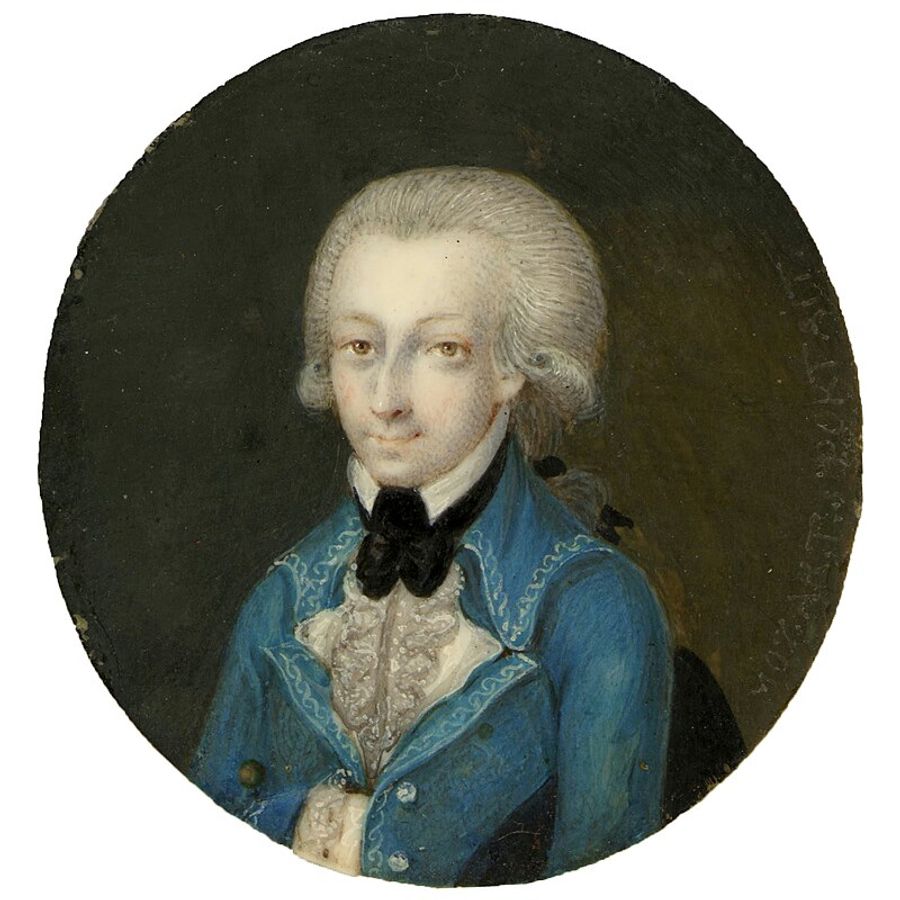
Mozart’s Flute Concerto No. 1 in G major, K. 313 was composed in Mannheim in early 1778, when the 22-year-old composer briefly found himself inside Europe’s most admired orchestral “laboratory.” Written for the Dutch amateur flautist Ferdinand Dejean, it is both a commission work and a revealing portrait of Mozart adapting his concerto thinking—normally honed at the keyboard—to a wind instrument he treated with unusual candor in his letters [1] [2].
Background and Context
When Wolfgang Amadeus Mozart (1756–1791) reached Mannheim in late 1777 on his way to Paris, he encountered an environment unlike Salzburg: an orchestra famous for discipline, dynamic nuance, and the new orchestral rhetoric associated with the “Mannheim school.” Even in the absence of a permanent court posting, Mannheim offered Mozart something he craved—players capable of turning orchestration into drama, not mere accompaniment.
That context matters for Flute Concerto No. 1 in G major, K. 313, because the piece is often praised primarily as “pleasant” or “gracious,” when it is, in fact, an experiment in balancing flute virtuosity with a sharply characterized orchestral persona. Mozart was learning, in real time, how to write for specific musicians in a cosmopolitan setting—an experience that fed directly into his later Viennese concerto style.
The immediate practical trigger was a commission from Ferdinand Dejean (also spelled Dejean/De Jean), a Dutch medical officer associated with the Dutch East India Company and a flute enthusiast with the means to pay handsomely. The commission—variously described in sources and complicated by what Mozart did and did not deliver—placed Mozart under deadline pressure at precisely the moment he was also networking, composing, and managing the uncertainties of travel with his mother [1] [2].
Composition and Premiere
The concerto belongs to the intense Mannheim stretch of early 1778. Mozart’s own correspondence shows the commission as both opportunity and irritation: he reports that Dejean, leaving for Paris, paid him 96 florins because Mozart had completed “only” two concertos and three quartets, and that Dejean even miscalculated the sum as half of an agreed 200 [1]. The letter is more than a financial footnote: it is Mozart thinking aloud about professional pride—he refuses the idea of merely “scribbling” to meet a deadline, because his name will circulate with the music.
Modern scholarship has therefore tended to treat K. 313 not as occasional music dashed off for a dilettante, but as a work in which Mozart—despite practical grievances—invested serious craft. The New Mozart Edition’s critical discussion stresses the documentary anchor of the 14 February 1778 letter and the broader problems of source transmission and commissioning context for the flute concertos and related works [2].
As for the premiere, no definitive first-performance record survives that can be tied to a specific date and venue with the confidence we have for many later concertos. The most plausible performer is Dejean himself (or a capable professional in his orbit), but here the historian must be careful: what we can say securely is that the concerto arises from a private commission in Mannheim and rapidly entered the repertory through publication and copying traditions rather than through a single famous “premiere event” [2] [3].
One related interpretive debate concerns the slow movement. The standalone Andante in C major, K. 315 has long been linked to K. 313—either as an alternative slow movement or as a fragment of the unfulfilled commission. Because K. 315 lacks an autograph and survives in early prints rather than Mozart’s manuscript, its “intended destination” remains partly conjectural, and performers’ choices (original Adagio vs. substituted Andante) become, in effect, part of the work’s reception history [4] [2].
Instrumentation
K. 313 is scored for a Classical orchestra that is modest on paper yet highly expressive in practice—especially in Mannheim, where wind playing and dynamic shading were cultivated as collective virtuosity.
- Solo: flute
- Winds: 2 oboes
- Brass: 2 horns
- Strings: violins I & II, viola, cello, double bass
This is the scoring reflected in modern reference listings and performance materials [3]. The absence of clarinets, trumpets, and timpani is not a sign of thin imagination; rather, Mozart uses what he has to keep the texture buoyant and transparent, allowing the solo flute’s articulation and color changes to read clearly against orchestral figuration.
A practical implication for performers is balance: the oboes can brighten and “edge” the orchestral sound, while the horns (often in sustained or punctuating roles) supply a pastoral halo that can either support the flute’s cantabile line—or, if pushed too hard, obscure it. Historically informed performances often treat this balance problem as a central interpretive challenge.
Form and Musical Character
Mozart’s concerto manner in 1778 is already recognizably “his”: long-breathed melody, theatrical pacing, and an instinct for conversation between soloist and ensemble. Yet the flute changes the rhetoric. Unlike the keyboard, which can generate harmony and counterpoint alone, the flute must suggest harmonic direction through line, articulation, and register—skills Mozart exploits with unusual finesse here.
I. Allegro maestoso (G major)
The first movement operates in concerto-sonata terms: a substantial orchestral exposition sets the tonal and thematic stage before the flute enters and reframes the material. What distinguishes K. 313 is Mozart’s tendency to let the flute arrive not as a mere “decorator,” but as a persuasive speaker who can soften, redirect, or intensify the orchestra’s propositions.
Listeners can hear a Mannheim-adjacent sensibility in the crisp orchestral gestures and in the way dynamic contrast and unison rhetoric can function dramatically, not just as surface brilliance. For the flautist, the writing demands both classical clarity and sustained line—virtuosity understood less as sheer speed than as control of breath, tone, and rhetorical timing.
A longstanding performance question concerns cadenzas. Mozart left no autograph cadenzas for K. 313, and later traditions range from elegantly restrained to overtly showy. The most convincing solutions tend to treat the cadenza as an extension of the movement’s conversational style—brief, thematically alert, and harmonically lucid—rather than a romantic soliloquy.
II. Adagio ma non troppo (D major)
The slow movement is often described simply as “lyrical,” but its real interest lies in how Mozart builds lyricism. The flute sings in long arcs that invite the player to shape phrases like an operatic voice (without text), while the orchestral accompaniment remains active enough to prevent the solo line from floating in a vacuum.
This is also the movement most directly implicated in the K. 315 question. If performers substitute the Andante in C major, they change not only tempo and key, but the concerto’s emotional geography: D major in the Adagio offers a luminous, outwardly radiant landscape, whereas C major can feel more neutral and “public.” The substitution is therefore not merely practical; it is interpretive, and editions discuss the uncertainties in transmission that make this choice historically charged [2] [4].
III. Rondo – Tempo di menuetto (G major)
Mozart closes with a rondo whose marking (Tempo di menuetto) is not decorative: it points to a specific type of elegance—poised, dance-inflected, and socially intelligible. The movement’s wit lies in its ability to keep that genteel surface while introducing episodes that test the soloist’s agility and the ensemble’s responsiveness.
Rather than the extrovert “race to the finish” found in some concertos’ finales, K. 313 ends by reaffirming grace as a form of virtuosity. The flute’s brilliance is integrated into a world of courtly gestures—perhaps a practical nod to an amateur commissioner, but also a sophisticated aesthetic choice.
Reception and Legacy
K. 313’s legacy is, paradoxically, bound up with Mozart’s sometimes-quoted complaints about writing for the flute. The same February 1778 letter that records the partial payment also shows Mozart defending standards: he insists he cannot simply turn out work mechanically, because the music will circulate under his name [1]. Whatever frustrations he felt about the commission, the concerto itself contradicts the caricature of unwilling workmanship.
Today the work stands near the center of the Classical flute repertory because it solves a compositional problem with unusual elegance: it makes the flute both sing and argue—capable of vocal lyricism, articulate dialogue, and bright passagework—without treating the orchestra as a passive backdrop. It also offers a window into Mozart’s Mannheim moment: an ambitious young composer encountering elite orchestral technique and translating it into concerto drama.
Recordings are numerous; what is most illuminating, historically, is not a single “definitive” version but the spectrum of approaches—modern flute’s sustained power versus period flute’s quicksilver articulation; larger symphonic strings versus chamber forces; and the interpretive choice of the original Adagio versus the alternative K. 315. In that sense, K. 313 remains a living laboratory, continuing Mannheim’s lesson by inviting performers to make transparency, balance, and rhetorical timing the real virtuoso acts.
Sheet Music
Download and print sheet music for Flute Concerto No. 1 in G major, K. 313 from Virtual Sheet Music®.
Sources
[1] Project Gutenberg: The Letters of Wolfgang Amadeus Mozart (includes the Mannheim correspondence with the 14 Feb 1778 Dejean payment details and broader commission context).
[2] Digital Mozart Edition (Mozarteum): New Mozart Edition (NMA) critical commentary PDF for concertos for flute/oboe/bassoon (commission context, sources, and editorial issues for K. 313 and related works).
[3] IMSLP: Flute Concerto in G major, K. 313/285c (instrumentation listing and score/parts reference).
[4] Reference overview of the Andante in C major, K. 315 and its debated relationship to K. 313 (alternative slow movement question).