- Köchel Number
- K9 299 | K6 297c
- Genre
- Concertos
- Form
- Concertos for Strings & Winds
- Key
- C Major
- Date
- April 1778
- Place
- Paris
- Age
- 22
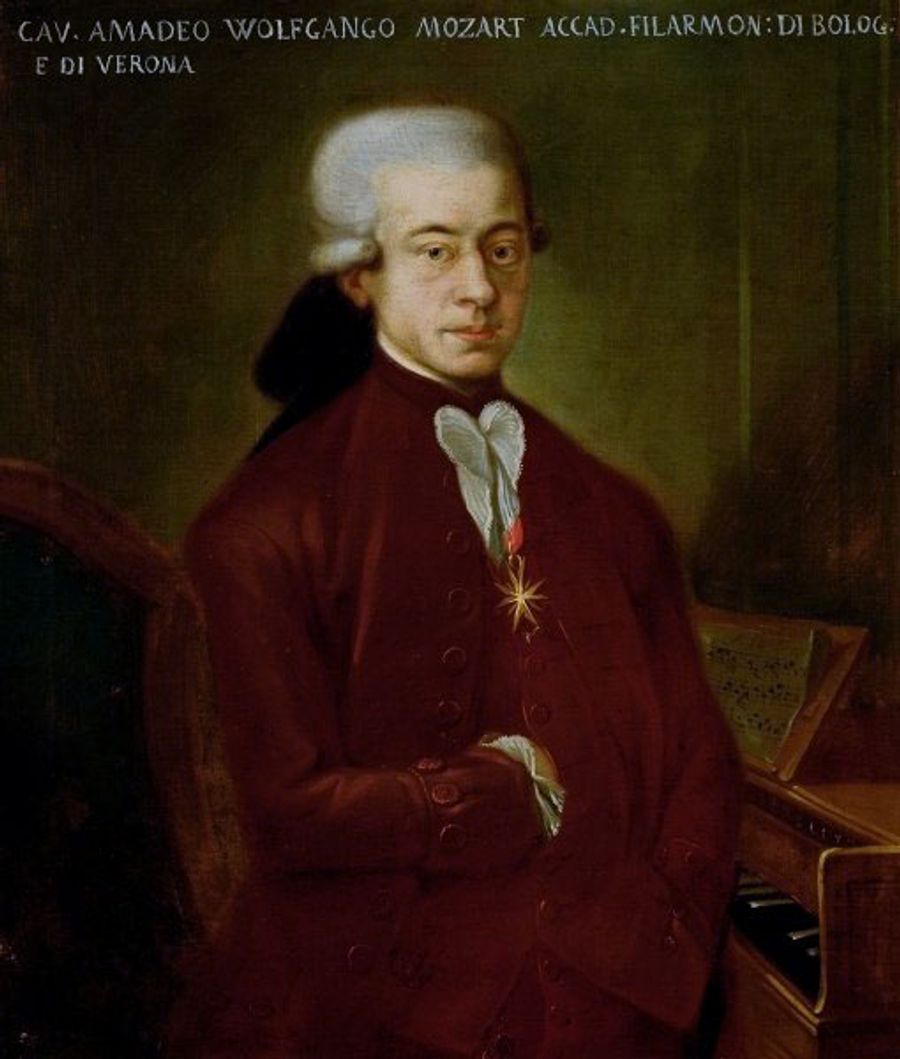
Mozart’s Concerto for Flute and Harp in C major (K. 299, formerly K. 297c) was composed in Paris in April 1778, when the composer was 22. A glittering hybrid of concerto and French salon elegance, it remains distinctive in Mozart’s output as his only completed concerto to feature the harp as a solo instrument.
Background and Context
When Wolfgang Amadeus Mozart (1756–1791) arrived in Paris in 1778 with his mother, Maria Anna Mozart, he entered a musical world that prized public concert life, fashionable virtuosity, and the refined social music-making of aristocratic homes. The journey—intended to secure patronage and a stable post—proved personally and professionally turbulent, yet it produced a cluster of works shaped by Parisian taste: brilliance on the surface, craftsmanship underneath.
The Concerto for Flute and Harp belongs to this Paris moment. It was commissioned by Adrien-Louis de Bonnières, duc de Guînes, an enthusiastic amateur flautist, for himself and his harp-playing daughter (who was also receiving composition lessons from Mozart) [1]. In other words, the work was designed for cultivated players rather than for the most fearsome public virtuosi—one reason its writing, while grateful and idiomatic, aims more at poise and conversational interplay than at athletic display.
The concerto is also notable simply for what it is. Mozart wrote comparatively few works involving the harp, and this concerto is widely described as his only piece to feature the instrument as an equal solo protagonist [1]. In a catalogue dominated by keyboard concertos and by violin writing rooted in his Salzburg years, the pairing of flute and harp gives K. 299 its special aura: pastoral color, luminous textures, and an unmistakably Parisian sheen.
Composition and Premiere
Mozart composed the concerto in Paris in April 1778 [4]. In modern catalogues it is numbered K. 299, though older Köchel listings place it as K. 297c—a change that reflects later attempts to preserve Köchel numbering while adjusting chronology [4].
The circumstances of its first performance are less securely documented in readily accessible sources than the commission itself. Many program notes assert an early Parisian premiere, but details (date, venue, participants beyond the intended dedicatees) are often presented without firm documentation. What can be said with confidence is that the work was conceived for performance within the duke’s circle—music that could function both as a concert piece and as a sophisticated form of aristocratic chamber display, enlarged by orchestral framing.
Instrumentation
Mozart scores the concerto with a light, classical orchestra that supports rather than overwhelms the two soloists [5]:
- Soloists: flute; harp
- Winds: 2 oboes
- Brass: 2 horns
- Strings: violins I & II, viola, cello, double bass
The orchestration is telling. By omitting trumpets and timpani, Mozart keeps the tuttis bright but not martial; the sound world stays airy enough for the harp’s resonance and the flute’s delicacy. The oboes and horns add color and harmonic warmth, but they rarely crowd the solo line. As so often in Mozart, balance is not an afterthought: it is the precondition for the music’s wit and grace.
Form and Musical Character
Mozart casts the concerto in the standard three-movement plan—fast, slow, fast—yet the interest lies in how he animates this familiar frame with a two-soloist conversation.
I. Allegro (C major)
The opening movement is built around a confident orchestral introduction and the subsequent entrance of the soloists, who alternate between cooperation and gentle rivalry. Rather than treating the harp as mere harmonic decoration, Mozart repeatedly gives it melodic prominence—often in patterns that exploit arpeggiation and broken-chord figuration as a kind of “natural language.”
A crucial pleasure here is the division of labor between the solo instruments. The flute often carries long-breathed melodic lines, while the harp answers with sparkling filigree, rhythmic buoyancy, and harmonic shading. Yet Mozart frequently reverses these roles, letting the harp sing and the flute become an agile partner. The writing is not symmetrical in every bar—nor should it be, given the instruments’ different means of sustaining sound—but the musical rhetoric is carefully balanced: each soloist is granted moments of true protagonism.
II. Andantino (F major)
The slow movement turns toward intimacy and suspended time. In F major (a key long associated with pastoral warmth in eighteenth-century style), Mozart writes a cantabile discourse in which the harp’s resonance can suggest a halo around the flute line—or, just as often, a soft illumination within the harmony.
What makes this movement deserve attention is its subtle handling of texture. The harp cannot sustain like a violin section or a keyboard; it speaks and fades. Mozart composes with that decay, shaping phrases whose expressiveness depends on timing and spacing. The result is a poised form of lyricism: not operatic anguish, but an aristocratic melancholy—music that seems to breathe the same air as Parisian interior culture.
III. Rondeau: Allegro (C major)
The finale is a rondo, and it plays to the concerto’s social origins: a graceful principal theme returns like a familiar face in conversation, while episodes provide contrast, charm, and quick changes of character [1]. Here Mozart’s gift for buoyant finales—light on their feet yet structurally secure—meets the particular sparkle of harp writing.
The movement’s brilliance is less a matter of speed than of profile: clear rhythmic gestures, bright orchestral punctuation, and the perennial Mozartian ability to make repetition feel newly minted. In performance, the finest readings highlight not just the soloists’ elegance, but the music’s theatrical timing: a smile, a graceful bow, an unexpected turn toward the minor, then back into sunlight.
Reception and Legacy
Today K. 299 holds a singular place in the repertoire as the standard classical-era concerto for flute and harp—a pairing that later composers rarely matched with comparable naturalness. Its appeal is immediate (color, charm, melodic abundance), but its lasting value lies in Mozart’s compositional intelligence: he writes for two instruments with markedly different acoustical behavior and persuades the ear that they belong together.
Within Mozart’s own output, the concerto is also a revealing Paris document. It shows him adapting to French taste without abandoning his deeper strengths: clear forms, conversational rhetoric, and a dramatic sense of timing. In that respect, K. 299 deserves attention not merely as a “lovely” one-off, but as a case study in Mozart’s cosmopolitan craft—how a commission for aristocratic amateurs could still yield a work of enduring refinement and substance.
Sheet Music
Download and print sheet music for Concerto for Flute and Harp in C major, K. 299 (297c) from Virtual Sheet Music®.
Sources
[1] Wikipedia: overview, commission by the Duc de Guînes, movement list, and general context for K. 299/297c.
[2] Köchel-Verzeichnis (Mozarteum): catalogue entry for KV 299.
[3] IMSLP: work page including instrumentation details (2 oboes, 2 horns, strings) and scoring summary.
[4] Wikipedia: Köchel catalogue table entry noting K. 299 = K. 297c, Paris, April 1778, and Mozart’s age.
[5] IMSLP (duplicate work page used specifically for orchestration statement in the article).