- Köchel Number
- K9 251 | K6 251
- Genre
- Divertimenti & Serenades
- Form
- Divertimenti for Strings & Winds
- Key
- D Major
- Date
- July 1776
- Place
- Salzburg
- Age
- 20
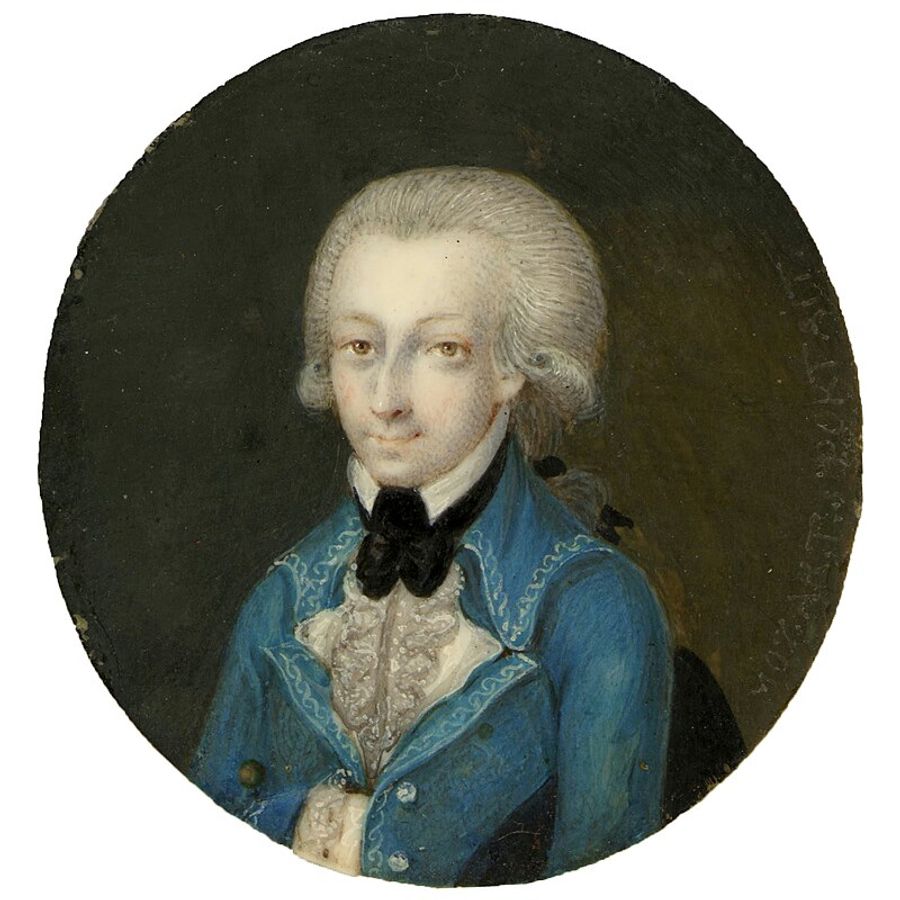
Mozart’s Divertimento No. 11 in D major, K. 251 (1776) is a Salzburg work for oboe, horns, and strings that turns the courtly “outdoor” divertimento into something sharper and more characterful. Written when the composer was 20, it mixes symphonic ambition with a serenade’s sociable ease—especially in its inventive pair of minuets and its unexpectedly expressive slow movement.
Background and Context
In Salzburg during the mid-1770s, Wolfgang Amadeus Mozart (1756–1791) was employed by the court of Archbishop Hieronymus Colloredo, producing music that could serve both ceremony and entertainment. In this milieu, the divertimento and serenade were not “minor” genres so much as flexible social tools: music to accompany name-day celebrations, dinners, and evening festivities, often performed by mixed wind-and-string ensembles drawn from local resources.[1]
K. 251 belongs to this Salzburg tradition, yet it deserves attention precisely because it does more than provide pleasant background. Mozart writes with an ear for contrast—wind brilliance against string warmth, rustic dance gestures against surprisingly “learned” form—and he treats a small ensemble as if it were capable of genuinely public, symphonic rhetoric. The result is a work that can charm as light music while also rewarding concentrated listening.
Composition and Premiere
The Divertimento in D major, K. 251 was written in Salzburg in July 1776.[1] The exact occasion is not absolutely settled in modern summaries, but it has long been connected with celebrations for Mozart’s sister Maria Anna (“Nannerl”)—either her name day (26 July) or her birthday (30 July). This association has helped fuel the work’s enduring sobriquet “Nannerl Septet.”[1]
As with many Salzburg divertimenti, a specific first performance is not securely documented in the public record. What is clear from the scoring is that Mozart had at hand excellent wind players (especially for horn) and a dependable string contingent—conditions that encouraged him to write a piece whose surface sociability is underpinned by real compositional craft.
Instrumentation
Mozart scores K. 251 for a compact, color-rich septet:[1][2])
- Woodwinds: oboe
- Brass: 2 horns
- Strings: 2 violins, viola, double bass
Two details matter for how the piece “speaks.” First, the oboe is not merely decorative; it frequently carries melodic and ornamental responsibility, standing out as a quasi-soloist. Second, the use of double bass (rather than a cello part as the main bass line) gives the ensemble a buoyant foundation and clarifies the serenade-like character—especially in passages where the bass articulates dance rhythms with crisp, lightly percussive definition.[1]
Form and Musical Character
K. 251 has six movements, a scale typical of Salzburg divertimento writing while still leaving Mozart room for internal drama and surprise:[1]
- I. Molto allegro (D major)
- II. Menuetto (D major)
- III. Andantino (A major)
- IV. Menuetto (Tema con variazioni) (D major)
- V. Rondo (Allegro assai) (D major)
- VI. Marcia alla francese (D major)
I. Molto allegro
The opening immediately signals that this is not “mere” background music. Mozart uses a monothematic sonata-allegro strategy: instead of presenting a clearly differentiated second theme in the dominant (A major), he reshapes the principal idea in a way that notably touches A minor—an expressive shadow that briefly complicates the sunny D-major façade.[1] The effect is subtle but telling: even in an entertainment genre, Mozart cannot resist giving the listener a more dramatic harmonic narrative.
II. Menuetto
The first Menuetto projects public, outdoor confidence—horn calls and sturdy string accompaniment framing a courtly dance. In the trio, Mozart reduces the texture to strings alone, a timbral “indoor” contrast that functions almost like a change of lighting: the music suddenly feels closer, more private, and more chamber-like.[1]
III. Andantino
Cast in A major, the Andantino offers the work’s most lyrical paragraph. Its form is described as rondo-like in modern commentary, and one hears why: recurring material gives the movement a gentle sense of return, as if the music is circling back to a familiar thought rather than driving forward.[1] The oboe’s cantabile line—supported by discreet strings—can sound almost operatic in profile, an early reminder that Mozart’s melodic imagination tends to turn “functional” slow movements into scenes.
IV. Menuetto (Tema con variazioni)
This movement is among K. 251’s most distinctive inventions: a minuet fused with variation technique. Mozart treats the minuet theme as a refrain, with the “trio” function fulfilled by successive variations, each spotlighting different players.[1] Notably, the first variation features the oboe, the second turns to solo violin, and the horns fall silent during the variations—an astute choice that thins the color and sharpens the listener’s focus on melodic filigree and string articulation.[1]
V. Rondo (Allegro assai)
The finale proper is an energetic rondo whose recurring refrain keeps the music in motion and makes it ideal for convivial performance. The writing alternates brilliance (oboe and horns projecting outward) with more delicate string-led episodes, maintaining variety without sacrificing momentum.[1]
VI. Marcia alla francese
The closing Marcia alla francese adds a ceremonial flourish. In Salzburg divertimento culture, a march can function as a practical and theatrical “frame”—music for entry, exit, or processional movement. Placed at the end, it leaves the listener with a clear public gesture, as if the entertainment ends by returning to the world of formal occasion.[1]
Reception and Legacy
K. 251 is not as ubiquitous as Mozart’s later Vienna serenades, yet it has remained attractive to performers because it sits at a sweet spot: modest forces, vivid wind color, and enough structural substance to anchor a full concert half. Its six-movement plan—especially the imaginative variation-minuet—shows Mozart expanding Salzburg divertimento conventions from within, turning a genre associated with sociability into a small laboratory for form, instrumental color, and character.
For modern listeners, the work offers a particularly clear window into Mozart at 20: already capable of symphonic thinking, already sensitive to timbre and contrast, and already unwilling to treat “occasional” music as routine. In short, the Divertimento No. 11 in D major, K. 251 is worth hearing not despite its entertainment origins, but because Mozart uses those origins as an invitation to be inventive.