- Köchel Number
- K9 25 | K6 25
- Genre
- Piano Music
- Form
- Piano Variations
- Key
- D Major
- Date
- 7 March 1766
- Place
- Amsterdam
- Age
- 10
Mozart’s Seven Variations in D on “Willem van Nassau” (K. 25) is a brief keyboard set from early 1766, written during the family’s stay in the Dutch Republic when the composer was just ten. Built on the well-known patriotic tune “Willem van Nassau,” it shows Mozart already thinking in crisp, performer-friendly variation patterns rather than mere embellishment.[1]
Mozart's Life at the Time
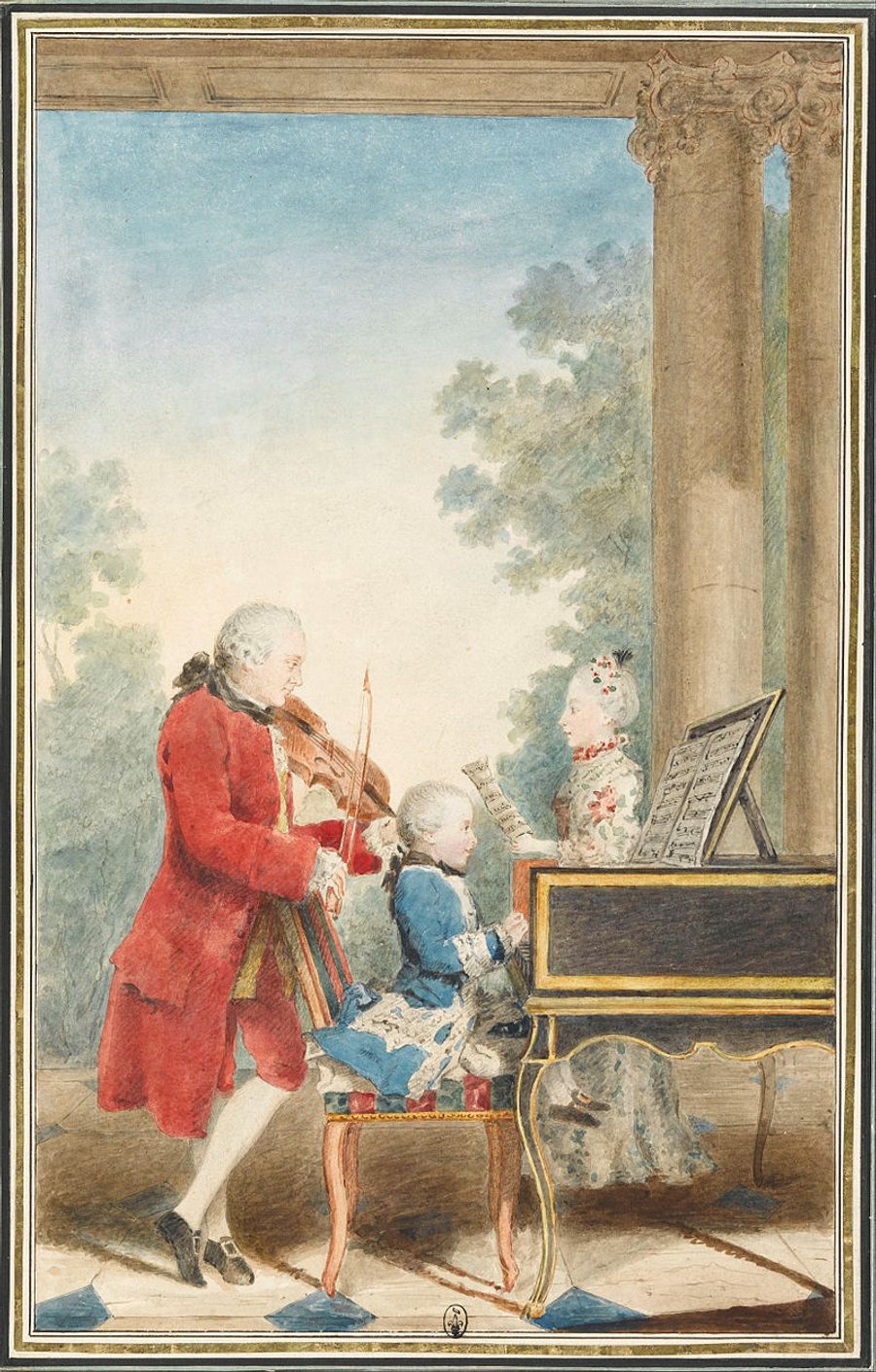
In early 1766, the ten-year-old Wolfgang Amadeus Mozart (1756–1791) was travelling with his family in the Netherlands, a leg of the Grand Tour that brought him into contact with local songs and audiences.[1] The set is associated with this Dutch period and is often linked in modern cataloguing to The Hague (7 March 1766), even when older references place it more generally in Amsterdam.[1][2]
Musical Character
The work presents a straightforward theme in D major followed by seven short variations for solo keyboard (harpsichord or early fortepiano).[2] Mozart treats the melody as a clear “spine,” keeping its outlines audible while changing surface figuration—typically by breaking chords into running patterns, tightening rhythmic activity, and shifting the distribution between the hands. The scale is modest, but the aim is recognisably didactic and public-facing: each variation reads like a new, slightly more agile way of presenting the same tune, a childhood preview of the fluent variation-writing that would later become second nature to him.[1]
Sheet Music
Download and print sheet music for 7 Variations in D on “Willem van Nassau”, K. 25 (D major) from Virtual Sheet Music®.