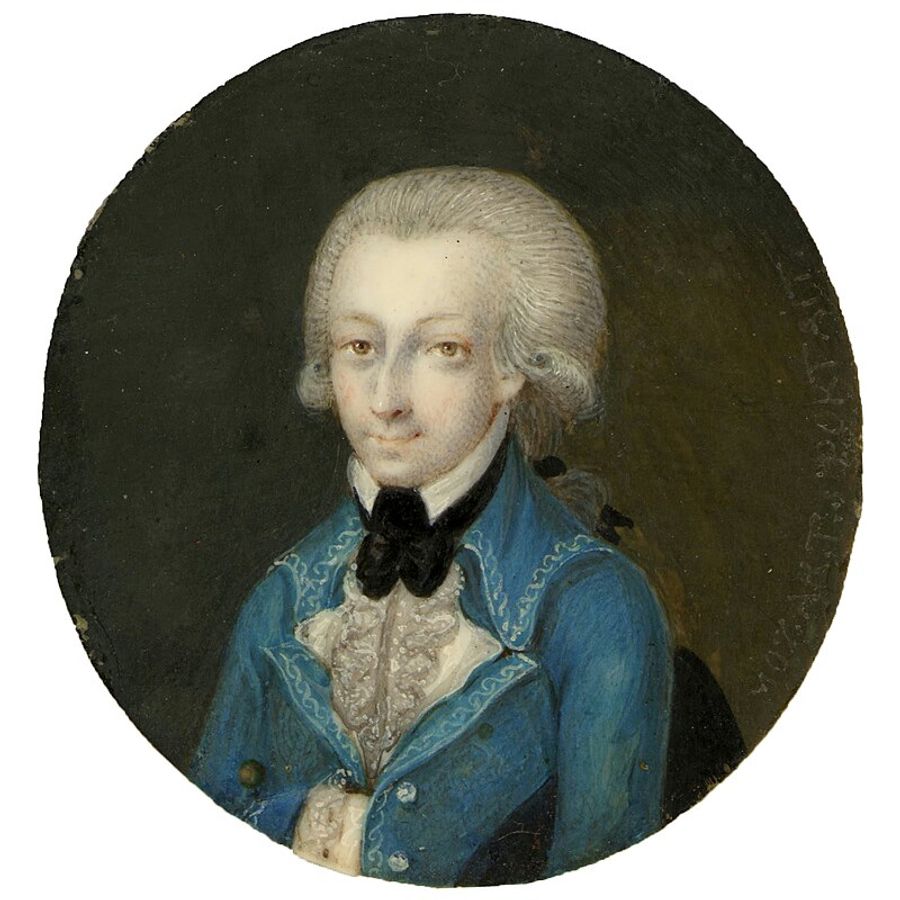
- Köchel Number
- K9 243 | K6 243
- Genre
- Sacred Music
- Form
- Litanies & Vespers
- Key
- E Flat Major
- Date
- March 1776
- Place
- Salzburg
- Age
- 20
Mozart’s Litaniae de venerabili altaris sacramento in E♭ major (K. 243), completed in Salzburg in March 1776, is his last and most expansive setting of this Eucharistic litany—music poised between cathedral ceremony and operatic immediacy. Written when the composer was 20, it shows how vividly he could dramatize Latin devotional texts within the practical constraints of Salzburg worship.
Background and Context
In 1776 Wolfgang Amadeus Mozart (1756–1791) was still working within the ecclesiastical culture of Salzburg, where elaborate Latin church music formed a regular part of major feasts and special services at the Cathedral and associated institutions. The Litaniae de venerabili altaris sacramento belongs to a specifically Eucharistic strand of Counter‑Reformation devotion: a litany of short invocations addressed to Christ present in the Blessed Sacrament, intended for public worship rather than private meditation.[1]
Mozart composed four litanies in all, but K. 243 stands out as the culmination of his efforts in the genre—broader in scale and richer in rhetorical contrast than the earlier Salzburg examples.[1] It is “moderately documented” largely because it sits just outside the narrow canon of Mozart’s most frequently programmed sacred works; yet it repays attention as a concentrated display of his youthful mastery of choral theatre in a liturgical frame.
Composition and Liturgical Function
The work is dated to March 1776 and is associated with Salzburg.[2][3] Its text cycles through a series of Eucharistic titles and petitions (for example Panis vivus, Verbum caro factum, Hostia sancta), culminating in an Agnus Dei.[4]
Although litanies can be sung in alternation (cantor/choir/congregation) in more modest settings, K. 243 is conceived as a concerted liturgical work: soloists and chorus carry the textual invocations in a sequence of discrete numbers, with orchestral writing that underlines the affect of each petition.[4]
Forces (typical modern performing materials):
- Soloists: soprano, alto, tenor, bass[4]
- Choir: SATB[4]
- Winds: 2 flutes, 2 oboes, 2 bassoons[4]
- Brass: 2 horns, 3 trombones[4]
- Strings: violins I & II, viola, double bass[4]
- Continuo: organ[4]
(Exact scoring and divisi details vary by source and edition; consult a critical edition or the specific performance materials in use.)[5]
Musical Structure
K. 243 unfolds as a chain of short movements, each keyed to a particular image of the Eucharist—effectively a succession of miniatures that lets Mozart shift quickly between awe, tenderness, and exultation.[4] A representative movement list (as commonly given in modern references) is:
- Kyrie
- Panis vivus
- Verbum caro factum
- Hostia sancta
- Tremendum
- Dulcissimum convivium
- Viaticum
- Pignus
- Agnus Dei[4]
What makes the piece distinctive is Mozart’s instinct for musical characterization in service of the text. The choral writing can pivot from declamatory weight to almost chamber-like transparency, while the orchestra does more than “accompany”: it paints a devotional psychology. Contemporary listeners often single out Tremendum as a locus of dramatic expression—string tremolos and hushed choral textures building toward sudden, forceful outbursts that suggest reverent fear before the mystery of the sacrament.[6]
The key of E♭ major—so often associated in Mozart with ceremonial radiance—also serves the liturgical purpose well, allowing bright sonorities for public worship while accommodating darker excursions when the text turns inward. In this sense K. 243 offers a telling preview of the composer’s later ability to fuse liturgical function with a strongly “dramatic” musical narrative.
Reception and Legacy
Unlike the Coronation Mass or the great late settings (Mass in C minor, Requiem), K. 243 has remained something of a connoisseur’s work: valued by choirs that relish Classical-era sacred repertoire, but less entrenched in mainstream concert life. The reasons are practical as much as reputational—its multi-movement design, solo quartet, and substantial orchestral forces make it more demanding to program than a single motet.
Yet precisely these features make it a rewarding rediscovery. K. 243 captures Mozart at 20 handling Salzburg’s ecclesiastical idiom with assurance while quietly stretching it: a litany that behaves, at moments, like opera and symphony translated into the language of Eucharistic devotion. For modern performers, it offers an ideal bridge between the compact Salzburg church pieces and the later, grander sacred canvases—proof that Mozart’s sense of spiritual drama was already fully awake in the mid‑1770s.[3]
Sources
[1] Overview of Mozart’s litanies and the place of the Eucharistic litanies within his Salzburg church output (reference article).
[2] Catalogue list entry giving date (March 1776) and location (Salzburg) for K. 243.
[3] Bärenreiter (publisher) product page noting K. 243 followed K. 195 and was composed in March 1776.
[4] Musica International entry with movement list, scoring summary, and basic work data for KV 243.
[5] IMSLP work page for K. 243 (access to scores and editions; useful for verifying materials used in performance).
[6] Emmanuel Music program notes discussing expressive features (notably the depiction of awe in “Tremendum”).