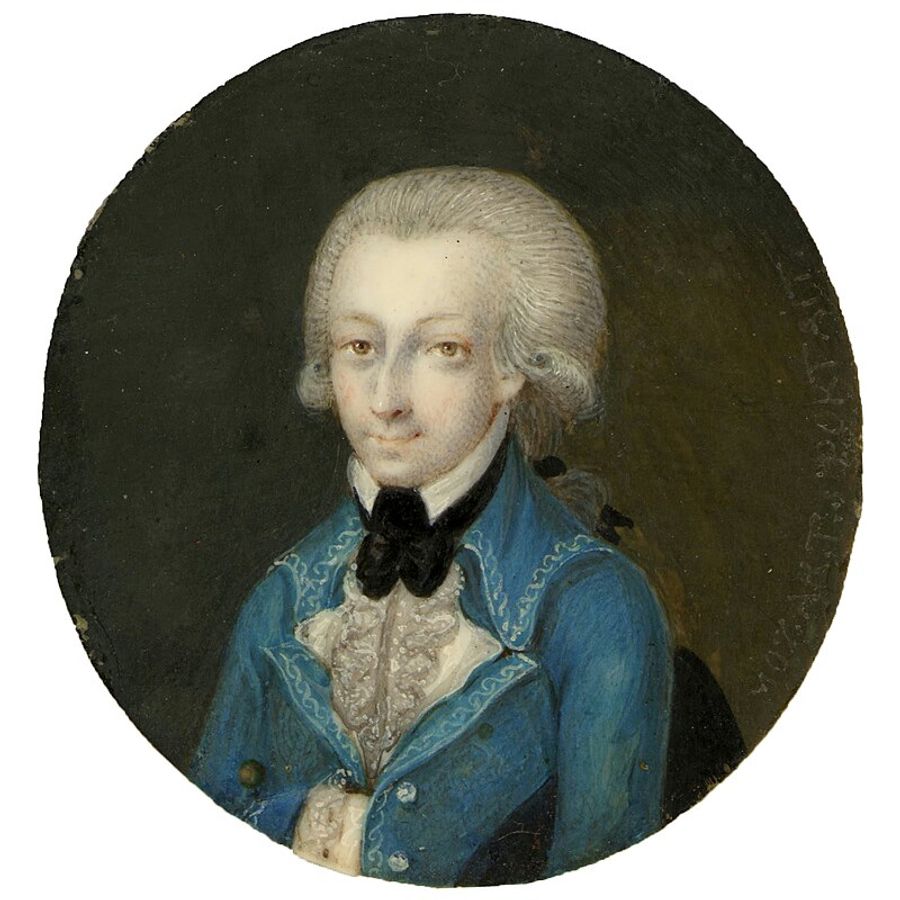
- Köchel Number
- K9 241 | K6 241
- Genre
- Sacred Music
- Form
- Church Sonatas
- Key
- G Major
- Date
- January 1776
- Place
- Salzburg
- Age
- 20
Mozart’s Church Sonata No. 9 in G major (K. 241) is a compact, single-movement liturgical work completed in Salzburg in January 1776, when the composer was 20. Written for two violins and organ with basso continuo, it stands out within the Salzburg Epistle Sonatas for the unusually prominent, concerto-like role of the organ.
Background and Context
Mozart’s so-called church sonatas—also known as sonate da chiesa or Epistle Sonatas—belong to a distinctly Salzburg Cathedral custom. During Mass, an instrumental piece could replace a choral gradual, sounding between readings at a fixed point in the liturgy; by Mozart’s time these short interludes were typically played with “orchestra,” even when the written score looks deceptively spare on the page [1]. Mozart composed seventeen such sonatas between 1772 and 1780, almost all as brisk, single-movement essays in Allegro tempo, tailored to fit a practical liturgical window rather than the concert hall [2]).
K. 241 belongs to a productive Salzburg phase in which Mozart—still employed in the archiepiscopal musical establishment—honed an art of compression: clear tonal plans, vivid surface rhetoric, and a balance between ceremonial function and musical delight. In that sense, the church sonatas form a small but revealing counterpart to the larger sacred genres (Masses, litanies, vespers) that dominated Salzburg’s institutional calendar.
Composition and Liturgical Function
The Köchel catalogue of the Internationale Stiftung Mozarteum dates K. 241 to Salzburg, January 1776, and preserves the work’s autograph title indicating that month and year [1]. Like its companion pieces, it was intended for performance within the Mass as a brief instrumental substitution for the gradual—music that had to be effective immediately, and to end cleanly, without disturbing the surrounding ritual [1].
Instrumentation in the Mozarteum catalogue is given succinctly as:
- Strings: violin I, violin II
- Keyboard/Continuo: organ (with basso continuo) [1]
Practical performance often implies a fuller continuo “bass team” than the score explicitly names—cello, violone/double bass, and sometimes bassoon doubling the line—reflecting Salzburg practice and the kinds of part sets known from related repertory [1]. Modern reference listings commonly describe the scoring as two violins, organ, and cello/bass (i.e., continuo bass) [2])—a useful shorthand for what players actually do.
Musical Structure
K. 241 is a single movement (typically performed as an Allegro), and its most striking feature is the organ’s profile. While many church sonatas treat the organ primarily as continuo support, K. 241 is frequently singled out as unusually “keyboard-forward,” at times resembling the dramaturgy of a concerto movement—solo figuration, bright passagework, and an almost theatrical sense of dialogue with the strings [3].
That concerto-like impression matters: it suggests Mozart exploiting the cathedral’s resources not merely to fill time, but to create a moment of focused instrumental display within worship—music that can sound festive without requiring trumpets and drums. In G major, the writing favors clarity and buoyancy, yet the tight scale forces Mozart to articulate form through crisp cadences and quick tonal excursions rather than extended development. For listeners, the pleasure lies in how swiftly the piece “gets to the point”: the organ’s brightness, the strings’ supportive brilliance, and the sense that a larger musical argument has been distilled to its essentials.
Reception and Legacy
The church sonatas as a genre are easy to underestimate: they are brief, functional, and rarely associated with a single famous occasion. Yet they remain a unique window into Mozart’s Salzburg craft—how a composer under institutional constraints could still produce music with poise, charm, and technical finish. Historically, the Epistle Sonata custom faded after Mozart left Salzburg, when liturgical directives favored vocal music at that moment in the service [2]).
Today, K. 241 survives most vividly in two places: in editions and recordings that frame the seventeen sonatas as a coherent Salzburg cycle, and in church or chamber performances where its organ writing makes an immediate case for itself. For a work designed to be “in between” things—between readings, between larger liturgical movements—it is remarkably self-assured. K. 241 deserves attention precisely because it turns a practical liturgical interlude into something akin to a miniature concerto: concise, public-facing, and unmistakably Mozartean in its ease.
Sources
[1] Internationale Stiftung Mozarteum, Köchel Verzeichnis entry for KV 241 (dating, key, instrumentation, Salzburg Epistle Sonata context, autograph note).
[2] Wikipedia: overview of Mozart’s Church Sonatas (dates, liturgical position, list including K. 241, later decline of the Epistle Sonata custom).
[3] Christer Malmberg (summary drawing on *The Compleat Mozart*/Zaslaw): notes on the church sonatas and the distinctive concerto-like character attributed to K. 241.