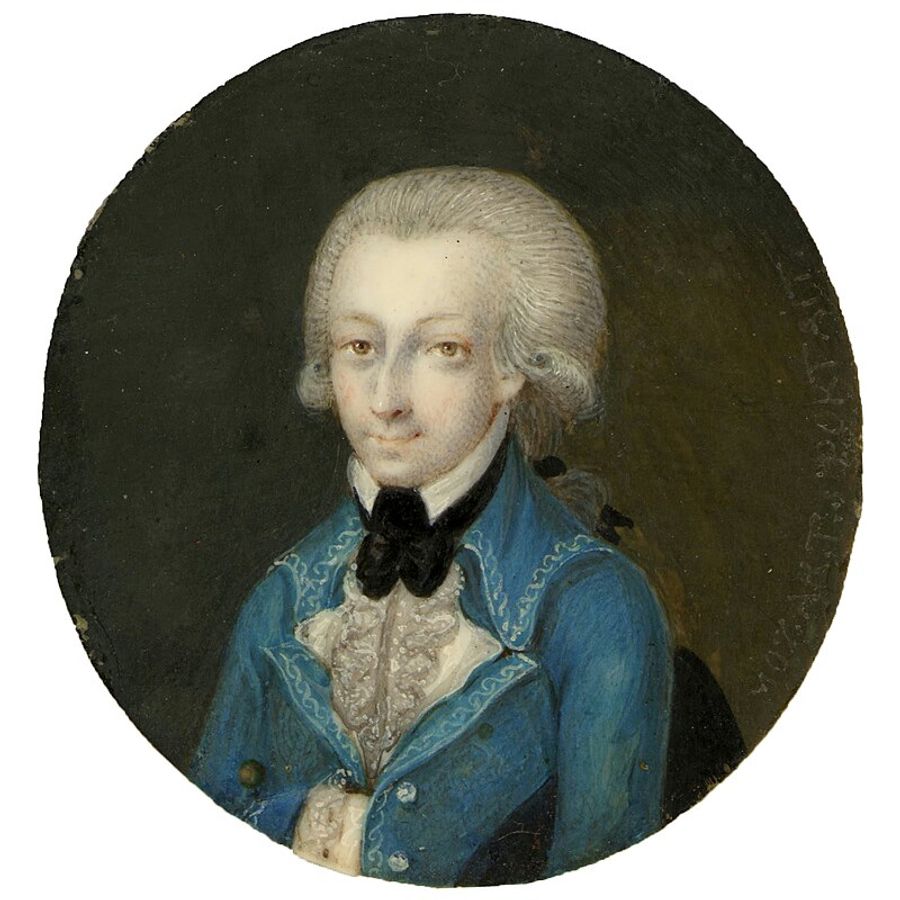
- Köchel Number
- K9 239 | K6 239
- Genre
- Orchestral Music
- Form
- Serenades, Cassations & Divertimenti
- Key
- D Major
- Date
- January 1776
- Place
- Salzburg
- Age
- 20
Mozart’s Serenade No. 6 in D major, “Serenata notturna” (K. 239) was composed in Salzburg in January 1776, when the composer was 20. Compact in scale yet boldly theatrical in sound, it is a serenade that turns the genre into a kind of outdoor concerto—built around a “double-orchestra” idea that remains instantly audible to modern listeners.
Background and Context
In Mozart’s Salzburg years, the serenade was not a minor sideline but a practical—and often prestigious—genre: functional music for civic, university, courtly, or festive occasions, typically performed by ensembles that could play outdoors and project confidently. Salzburg in the mid-1770s offered the young Wolfgang Amadeus Mozart (1756–1791) regular opportunities to write such works, and he responded with a remarkable sequence of divertimenti, cassations, and serenades that blend social utility with compositional ambition.
The Serenata notturna stands out within this landscape because it makes its “occasion music” premise part of the drama. Rather than aiming for the long, multi-movement breadth of some Salzburg serenades, Mozart fashions a taut three-movement design whose surfaces are immediately charming, yet whose scoring concept is strikingly original: two contrasted bodies of strings (plus timpani) set into dialogue, as if a small concertino group were stepping forward from a larger band. The result feels halfway between serenade, concerto, and staged procession—music that seems to move through space.
Composition and Premiere
Mozart composed the Serenata notturna in Salzburg and dated it January 1776 in his autograph inscription, a detail preserved in the work’s source record and modern cataloguing [1]. The precise original occasion is not definitively known, but the title (with its “night” suggestion) and the work’s march-like framing gestures fit well with Salzburg’s culture of outdoor or semi-outdoor ceremonial performance.
Unlike Mozart’s operas and late symphonies, the Serenata notturna does not come with a securely documented premiere narrative in the standard reference trail; its early performance context is best approached as typical for the genre: festive, flexible, and dependent on available players. That very flexibility may help explain its later success. With only three movements and highly lucid rhetoric, it travels well—from courtly Salzburg to the modern concert hall—without losing its identity.
Instrumentation
Mozart’s scoring is the work’s calling card: it is conceived for two string groups, with timpani adding ceremonial brilliance. Modern descriptions often summarize the concept as a solo quartet (two violins, viola, double bass) set against a larger string body, creating a concerto-like contrast within a serenade frame [2]).
A practical way to think of the forces is:
- Solo group (concertino-like): 2 violins, viola, double bass [2])
- Ripieno group: string orchestra (violins, violas, cellos, double basses) [3])
- Percussion: timpani [1]
This “double ensemble” idea is not mere coloristic novelty. It shapes articulation, dynamics, and even the listener’s sense of musical perspective: tuttis can feel like public proclamation, while the smaller group suggests chamber intimacy—an effect Mozart can alternate quickly for comic timing or graceful contrast.
Form and Musical Character
I. Marcia (D major)
Mozart opens with a Marcia—a genre signal as much as a tempo marking. The music has the crisp profile of ceremonial procession, but Mozart’s touch is to make the scoring itself part of the spectacle: the larger group can sound like an official band, while the smaller group answers with more pointed, conversational gestures. The timpani, used with restraint, lends the movement an almost “public square” resonance.
Formally, the movement’s strength lies in its clarity: firm cadences, repeated patterns, and bright D-major sonorities that read well in resonant spaces. Yet within that simplicity Mozart keeps the surface alive through quick exchanges between the two ensembles—an early example of his instinct for dramatizing texture.
II. Menuetto (D major) — with contrasting trio
The Menuetto deepens the work’s central conceit: social dance music reframed as musical theatre. The minuet proper is robust and rhythmically decisive, while the contrasting middle section (often heard as a trio-like relief) can shift the balance toward the solo group, thinning the texture and sharpening the sense of “foreground” and “background.” This is not the aristocratic minuet as polite wallpaper; it is the minuet as a scene with characters.
III. Rondeau (D major)
The finale is a buoyant Rondeau whose recurring refrain makes the movement immediately memorable, while episodes provide the chance for Mozartean wit—sudden textural lightening, playful punctuation, and lively repartee between soloists and ensemble. The concerto principle (alternation and contrast) is fully absorbed into serenade language: instead of a soloist “against” the orchestra, Mozart gives us a small band “within” a larger one.
Across all three movements, the piece’s distinctive achievement is its economy. At a time when serenades could be expansive, Mozart compresses his material into a bright, public-facing triptych that still offers real variety—especially in the way sonority and musical “distance” are constantly recalibrated.
Reception and Legacy
The Serenata notturna has become one of Mozart’s most frequently performed Salzburg serenades, prized for its immediacy and its clever, ear-catching scoring concept [4]. In repertoire terms, it occupies an appealing middle ground: lighter in scale than the mature symphonies, yet unmistakably Mozart in its formal poise and theatrical timing.
Its legacy also lies in how directly it teaches listeners to hear structure through timbre. Even without specialized training, one can perceive the musical argument because the “two orchestras” delineate it in real time: statement and response, public and private, massed sound and chamber-like detail. For Mozart at 20, still working within Salzburg’s constraints, that is a quietly bold artistic statement—proof that functional music could be, in the right hands, a laboratory for invention as well as an instrument of celebration.
Sources
[1] Mozarteum (Köchel Catalogue) work entry for KV 239: dating, source notes, and instrumentation information.
[2] Wikipedia overview of Serenade No. 6, K. 239 (basic background, three-movement layout, and the solo-quartet vs. orchestra concept).
[3] IMSLP page for Serenade No. 6, K. 239 (access to editions/scores and general work identification).
[4] San Francisco Symphony program note (Encore+) discussing the work’s scoring concept and concert-life appeal (accessed 2026).