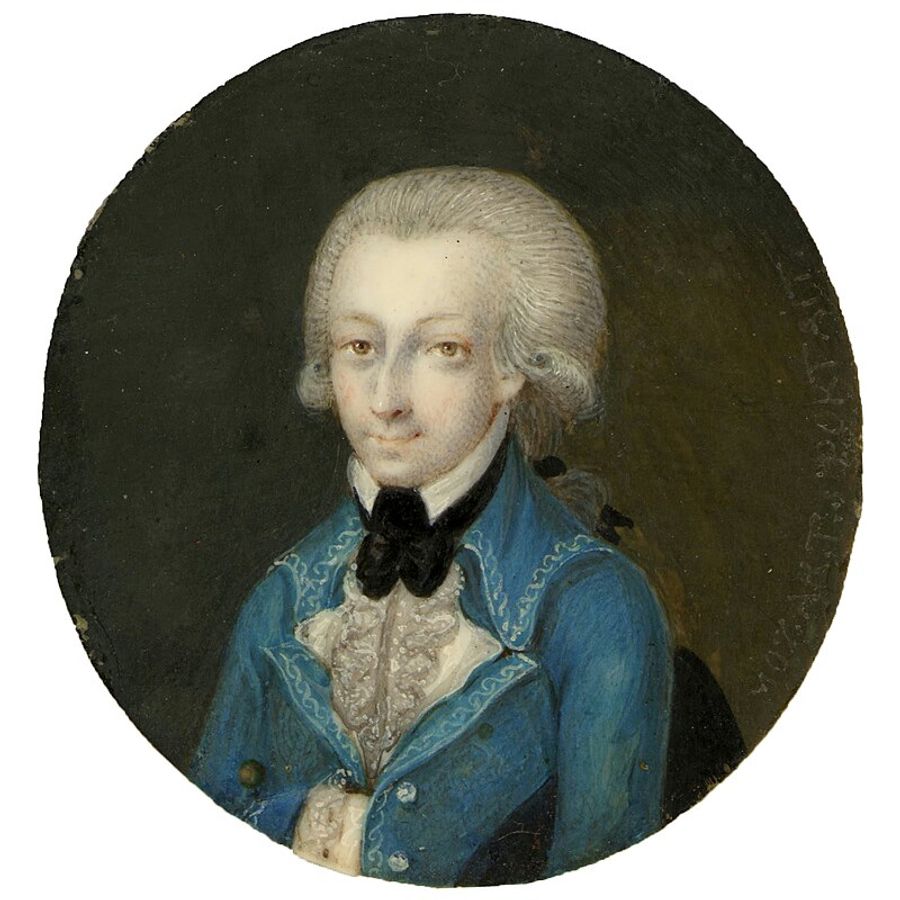
- Köchel Number
- K9 237 | K6 189c
- Genre
- Orchestral Music
- Form
- Serenades, Cassations & Divertimenti
- Key
- D Major
- Date
- Summer 1774
- Place
- Salzburg
- Age
- 18
Mozart’s March in D major, K. 237 (1774) is a compact, brilliantly scored ceremonial piece from his Salzburg years—music designed to frame public festivities rather than to dominate the concert hall. Written when he was 18, it shows how even “functional” occasional music could become, in Mozart’s hands, a little study in color, balance, and confident musical rhetoric.
Background and Context
In 1774 Wolfgang Amadeus Mozart (1756–1791) was firmly embedded in Salzburg’s institutional musical life, writing not only symphonies and church music but also the serenades, cassations, and divertimenti that accompanied civic and aristocratic ceremony. A march like K. 237 belongs to this practical world: it is music meant for movement—entrances, exits, and processions—where clarity of rhythm and bright sonority matter at least as much as thematic sophistication.
Yet these utilitarian genres are essential to understanding Mozart’s development. Salzburg’s outdoor and ceremonial repertory encouraged him to think in large gestures, to write for wind-and-brass color at close range, and to project musical ideas across open air. The result is a work that may be brief, but is not anonymous: K. 237 sits within a recognizable Salzburg “ceremonial D major” sound—trumpets, horns, oboes, and a string body reinforcing the beat and the harmonic pillars.[1]
Composition and Premiere
The march is catalogued as March in D major, K. 237 (also appearing in older cataloguing as K. 189c), and IMSLP summarizes it as a single-movement orchestral march from 1774.[1] While marches can circulate independently, this one is strongly tied to Mozart’s University of Salzburg serenade culture: scholarship has long associated it with the Serenade No. 4 in D major, K. 203/189b (the so-called “Colloredo” serenade), functioning as an introductory or exit march.[2]
A recent study mapping Mozart’s “serenade-linked” marches places K. 237/189c explicitly alongside K. 203/189b, listing it as a Marcia in D for that serenade complex (composed 1774) and locating it within the relevant volume of the Neue Mozart-Ausgabe.[3] In other words, it was likely intended not for a silent audience seated in rows, but for a public occasion where the music’s job was to organize attention—announcing the start, creating ceremony, and punctuating transitions.
Instrumentation
March in D major, K. 237 is scored for orchestra with a festive wind-and-brass profile. IMSLP gives the following instrumentation details:[1]
- Winds: 2 oboes, 2 bassoons
- Brass: 2 horns, 2 trumpets
- Strings: violins I & II, cello/double bass (no violas)
Two details deserve attention. First, the D-major trumpet writing signals an outdoor/ceremonial function: natural trumpets (without valves) are at their most secure and brilliant in “open” keys like D major. Second, the omission of violas is unusual enough to register immediately—an orchestral texture that feels slightly brighter and more top-heavy, with inner harmony often implied rather than densely filled. That leanness can be an advantage in outdoor performance, where too much middle-register activity easily turns to blur.
Form and Musical Character
As a march, K. 237 prioritizes rhythmic definition, harmonic directness, and sharply profiled phrases—exactly what a moving crowd or a ceremonial assembly needs. But the piece earns attention because it is more than a metronomic tread: Mozart treats the march as a miniature dramatic scene, in which bright fanfare rhetoric alternates with more tuneful, conversational writing for winds and strings.
He also writes in the serenade-march manner rather than the purely military one. That distinction matters. In Salzburg, these marches often sit adjacent to multi-movement serenades that include concerto-like solos, minuets, and finales. The march therefore has to “sound official” while still belonging to the same musical world as the serenade proper—hence the combination of ceremonial brass and more graceful wind phrases that can feel almost operatic in their sense of vocal line.
Heard alongside Serenade No. 4, K. 203, the march can be appreciated as a framing device: it establishes the public D-major brilliance before the serenade moves on to more varied keys, textures, and even concerto-like solo display within the larger work.[2] In performance today, it functions well either as a standalone curtain-raiser or in historically informed programming that restores the “processional” context these serenades originally inhabited.
Reception and Legacy
K. 237 is not a repertory staple, partly because its original purpose was situational: marches do their work quickly and then yield the stage. Even so, it survives in the scholarly and performing tradition because it illuminates how Mozart’s Salzburg craft operated at ground level—how he could write “for the job” while still shaping a distinctive orchestral sound.
Modern interest in these pieces has grown with the renewed attention to Mozart’s serenade repertory as more than pleasant background music. Studies of the serenade-linked marches underline that they formed a coherent functional system—musical signals embedded in civic ritual—rather than isolated trifles.[3] For listeners, March in D major, K. 237 offers a compact way into that world: a bright, disciplined ceremonial voice from an 18-year-old composer who was already thinking like a master orchestrator, even when composing on the boundaries of the “major” canon.
Sources
[1] IMSLP work page: March in D major, K. 237/189c — composition year and instrumentation (including note: no violas)
[2] Wikipedia: Serenade No. 4 in D major, K. 203/189b — notes that March in D, K. 237/189c was used as an introduction/exit for the serenade; context for Salzburg University ceremonies
[3] János Kárpáti, “Ecco la marcia, andiamo…” (Studia Musicologica 60, 2019) — table of serenade-linked marches listing K. 237/189c as linked to Serenade K. 203/189b and its NMA placement