- Köchel Number
- K9 21 | K6 19c
- Genre
- Opera & Stage Music
- Form
- Arias, Scenes, Ensembles & Choirs
- Key
- C Major
- Date
- 1765
- Place
- London
- Age
- 9
Mozart’s “Va, dal furor portata” (K. 21) is a compact but vivid Italian concert aria for tenor and orchestra, composed in London in 1765 when the composer was nine. Set to a text by Pietro Metastasio (from Ezio), it offers an early glimpse of Mozart’s instinct for operatic rhetoric—anger, accusation, and moral pressure—compressed into barely a few minutes.
Mozart’s Life at the Time
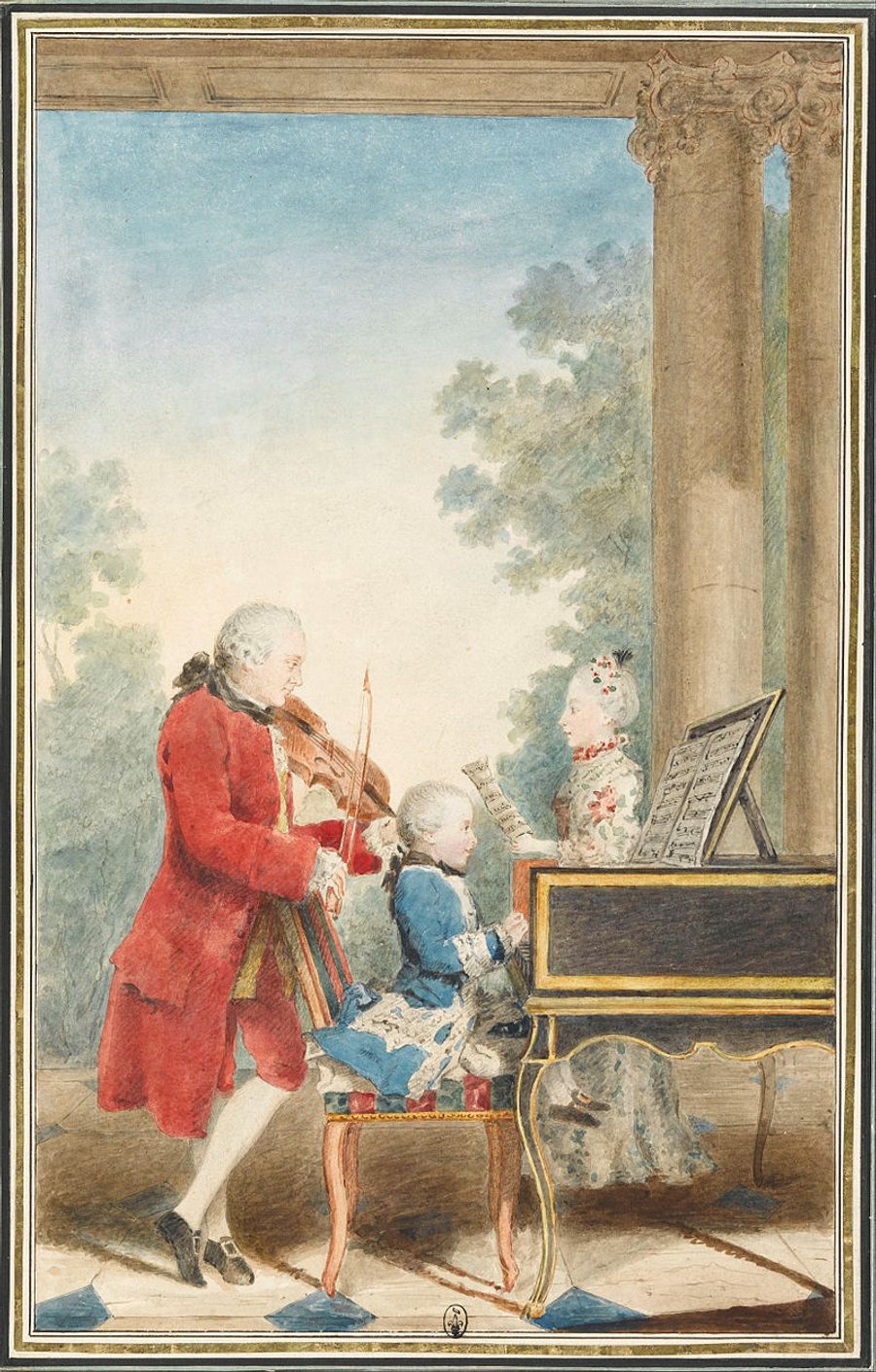
In 1765 the nine-year-old Wolfgang Amadeus Mozart (1756–1791) was in London with his family during the long “Grand Tour” of Western Europe (1763–66), a period in which public appearances, patronage, and opportunistic commissions shaped much of his day-to-day work. Within this intensely practical context, vocal numbers served a double purpose: they could be offered to professional singers and, just as importantly, demonstrate the boy’s command of the fashionable Italian style at a time when Italian opera dominated elite musical life.[3]
K. 21 belongs to a cluster of early arias Mozart produced on the tour—pieces often treated as “juvenilia” because they are short, occasional, and detached from a specific full opera production. Yet the genre is telling: even before Mozart had written his mature operas, he was already learning to translate a dramatic situation into musical pacing, vocal gesture, and orchestral color.[3]
Composition and Manuscript
The aria is catalogued as Aria for tenor and orchestra in C major, authenticated and extant, with the Köchel-Verzeichnis listing two related versions/datings spanning from early 1765 to July 1766.[3] The text is by Pietro Metastasio (1698–1782), taken from Act II of Ezio, where the character Massimo’s words combine outward fury with a sharp personal reproach.[1]
Although not a repertory staple today, the work is firmly documented in modern Mozart editions and catalogs; its survival and clear attribution make it a reliable witness to Mozart’s early absorption of Italian operatic language. In practical terms, it is also performable with modest forces—an advantage that likely mattered in a touring environment where flexibility was crucial.[2]
Musical Character
At a glance, “Va, dal furor portata” looks like a straightforward concert aria, but its distinctiveness lies in how quickly it “does drama.” The scoring already points beyond mere continuo accompaniment toward a genuinely orchestrated scene:
- Winds: 2 oboes, 2 bassoons
- Brass: 2 natural horns (in C)
- Strings: violins I & II, viola, cello, double bass
- Voice: tenor[1][2]
The affect is one of propelled indignation—furor not as a vague mood, but as a motor that drives rhythm, phrasing, and declamation. Metastasio’s couplets pivot between accusation (“reveal the treachery”) and a pointed reminder of obligation (“I gave you life, and you take it from me”), and Mozart responds with music that presses forward while still leaving room for the singer’s rhetorical emphasis.[1]
Why does this small London aria deserve attention? Precisely because it is small: it shows, in miniature, the young composer’s feel for operatic timing. Even without the scaffolding of a full stage work, Mozart aims for the essentials—clear verbal projection, a sense of “scene,” and orchestral reinforcement of the vocal argument. Heard alongside later insertion arias and mature opera numbers, K. 21 becomes a starting point: an early, documented experiment in the kind of dramatic compression that would later make Mozart’s operatic writing so unmistakably direct.
Sources
[1] Wikipedia: overview, Metastasio source (*Ezio*), and instrumentation summary.
[2] IMSLP work page: general information (dating/location), instrumentation details, and reference to the Neue Mozart-Ausgabe source scan.
[3] International Mozarteum Foundation (Köchel-Verzeichnis) entry for KV 21: authentication status, key, and version/dating information.