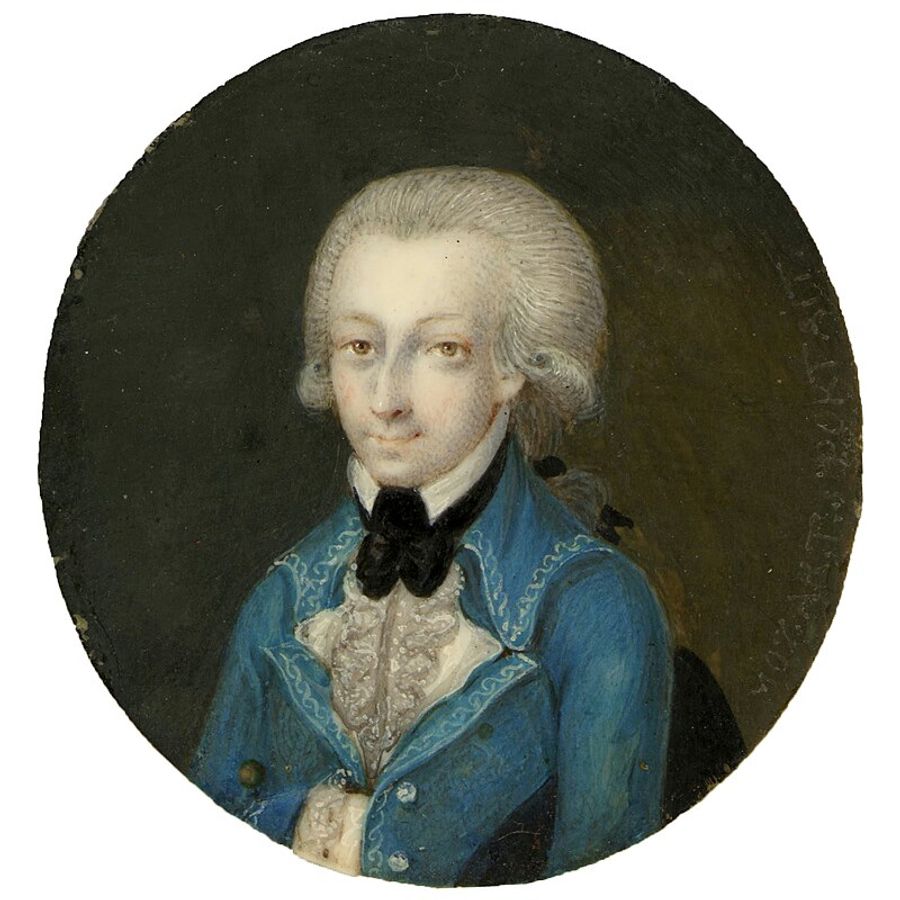
- Köchel Number
- K9 205 | K6 167A
- Genre
- Divertimenti & Serenades
- Form
- Divertimenti for Strings & Winds
- Key
- D Major
- Date
- July 1773
- Place
- Vienna
- Age
- 17
Mozart’s Divertimento No. 7 in D major, K. 205 (K.6 167A) belongs to a small, distinctive group of mid-1770s “notturno/divertimento” pieces scored for just a handful of players—here, two horns, bassoon, violin, viola, and basso. Probably written in 1773 (with some uncertainty in the dating), it shows the 17-year-old composer turning the social music of the serenade tradition into something lean, bright, and unusually characterful.
Background and Context
In the early 1770s Wolfgang Amadeus Mozart (1756–1791) was still, in institutional terms, the Salzburg court musician in training, yet his ambitions—and opportunities—were broader. The year 1773 sits between the family’s Italian travels and Mozart’s increasingly intense engagement with Viennese styles: music meant for sociable occasions (outdoors, at dinner, in gardens) coexisted with symphonies, church works, and the first clear steps toward the mature quartet and concerto.
K. 205 is especially revealing because it is neither a “big” serenade with a full complement of winds, nor a purely string divertimento. Instead, it uses a compact mixed ensemble that could be assembled quickly and played with one musician per part—exactly the sort of flexible scoring suited to private entertainment. The International Mozarteum Foundation’s Köchel catalogue notes that Mozart used the labels Divertimento or Notturno for a small number of such works, intended for one-to-a-part performance practice rather than full orchestral deployment [1].
That economy of forces is not a limitation so much as an aesthetic. The single violin part (no separate first and second violins) gives the texture a “soloistic” profile: the violin often functions as the leading melodic voice, with viola and bass forming a tight inner-and-lower scaffold. Against that, the two horns provide ceremonial sheen, while the bassoon is free to do more than merely reinforce the bass line.
Composition and Premiere
Mozart did not date the autograph, and the work’s origin is therefore discussed with some caution. A widely circulated reference summary (drawing on scholarship associated with Neal Zaslaw’s The Compleat Mozart) describes the origin as unclear, noting earlier connections made to Mozart’s Vienna visit in 1773—specifically to a garden concert at the home of the physician Franz Anton Mesmer on 18 August 1773, mentioned in a letter from Leopold Mozart three days later—while also reporting a more recent tendency (via handwriting analysis) to place the piece slightly earlier, in July 1773 [2].
The Mozarteum’s Köchel catalogue similarly gives a broad 1773 frame and specifically includes “Vienna, 07.1773” among its dating indications [1]. In practice, performers and listeners can take from this that K. 205 belongs to Mozart’s 1773 sound-world—close to the symphonies and serenades of that period—rather than to the later Viennese divertimenti of the 1780s.
A documented premiere is not secure. Modern reference pages sometimes supply speculative first-performance notes, but these are not consistently supported by primary evidence. What is firmer is the work’s compatibility with the period’s “occasional” music-making: it is compact, bright, and laid out in a sequence of movements that balances introductory dignity, dance, lyrical repose, and a brisk finale.
Instrumentation
Mozart’s scoring is one of the divertimento’s chief attractions: it is both festive (horns) and intimate (one-to-a-part strings).
- Winds: 2 horns; bassoon
- Strings: violin; viola
- Bass: basso (typically realized by violoncello and/or double bass; often doubled or reinforced by the bassoon)
This exact instrumentation is given in the Mozarteum’s Köchel catalogue (“cor1+cor2, vl, vla, b+fag”) [1] and echoed in widely used performance/reference listings [3].
Two practical consequences follow. First, the horns can articulate the outdoor, “signal” character traditionally associated with D major; second, the bassoon—present in addition to the bass line—can alternate between reinforcement and independent counterpoint, enriching the texture without enlarging the ensemble.
Form and Musical Character
K. 205 comprises five movements, a design that feels almost like a serenade in miniature: a substantial opening movement (with slow introduction), two minuets framing a central slow movement, and a high-spirited finale.
- I. Largo – Allegro (D major)
- II. Menuetto (D major) – Trio (G major)
- III. Adagio (A major)
- IV. Menuetto (D major) – Trio (D minor)
- V. Finale: Presto (D major)
(movement list as given by IMSLP and consistent with NMA-derived descriptions) [3]
I. Largo – Allegro
The Largo introduction, though brief, is crucial: it gives the piece a ceremonial “curtain-raising” gesture, with the horns able to suggest the outdoor serenade tradition while the strings outline a more intimate harmonic space. The ensuing Allegro is not symphonic in scale, but it is far more than background music. The single violin line encourages a quasi-concertante rhetoric: Mozart writes with the expectation that the violinist can project, ornament, and lead.
II. Menuetto (with Trio in G major)
The first minuet provides social poise—music that can, in principle, accompany conversation—yet it is shaped with Mozart’s knack for tonal freshness. The Trio’s shift to G major relaxes the brightness of D major and gives the horns a chance to re-color the harmony without overpowering the chamber-like strings.
III. Adagio (A major)
Placed at the center, the Adagio is the work’s lyrical heart. In divertimenti, slow movements often function as moments of “listening inward,” and here the key of A major (the dominant) creates a gentle, cantabile space that feels naturally vocal. The scoring is telling: with only one violin, Mozart can write melodic lines that are clear, un-doubled, and personal—almost like an aria without words.
IV. Menuetto (with Trio in D minor)
The second minuet is more than a repeat of the social dance function; it is a structural counterweight. Most striking is the Trio in D minor, an expressive darkening within an otherwise sunny D-major divertimento. That minor-mode turn is one reason K. 205 deserves attention: it shows the teenage Mozart already drawn to sharp contrasts of affect inside “light” genres.
V. Finale: Presto
The finale restores D major with brisk confidence. Presto finales in this repertory are often about momentum and brilliance rather than thematic profundity, but Mozart’s gift lies in making propulsion feel inevitable: the horn calls, quick string figuration, and bassoon-inflected bass line combine into a tight, festive close.
Reception and Legacy
K. 205 is not among Mozart’s most frequently programmed divertimenti—partly because its instrumentation is unusual and does not match the standard modern chamber-orchestra lineup. Yet that very specificity is its charm. The work’s “in-between” identity (not quite string quartet, not quite wind serenade, not quite orchestral serenade) offers a vivid snapshot of 18th-century functional music-making: flexible, occasion-driven, and dependent on the players available.
Historically, scholarship has often noticed the divertimento’s distinctive scoring: it belongs to a tiny corner of Mozart’s output in which a single violin part is used rather than the more typical paired violins, and it is frequently discussed alongside the March in D major, K. 290/167AB, which shares that one-violin layout [2]. For listeners today, Divertimento No. 7 rewards attention as a concise demonstration of Mozart’s ability to elevate “entertainment” genres: within five short movements he achieves a satisfying architectural symmetry, a surprising minor-mode inflection, and an instrumental palette that is both rustic (horns) and refined (the chamber-like string writing).
Sources
[1] International Mozarteum Foundation (Köchel Catalogue): KV 205 work entry with dating, instrumentation, and movement listing.
[2] Reference summary derived from Zaslaw’s The Compleat Mozart (hosted by Christer Malmberg): notes on uncertain origin/dating, possible Mesmer connection, and distinctive one-violin scoring.
[3] IMSLP work page for Divertimento in D major, K. 205/167A: instrumentation and five-movement structure (with keys).