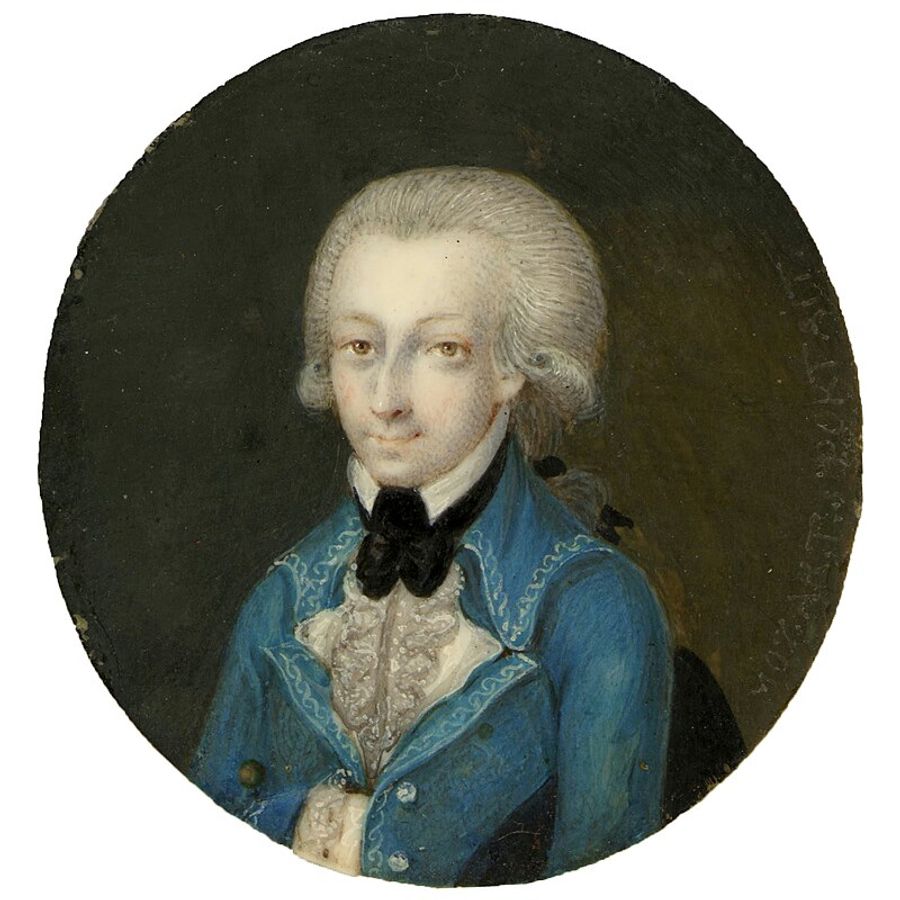
- Köchel Number
- K9 200 | K6 189k
- Genre
- Orchestral Music
- Form
- Symphonies
- Key
- C Major
- Date
- c. 17 November 1773–1774
- Place
- Salzburg
- Age
- 17
Mozart’s Symphony No. 28 in C major (K. 200) is a Salzburg work from November 1773, written when he was 17 and poised between youthful fluency and a new, more “symphonic” ambition.[1] With festive trumpets, buoyant dance rhythms, and an unusually alert sense of dialogue between strings and winds, it is one of the early Salzburg symphonies that rewards close listening far beyond its modest fame.[2]
Background and Context
Mozart’s Salzburg symphonies of the early 1770s are often discussed as functional works—music for the court concerts of the Prince-Archbishop, written quickly and rarely circulated widely during the composer’s lifetime.[2] Yet within those practical constraints Mozart repeatedly tests how much character, contrast, and architectural weight he can pack into a familiar four-movement plan.
K. 200 belongs to the cluster of Salzburg symphonies composed around 1773–1774—years that also produced the dramatic Symphony No. 25 in G minor (K. 183) and the altogether more mature Symphony No. 29 in A major (K. 201).[1] If K. 183 is a stormy manifesto and K. 201 a clear step toward the Vienna symphonic ideal, K. 200 stands as their bright, festive counterpart: not “experimental” in orchestral size, but distinctive in the way it turns conventional Salzburg gestures into continuous, quicksilver conversation.
Composition and Premiere
The dating of K. 200 is unusually tangled because Mozart’s inscription in the autograph is hard to read. The Neue Mozart-Ausgabe preface argues for November 1773 (with the day likely 12 or 17), partly on stylistic and documentary grounds.[1] The Köchel-Verzeichnis entry likewise places the work in Salzburg within a broader dating window for the source tradition, while confirming the work’s secure authenticity.[2]
The autograph manuscript itself has had a complex history of ownership; the Morgan Library & Museum catalog describes a full score with an inscription reading “Salisburgo 17 (or 12) 9mber 1774,” reflecting an older reading (from Köchel’s 6th edition) of the heavily crossed-out date.[3] In other words, the sources preserve the very ambiguity that later scholarship has attempted to resolve.
As with many Salzburg symphonies, the precise first performance is not securely documented. Given the work’s forces and character—bright C major with trumpets—it plausibly served a festive court occasion rather than a public concert in the later Viennese sense.[2]
Instrumentation
K. 200 uses essentially the “festive” Salzburg symphony orchestra: pairs of winds and brass with strings, with trumpets silent in the slow movement.[4]) The Köchel-Verzeichnis scoring summary specifies:
- Winds: 2 oboes
- Brass: 2 horns; 2 trumpets
- Strings: violins I & II, viola, cello & double bass
Mozarteum’s instrumentation line (oboes, horns, trumpets, and strings) is especially valuable here because it reflects the work’s cataloged scoring rather than later performing traditions.[2]
Two details are worth noticing in performance. First, the trumpets’ absence in the Andante is not merely a practical matter of range or tuning; it also shifts the sound-world decisively toward warmer, more private colors. Second, Mozart’s Salzburg practice often involved the same players doubling flutes and oboes, which could affect how one imagines orchestral resources at court—even when the notated scoring looks straightforward.[2]
Form and Musical Character
Mozart casts the symphony in four movements, a layout associated with the more “Germanic” concert symphony rather than the three-movement Italian overture-symphony.[1]
- I. Allegro spiritoso (C major, 3/4)
- II. Andante (F major, 2/4)
- III. Menuetto – Trio, Allegretto (C major, 3/4)
- IV. Presto (C major, 2/2)
I. Allegro spiritoso
The first movement’s most striking feature is its meter: a full-bodied opening movement in 3/4, which immediately blurs the line between “symphonic” argument and dance-like lift.[4]) Mozart uses sonata-allegro form (exposition, development, recapitulation) in a way that feels less like rhetorical oratory and more like agile stage dialogue: phrases bounce between upper strings and winds, while the harmony moves briskly enough to keep the ear slightly off balance.
In C major—often a “public” key for Mozart—the presence of trumpets adds brilliance, but the movement’s wit lies in articulation and pacing: quick cadential turns, sudden lightness, and a tendency to keep the musical surface in motion, as though the orchestra were speaking in overlapping sentences.
II. Andante (F major)
The slow movement, in the subdominant key of F major, is marked Andante—not Adagio—and its mood is correspondingly poised rather than solemn.[4]) With trumpets withheld, the texture becomes more intimate: wind color and inner-string movement matter more, and Mozart’s phrase endings often feel gently “questioning,” as if the music prefers continuation to full stop.
This is one of the reasons K. 200 deserves more attention than its relative obscurity suggests: even when the scoring is modest, Mozart is already thinking dramaturgically about orchestral color across a multi-movement span.
III. Menuetto – Trio
The minuet restores C major and the courtly public sphere. Yet it is not simply “filler.” Its rhythmic profile—firm, balanced, and slightly martial in its emphases—acts as a hinge between the genial opening and the headlong finale. The Trio’s contrast (lighter scoring, more conversational phrasing) refreshes the ear before Mozart’s closing sprint.
IV. Presto
The finale’s Presto is the symphony’s calling card: compact, effervescent, and propelled by a near-constant sense of forward motion.[4]) Rather than ending with grand ceremonial gestures, Mozart opts for quick-footed brilliance—an ending that feels closer to operatic ensemble energy than to monumental symphonic peroration.
Reception and Legacy
K. 200 has never occupied the central repertory the way Mozart’s late symphonies do, and even within the Salzburg works it is often overshadowed by the emotional extremity of K. 183 and the polish of K. 201.[1] Yet modern scholarship and performance materials have made it easier to encounter the piece on its own terms: the autograph survives, and the work is available in major scholarly editions and public-domain scores.[2][5]
What ultimately makes Symphony No. 28 worth rediscovery is not historical novelty but craftsmanship. At 17, Mozart can already treat “standard” Salzburg materials—oboes and horns over strings, with trumpets for ceremonial shine—as a vehicle for rapid character shifts, deft formal control, and a sense of orchestral theater. Heard alongside its neighbors, K. 200 emerges as a key chapter in Mozart’s Salzburg symphonic education: a work that turns courtly convention into genuine musical personality.
Sources
[1] Neue Mozart-Ausgabe (Digital Mozart Edition), Symphonies volume preface (English PDF) discussing dating and context for K. 200.
[2] Internationale Stiftung Mozarteum, Köchel-Verzeichnis entry for KV 200 (catalog data, authenticity status, dating window, instrumentation shorthand).
[3] The Morgan Library & Museum catalog record for Mozart autograph manuscript of Symphony in C major, K. 200 (inscription and provenance details).
[4] Wikipedia: Symphony No. 28 (Mozart) (movement list, keys/meters, and general scoring overview including trumpets silent in slow movement).
[5] IMSLP: Symphony No. 28 in C major, K. 200 (public-domain scores and parts; reference access point).