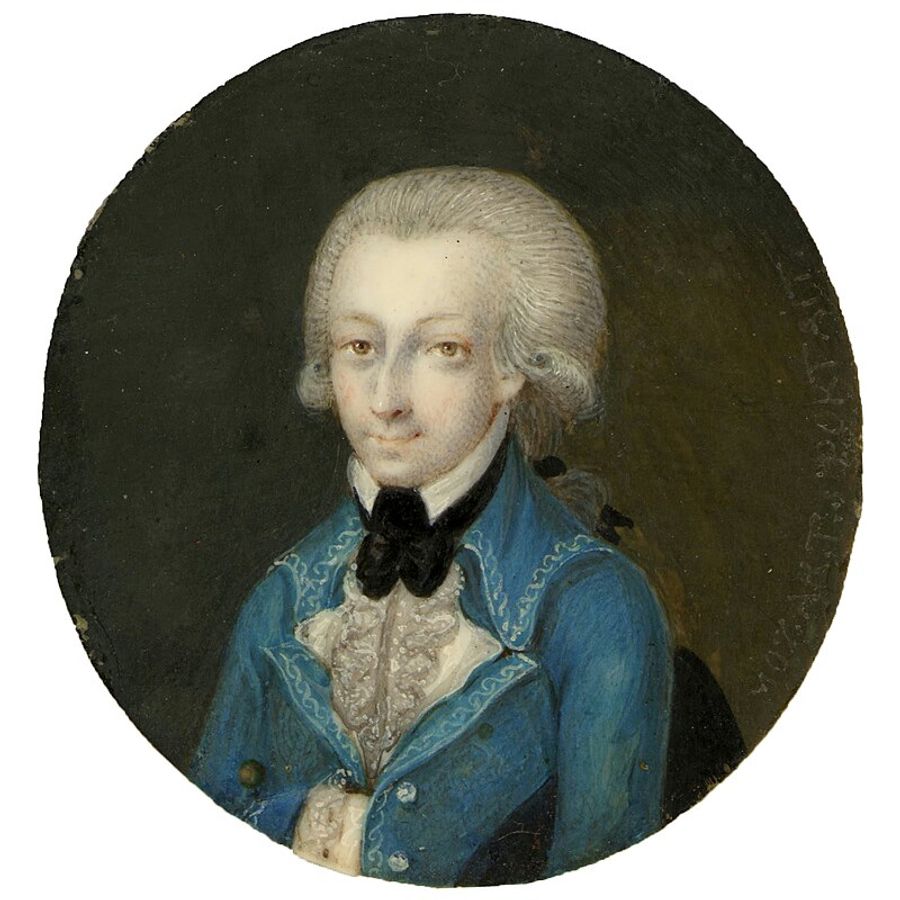
- Köchel Number
- K9 196f | K6 Anh. C 17.02
- Genre
- Divertimenti & Serenades
- Form
- Divertimenti & Serenades for Winds
- Key
- B Flat Major
The Divertimento in B♭ major for winds (K. 196f) survives as a short, four-movement entertainment piece, transmitted without a secure autograph and generally treated as of doubtful authenticity. It circulates in versions for wind sextet or wind octet, suggesting a practical flexibility typical of late-18th-century outdoor and social music-making.
Background and Context
K. 196f is usually discussed not as a securely documented Mozart work, but as a divertimento attributed to him whose origin (date, place, and original source) is unclear. Modern editorial treatment reflects that uncertainty: in the Digital Mozart Edition’s table of contents for the Neue Mozart-Ausgabe volumes devoted to works of doubtful authenticity, the piece appears as a Divertimento in B flat a 6 (two clarinets, two horns, two bassoons) and also as a Divertimento in B flat a 8 (adding two oboes).[1]
The work was first published around 1801 (Leipzig, Breitkopf & Härtel), a relatively late appearance that does not, in itself, exclude Mozart but does weaken any attempt to connect it firmly to a specific episode in his career.[2] For listeners approaching it today, the most responsible framing is to hear it as pleasant Harmoniemusik-like repertoire in B♭ major that may reflect Mozartian practice, while remaining alert to the possibility of another hand behind it.
Musical Character
What can be described with some confidence is the piece’s layout and intended sonority. As transmitted, it comprises four movements—Allegro, Adagio, Menuetto – Trio, and a finale marked Andantino with a Trio—and exists in scorings for either six winds (2 clarinets, 2 horns, 2 bassoons) or eight (adding 2 oboes).[2]
B♭ major is a natural key for late-18th-century winds, particularly the horns, and the instrumentation points to the cultivated “Harmonie” sound world that Mozart knew well: clarinets and bassoons supply warmth and body in the middle and lower registers, while the horns broaden the harmony and help project the music outdoors; the optional oboes (in the octet version) sharpen the upper profile and can strengthen melodic outlines.[1]
Place in the Catalog
Within the broad orbit of Mozart’s wind serenades and divertimenti, K. 196f sits at the margins: it is close enough in scoring and genre to invite comparison with authentic Harmoniemusik, yet distant in documentation. For that reason, it is best treated as an interesting, performable appendix to the wind repertory rather than as firm evidence for Mozart’s stylistic development at any precise moment in his life.[1]
Sources
[1] Digital Mozart Edition (Mozarteum Salzburg): Neue Mozart-Ausgabe, Works of Doubtful Authenticity vol. 2 (table of contents listing K. 196f / Anh. 227 in sextet and octet scorings, with movement incipits and scoring).
[2] IMSLP: Divertimento in B-flat major, K.Anh.227 (K.196f) — general info including key, movement list, instrumentation variants, and first publication c. 1801.