Missa brevis in D major, K. 194 — Mozart’s Salzburg ‘brief Mass’ at its most concentrated
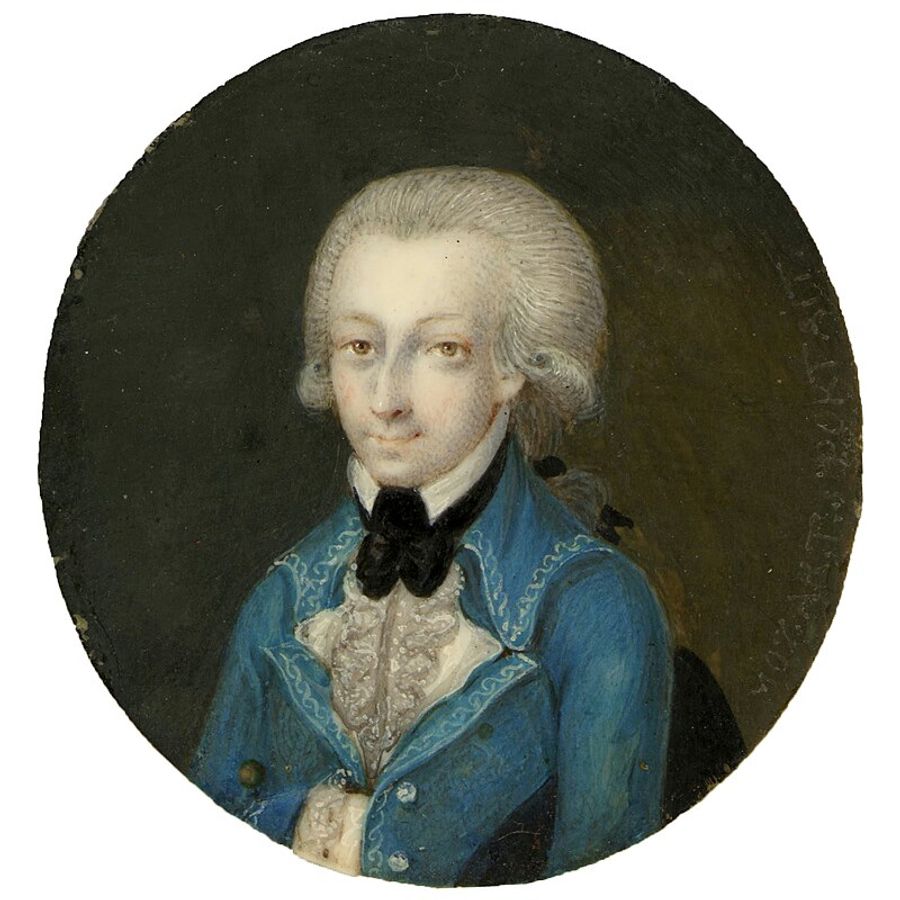
- Köchel Number
- K9 194 | K6 186h
- Genre
- Sacred Music
- Form
- Masses & Requiem
- Key
- D Major
- Date
- 8 August 1774
- Place
- Salzburg
- Age
- 18
Mozart’s Missa brevis in D major (K. 194) is a compact liturgical setting completed in Salzburg on 8 August 1774, when the composer was 18.[1] Written for practical church use rather than concert display, it nonetheless shows Mozart’s gift for marrying clarity, momentum, and flashes of contrapuntal craft within strict time constraints.[2]
Background and Context
In the 1770s Mozart’s professional life in Salzburg was inseparable from the city’s ecclesiastical calendar. Much of his sacred output was produced for the musical establishment connected with the Prince-Archbishop’s court and the Cathedral, where brevitas—a preference for concise settings—shaped what composers could write and what could realistically be performed within the liturgy.[2] The result was a flourishing local genre: the Salzburg missa brevis, typically marked by swift pacing, limited textual repetition, and orchestration that could be scaled to available forces.
K. 194 belongs to Mozart’s intense summer of church composition in 1774, close in time to the Missa brevis in F major, K. 192 (completed 24 June 1774).[3] In this context, K. 194 can sound less like a “small” Mass than like a concentrated solution to a practical problem: how to articulate the entire Ordinary with rhetorical variety, without lingering.
Composition and Liturgical Function
Mozart dated the work 8 August 1774 in Salzburg, and modern catalogues identify it as a Missa brevis for ordinary church use.[1] Its liturgical purpose is reflected in its economy: the Gloria and Credo are set as continuous movements (rather than being broken into multiple independent numbers), helping the service proceed efficiently.[4]
The scoring, too, aligns with Salzburg practicality: SATB choir with SATB soloists (often emerging from the choir), plus a restrained orchestra centered on strings and continuo; sources and later descriptions also note the common Salzburg practice of reinforcing choral lines with trombones (colla parte), strengthening the sound without adding contrapuntal complexity.[4] The work is preserved and disseminated in modern editions (including the Neue Mozart-Ausgabe), and the score tradition is widely accessible today.[5]
Musical Structure
Despite its “brief” designation, K. 194 is not musically perfunctory. Its distinctiveness lies in how decisively Mozart characterizes large spans of text with a few well-chosen gestures—clear choral declamation, bright D-major ceremonial tone, and quick transitions that keep the narrative of the Ordinary in motion.
A typical layout comprises the standard six-part Ordinary:
- Kyrie
- Gloria
- Credo
- Sanctus
- Benedictus
- Agnus Dei[4]
Within that frame, listeners can notice three “Salzburg” solutions executed with unusual poise:
- Momentum through continuity. The long texts (Gloria, Credo) move in a largely uninterrupted sweep. Mozart minimizes repetition and favors syllabic, speech-like choral writing, so that doctrinal text remains intelligible at speed—an aesthetic consistent with the Archbishop’s liturgical expectations as described in modern scholarship.[2]
- Color from reinforcement, not expansion. The use of a modest string/continuo basis (with possible trombone doubling) yields a sonority that can sound festive without requiring a “concert Mass” orchestra. This is one reason the work rewards attention: Mozart achieves public splendor with essentially architectural means—pillars of sound rather than decorative excess.[4]
- Contrapuntal flashes inside a short span. Even under tight constraints, Mozart finds room for short imitative or fugal passages that sharpen the rhetoric at key textual moments. In a Salzburg missa brevis, such touches function like illumination in a manuscript: brief, structural, and memorable rather than extensive.[4]
Reception and Legacy
K. 194 is not among Mozart’s most famous Masses, partly because it is designed for routine worship rather than for monumental display. Yet that is precisely its historical value: it preserves, at high craftsmanship, the everyday sound-world of Salzburg Catholic liturgy in the mid-1770s—music written to be used.
In performance today, the work often surprises audiences expecting a merely functional “short Mass.” Its compact proportions reveal Mozart’s instinct for dramatic pacing: the Ordinary unfolds with the urgency of a single span, and the quick, lucid choral writing can feel remarkably modern in its directness. For choirs and listeners interested in how Mozart learned to say much with little, the Missa brevis in D major, K. 194 remains one of the most instructive—and quietly satisfying—entries in his Salzburg sacred catalogue.[1]
Sources
[1] Internationale Stiftung Mozarteum (Köchel Verzeichnis): KV 194 — Missa in D ‘Missa brevis’ (work entry, catalogue data and overview).
[2] Oxford Academic (The Master Musicians: Mozart), chapter on sacred music discussing Colloredo’s influence and the predominance of the missa brevis in Mozart’s Salzburg output.
[3] Wikipedia: Mass in F major, K. 192 (completion date and Salzburg context for the closely related 1774 missa brevis pair).
[4] Wikipedia: Mass in D major, K. 194 (basic facts: completion date, movement layout, and common scoring description).
[5] IMSLP: Missa brevis in D major, K. 194 (access to editions, including reference to Neue Mozart-Ausgabe materials).