- Köchel Number
- K9 191 | K6 186e
- Genre
- Concertos
- Form
- Concertos for Strings & Winds
- Key
- B Flat Major
- Date
- 4 June 1774
- Place
- Salzburg
- Age
- 18
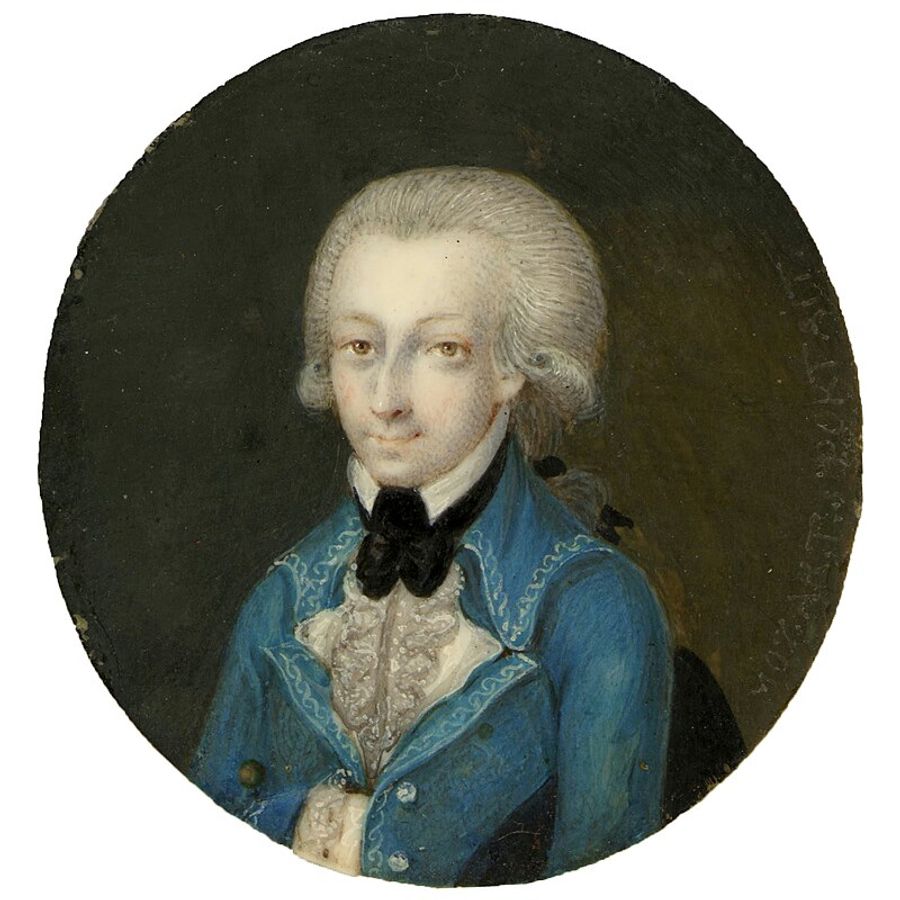
Mozart’s Bassoon Concerto in B♭ major, K. 191 (completed in Salzburg in 1774) stands at the head of his surviving concertos for solo wind instrument and orchestra. Written when the composer was 18, it combines symphonic ambition with unusually vocal writing for the bassoon—an early proof of how naturally Mozart could make a “supporting” orchestral voice sing.
Background and Context
In 1774 Wolfgang Amadeus Mozart (1756–1791) was employed in Salzburg under the rule of Prince-Archbishop Hieronymus Colloredo, writing at speed across genres while absorbing the latest instrumental idioms circulating through southern Germany and Austria. The Bassoon Concerto in B♭ major, K. 191 belongs to this Salzburg period and, despite its relative brevity, it already shows Mozart treating a wind soloist not merely as an agile virtuoso but as an expressive protagonist—capable of operatic cantabile (songful melody) as well as comic quickness.1
The concerto’s reputation today is strikingly disproportionate to its early date. It has become a cornerstone of the bassoon repertory—often encountered in conservatory study and professional auditions—because it tests classical style, articulation, phrasing, and poised virtuosity more searchingly than its friendly surface suggests.2
Composition and Premiere
The autograph score is lost, but the work’s completion date is generally given as 4 June 1774, in Salzburg.2 Beyond that, the original performing circumstances remain opaque. A long-standing tradition connects the concerto with the Bavarian aristocrat and bassoon amateur Thaddäus Freiherr von Dürnitz, yet modern reference accounts typically treat the “commission” story with caution, noting that hard documentary proof is limited.2
What can be said with confidence is that K. 191 is Mozart’s earliest surviving concerto for a wind instrument—a fact that makes it a revealing point of departure for the later Salzburg and Vienna masterpieces for oboe, horn, clarinet, and flute.2 The writing already assumes a soloist fluent in rapid passagework and wide registers, but it just as often rewards a player who can shape long, aria-like lines with imaginative breath and color.
Instrumentation
Mozart scores the concerto for solo bassoon and a compact classical orchestra—essentially a chamber-sized symphonic palette—allowing the solo line to project without strain while still engaging in genuine dialogue.
- Woodwinds: 2 oboes
- Brass: 2 horns (in B♭)
- Strings: violins I & II, viola, cello, double bass (bass line)
- Solo: bassoon2
Notably, the scoring omits trumpets and timpani, keeping the sound bright but pliant; the horns add ceremonial sheen in tutti passages and warm harmonic cushioning in lyric episodes.
Form and Musical Character
Mozart follows the standard three-movement concerto plan, but within that familiar outline he gives the bassoon a remarkably “theatrical” range of roles: witty conversationalist, lyrical singer, and agile dancer.
I. Allegro (B♭ major)
The opening movement uses sonata-allegro form with an orchestral introduction, a design that lets Mozart establish a public, extrovert tone before the soloist enters to reinterpret that material more personally.2 What makes the movement distinctive for the instrument is how naturally Mozart turns the bassoon’s reedy resonance into melodic charm: scalar runs and arpeggios are frequent, but they are rarely empty display. Instead they tend to speak—answering orchestral gestures, dovetailing with oboes, or smoothing transitions into new harmonic regions.
A hallmark of Mozart’s concerto style is already present: the solo part is virtuosic, yet never severed from the orchestra’s thematic argument. Even when the bassoon becomes most animated, the surrounding textures remain transparent enough to keep the musical “conversation” intelligible.
II. Andante ma adagio (F major)
The slow movement shifts to F major and adopts a more intimate, vocal tone.2 Here Mozart writes for the bassoon as if it were a low lyric voice: phrases are long, breath-shaped, and often poised above softly pulsing accompaniment. The movement is sometimes described as a sonata without development—a compact lyrical design that concentrates on melody and harmonic shading rather than dramatic confrontation.2
One reason the movement deserves attention from listeners beyond the bassoon world is its forward glance toward Mozart’s mature operatic lyricism. Reference accounts have long noted that a theme from this movement later reappears in the expressive sound-world of Le nozze di Figaro (1786), suggesting how readily Mozart’s instrumental singing could migrate into the theater.2
III. Rondo: Tempo di Menuetto (B♭ major)
The finale, marked “Rondo: *Tempo di Menuetto*,” is a dance-inflected rondo whose elegance is as important as its virtuosity.2 Mozart’s choice of a minuet tempo is telling: rather than a headlong sprint to the finish, the movement balances sparkle with courtly poise. The bassoon’s nimble figures—often leaping, turning, and ornamenting—retain a distinctly social character, as if the soloist were the most eloquent dancer on the floor.
In performance, the finale’s charm can disguise its technical demands. Clean articulation, lightness in the upper register, and stylistic grace are essential; heavy sonority can blunt the music’s wit.
Reception and Legacy
K. 191 occupies a special place in Mozart’s output because it shows, at age 18, a complete mastery of the classical concerto’s rhetorical balance: public brilliance tempered by intimacy, and virtuoso writing that remains inseparable from character and line. For bassoonists it has become a rite of passage, widely regarded as one of the most frequently performed and studied works in the instrument’s literature.2
Historically, it also stands as a reminder of Mozart’s early seriousness about wind instruments. Even before the great Vienna concertos and quintets, he was already able to individualize a timbre and write idiomatically for it—turning the bassoon from orchestral “foundation” into a persuasive solo voice. That transformation, achieved with modest forces and a seemingly conventional three-movement plan, is precisely why the concerto continues to deserve attention.
Sheet Music
Download and print sheet music for Bassoon Concerto in B♭ major, K. 191 (1774) from Virtual Sheet Music®.