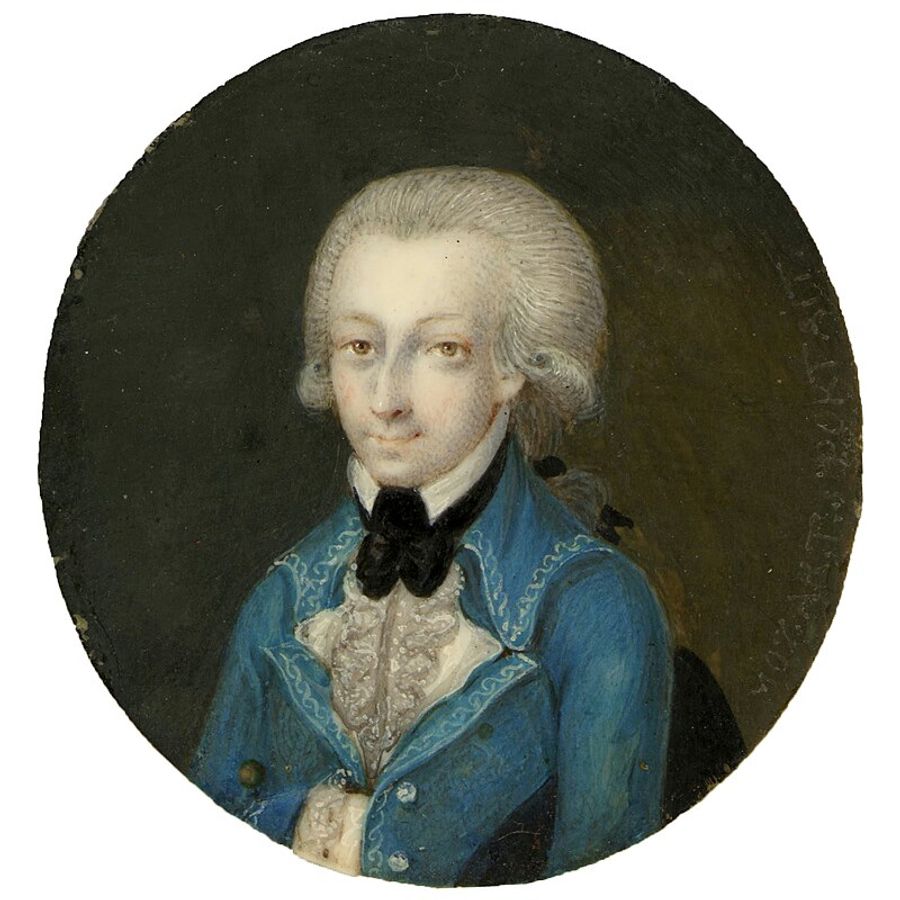
- Köchel Number
- K9 176 | K6 176
- Genre
- Orchestral Music
- Form
- Dances & Marches
- Date
- December 1773
- Place
- Salzburg
- Age
- 17
Mozart’s 16 Minuets (K. 176), written in Salzburg in December 1773, form a compact anthology of courtly dance music from the composer’s 17th year. Though conceived for social function rather than concert display, the set is a revealing workshop of orchestral color, phrase craft, and the poised elegance that underpins Mozart’s larger Salzburg serenades.
Background and Context
In the early 1770s Wolfgang Amadeus Mozart (1756–1791) was employed in Salzburg under the court of Archbishop Hieronymus Colloredo—a setting that demanded a steady supply of practical music: church pieces, serenades, cassations, and above all dances for social and ceremonial occasions. Minuets were not “character pieces” in the later Romantic sense; they were usable, repeatable, and adaptable—music designed to accompany measured movement, to punctuate dinner entertainments, or to supply a festive sequence at court gatherings.
K. 176 belongs to that utilitarian world, yet it also sits at a fascinating moment in Mozart’s development. In 1773 he had recently returned from his third Italian journey and was absorbing, at speed, a mix of Italianate melody, Salzburg practicality, and the expanding orchestral style he encountered through travel and study. The result, in sets like these, is a kind of miniature orchestral laboratory: short spans in which Mozart can test a cadence trick, a wind color, a harmonic sidestep, then move briskly on to the next dance.
Composition and Premiere
The surviving autograph places the set in Salzburg, December 1773 [1]. Unlike a symphony or concerto, the “premiere” of court dances is rarely documented: these pieces were typically written to be used rather than announced. K. 176 is therefore best understood as repertoire intended for Salzburg court/social occasions, where a sequence of minuets could be selected, reordered, or repeated as needed.
A further reason to take K. 176 seriously is that it is not an isolated curiosity: it belongs to Mozart’s substantial output of dances and marches, and it demonstrates how fluently he could write idiomatically for dance while still delivering crisp orchestral conversation. The set’s transmission in a major critical edition (Neue Mozart-Ausgabe) underlines its secure place in the canon of Mozart’s authentic dance music [1].
Instrumentation
The set is scored for a small late-18th-century Salzburg orchestra with flexible options for winds and brass—practical scoring that allowed the music to fit the players available on a given occasion. IMSLP’s catalogue entry summarizes the forces as follows [1]:
- Winds: 2 oboes (or 2 flutes), bassoon
- Brass: 2 horns (or 2 trumpets)
- Strings: violins I & II, viola, cello, double bass
This kind of “either/or” scoring is itself historically telling: dance music was often expected to work with substitutions, and Mozart’s writing typically keeps the core harmonic and rhythmic skeleton clear enough that coloristic parts can be added or omitted without collapsing the texture.
Form and Musical Character
Each minuet is a small, self-contained structure built around the classic minuet-and-trio design: a Minuet (usually in rounded binary) followed by a contrasting Trio, then a return of the Minuet da capo. Taken as a set of sixteen, K. 176 becomes more than background music: it is a curated progression of rhythmic profiles, orchestral balances, and tonal variety.
What listeners should notice
- Orchestral “speaking” in miniature. Even in short spans, Mozart distributes interest across the ensemble—strings providing the dance step, winds adding punctuation, and bass lines that do more than merely mark time.
- Cadence craft and phrase symmetry. The minuet is a genre obsessed with proportion: four-bar and eight-bar units, clear half-cadences, and tidy returns. Mozart honors that etiquette, yet he often refreshes it with a sly extra bar, a teasing dominant pedal, or a brief harmonic detour that adds wit without disturbing the dancers.
- Trio contrast as a color change. In this repertoire the Trio is rarely dramatic; its purpose is to offer relief—lighter scoring, different register, or a smoother melodic line. In performance, a well-judged Trio is where the set’s charm accumulates: the ear senses that Mozart is constantly rebalancing the room.
Why the set deserves attention
K. 176 is not “minor Mozart” in the pejorative sense; it is Mozart doing what Salzburg required, with a level of finish that anticipates the more famous dance movements embedded in later serenades and symphonies. For the modern listener, the set also offers a practical window into 18th-century musical life: these are the kinds of pieces that trained orchestras to play together, sharpened a young composer’s instinct for timing, and cultivated the stylistic poise that later makes Mozart’s large forms feel effortless.
Reception and Legacy
Because court dance sets were written for immediate use, K. 176 has never had the reception history of a symphony or opera. Its legacy is quieter but important: it survives in autograph, circulates in modern urtext editions, and remains performable as either a complete sequence or as selected numbers suited to a concert encore, a period-instrument program, or a reconstruction of Salzburg social music-making [1].
In a broader view of Mozart’s output, the set reminds us that his genius was not confined to “masterpieces” conceived for posterity. The ability to write functional music—graceful, clear, expertly balanced—was a professional necessity in Salzburg. K. 176 shows Mozart already fully in command of that craft at seventeen, turning the courtly minuet into a sequence of polished miniatures that still rewards close listening today.
Sources
[1] IMSLP work page for *16 Minuets, K. 176* (autograph dating note; general info; instrumentation; NMA reference).