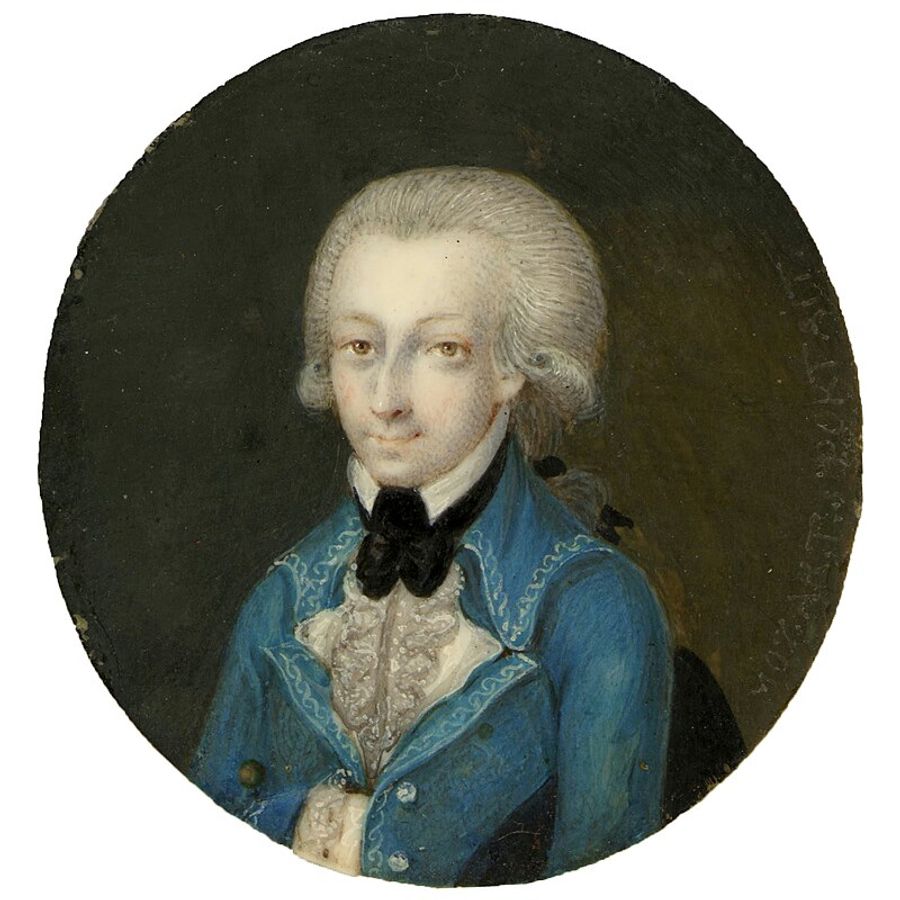
- Köchel Number
- K9 148 | K6 125h
- Genre
- Vocal Music
- Form
- Lieder
- Key
- D Major
- Date
- 1772
- Place
- Salzburg
- Age
- 16
Mozart’s Lobgesang auf die feierliche Johannisloge (K. 148) is a compact German song—known by its text incipit “O heiliges Band”—written in Salzburg when he was about sixteen. Though small in scale, it stands at a fascinating crossroads: an early Enlightenment “brotherhood” text set with the directness of a Lied, yet tinged with the ceremonial profile Mozart would later bring to his mature Masonic music.
Background and Context
In Mozart’s catalogue, Lobgesang auf die feierliche Johannisloge sits among the earliest works associated with Masonic culture. The title points to a “Johannisloge” (St John’s lodge), and the piece is often described as a song intended for a solemn lodge celebration—a strikingly early date for such a connection in Mozart’s life, since his formal Masonic membership lay more than a decade in the future. The Berliner Philharmoniker’s overview of “Mozart and Freemasonry,” for instance, notes the work as an early (probable) 1772 lodge-related song, written before either Wolfgang or Leopold Mozart belonged to a lodge [4].
At the same time, basic catalogue data remind us that “K. 148” has had a complicated paper trail. The International Mozarteum Foundation’s Köchel database lists the work as authentic and preserves crucial documentary anchors (including an autograph source), while also giving a later Salzburg dating and specifying the musical key as D major—details that do not always circulate in popular references [1]. That tension—between tradition, transmission, and modern cataloguing—is part of what makes this modest Lied worth a closer look.
Text and Composition
The text is by Ludwig Friedrich Lenz (1717–1780), and the song is commonly identified by its opening words, “O heiliges Band” (“O sacred bond”). In keeping with lodge ideals, the poem praises Freundschaft (friendship) and the faithful bond of “true brothers,” phrasing the social ethic of the Enlightenment in devotional-sounding language without becoming church music.
As for scoring, the Köchel database characterizes the piece as “Song for voice and clavier” (voice with keyboard accompaniment) [1]. Other performance traditions broaden that picture: some sources describe a version involving tenor with a male-voice choral response or reinforcement—an arrangement that fits the semi-ritual, communal setting suggested by the title [4]. The surviving materials and later editorial handling help explain why one encounters differing descriptions in reference works.
Musical Character
Musically, Lobgesang belongs to the world of the early German Lied before Goethe’s and Schubert’s revolutions: concise, public-facing, and designed for clear declamation. Its D-major profile (as given by IMSLP’s work header and the Mozarteum catalogue) points toward a bright, affirmative tonal “badge”—a practical choice when the text celebrates concord rather than private anguish [1] [2].
What makes the piece distinctive within Mozart’s early Salzburg output is precisely its purposefulness: it is not a theatrical scena, not church music, and not merely a domestic strophic trifle. Instead, it hints at a “ceremonial Lied” type—music that can be sung by an individual yet belongs to a collective identity. Heard in that light, K. 148 becomes an early preview of Mozart’s later gift for writing music that dignifies community: a small work, but one already attentive to the social meanings music can carry.
Sheet Music
Download and print sheet music for Lobgesang auf die feierliche Johannisloge (K. 148) from Virtual Sheet Music®.
Sources
[1] International Mozarteum Foundation (Köchel-Verzeichnis): work entry for KV 148 with authenticity status, key, dating, scoring, and source notes.
[2] IMSLP: Lobegesang auf die feierliche Johannisloge, K. 148/125h — general information (key, composition year estimate, instrumentation) and score access.
[3] IMSLP PDF (mirrored from Neue Mozart-Ausgabe): score for Lobgesang auf die feierliche Johannesloge, K. 148 (125h).
[4] Berliner Philharmoniker: essay “Mozart and Freemasonry,” discussing K. 148 as an early lodge-related song and noting Mozart was not yet a Freemason.