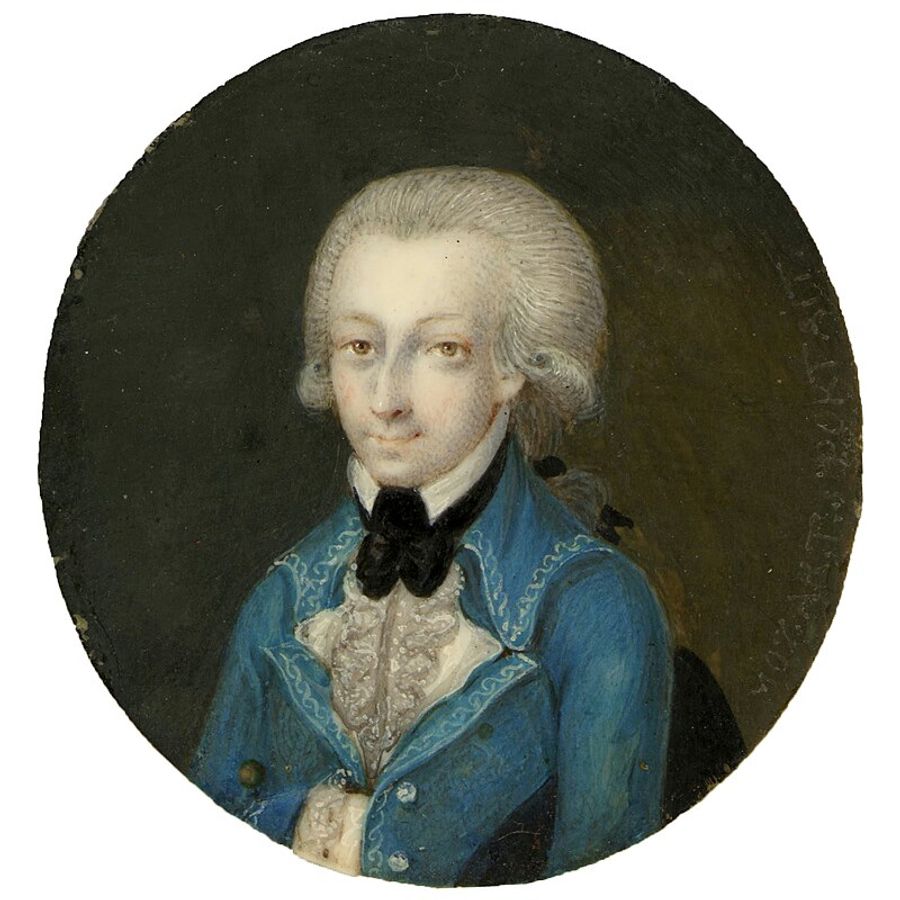
- Köchel Number
- K9 142 | K6 Anh. C 3.04
- Genre
- Sacred Music
- Form
- Masses & Requiem
- Key
- B Flat Major
- Date
- 1770
Tantum ergo in B♭ major (K. 142) is a short Eucharistic hymn setting traditionally ascribed to Wolfgang Amadeus Mozart (1756–1791), but its authorship is doubtful. Neither the date nor the place of composition is securely known, and the work survives chiefly in later copying traditions rather than in an autograph score.[1]
Background and Context
The attribution history of K. 142 is unusually tangled. In the 20th century, the Mozart scholar Robert Münster reported that an old set of copied parts from the Abbey Neumarkt–St. Veit (connected historically with Salzburg’s Benedictine circles) transmits K. 142 together with a second Tantum ergo (K. 197), and that both were long treated as doubtful.[2] Münster further argued that K. 142 is, for the most part, identical with a Tantum ergo by Johann Zach (1669–1773), suggesting that what has been called “Mozart” may instead be Zach’s composition, perhaps lightly revised for local use.[2]
In practical terms, the piece nonetheless fits the world of south-German and Salzburg devotion: Tantum ergo was commonly sung at Benediction, and compact concerted settings—intended to sound festive without extending the liturgy—circulated widely in monastic and parish archives.[2]
Musical Character
K. 142 is a concise, bright B♭-major setting that treats the hymn strophically, with clear cadential punctuation and an emphasis on ceremonial brilliance. The scoring in transmitted sources is for soprano solo and SATB choir with strings and basso continuo, reinforced by two trumpets (clarini)—a sonority strongly associated with Salzburg church music for major feasts.[2]
One striking detail noted by Münster is an extended “Amen” coda (added material that increases the work’s length), a feature not typical of Zach’s other Tantum ergo settings; this kind of amplifying conclusion can be heard as a deliberate heightening of the final doxological gesture.[2] Even if the music is not securely Mozart’s, the piece remains a useful window onto the stylistic norms against which Mozart’s authenticated Salzburg sacred works were written and performed.