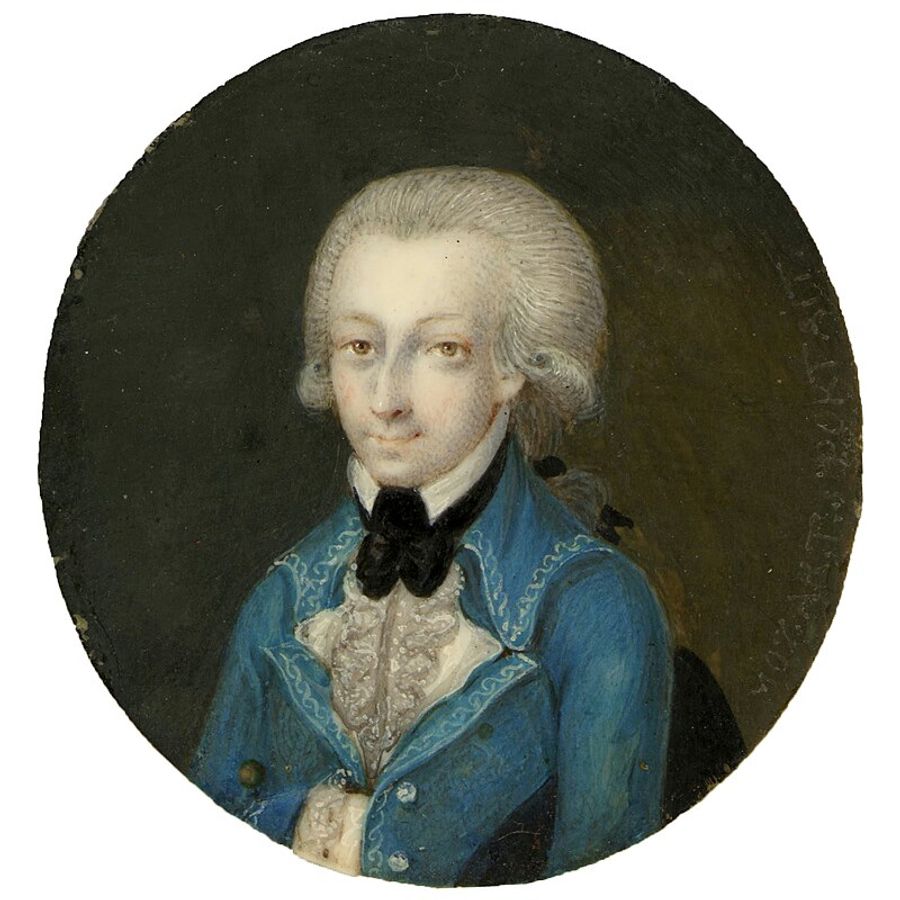
- Köchel Number
- K9 121 | K6
- Genre
- Orchestral Music
- Form
- Symphonies
- Key
- D Major
- Date
- 1775
- Place
- Salzburg
- Age
- 19
Mozart’s Finale of a Symphony in D major (K. 121), written in Salzburg in 1775 when he was 19, is a brilliant, compact orchestral movement later attached to the two-movement overture of La finta giardiniera (K. 196) to create the three-movement Symphony in D major, K. 196+121 (also catalogued as K. 207a). Though modest in scale, it offers a vivid snapshot of Mozart’s teenage symphonic style—quick-witted, rhythmically alert, and theatrically minded.
Background and Context
In January 1775, Wolfgang Amadeus Mozart (1756–1791) was in Munich for the premiere of his Italian opera buffa La finta giardiniera (K. 196), first performed on 13 January at the Salvatortheater [1]. Like many of Mozart’s stage works, the opera had an overture designed to set the tone and capture attention quickly. That overture—substantial and symphonically shaped—later became the first two movements of what is now often encountered as a three-movement Symphony in D major, K. 196+121 [2].
The complication is that the “symphony” is not a unified composition conceived from the outset. The finale, K. 121 (also referenced in older Köchel numbering as K\^6 207a), circulated as a standalone orchestral movement and only later came to serve as the concluding movement for the two-movement overture-derived torso [3]. This hybrid origin helps explain why K. 121 can feel at once like a concert-hall finale and like theater music: it carries the kinetic clarity of an operatic curtain-raiser, but it also supplies the satisfying “last word” expected at the end of a short Salzburg symphony.
Composition and Premiere
The finale is generally dated to 1775, with Mozart back in Salzburg after the Munich opera engagement, and it is most commonly described as having been composed to “complete” the two-movement symphonic unit derived from the overture to La finta giardiniera [2]. Some sources present the chronology in plain practical terms: after the opera’s premiere, Mozart wrote a new Allegro finale (K. 121) so that the two existing movements could function as a full concert symphony [4].
The paper trail is not entirely straightforward. Modern discussions note that questions of dating have been raised on manuscript-paper evidence (an issue often encountered in Mozart source studies), which underlines that K. 121’s history is “attached” rather than natively symphonic [2]. What matters for listeners, however, is the artistic result: K. 121 behaves persuasively as a finale—fast, bright, and decisively goal-directed.
Instrumentation
In keeping with many mid-1770s Salzburg symphonies, the scoring is lean and functional rather than “festival” grand. The standard instrumentation given for the symphony that incorporates K. 121 is:
- Winds: 2 oboes
- Brass: 2 horns (in D)
- Strings: violins I & II, viola, cello, double bass
This scoring is explicitly documented in reference descriptions and modern edition cataloguing [2], and it matches the instrumentation summary on IMSLP for K. 121 within the K. 196+121 complex [3]. The absence of trumpets and timpani—often associated with ceremonial D major—keeps the movement’s brilliance “classical” rather than martial, relying on rhythmic bite, quick articulations, and bright wind coloring instead of sheer decibel splendor.
Form and Musical Character
K. 121 is typically transmitted simply as an Allegro finale (the third movement of the composite symphony) [3]. In its musical rhetoric, it belongs to a family of youthful Mozart finales that favor compact sonata-allegro form—clear-cut thematic profiles, energetic transitions, and a development section that keeps the drama moving without overstaying its welcome.
Several characteristics make it worth hearing as more than just a “patch” to complete an overture:
- Theatrical energy without vocals. Even stripped of stage and text, the movement’s quick conversational gestures—short motives tossed between strings and winds, quick cadential confirmations, and “busy” passagework—suggest Mozart thinking in scenes and reactions rather than in monumental architecture.
- A D-major brilliance built from economy. With only oboes and horns as winds/brass, the music has to manufacture sparkle through texture. Mozart does so by keeping the string writing active and by using winds for punctuation and brightening rather than constant doubling.
- Finale logic: drive and closure. A successful symphonic finale does two things: it accelerates the listener’s sense of forward motion, and it makes the ending feel inevitable. K. 121’s tight proportions and emphatic cadences accomplish exactly that—one reason it can convincingly “seal” two movements that originated with a different function.
Heard in context after the overture movements (K. 196), K. 121 also sharpens an important point about Mozart in the mid-1770s: the boundary between opera and symphony was porous. Overture material could have a double life in the concert hall, and a newly written finale could retrofit the whole into a genre audiences recognized as a symphony.
Reception and Legacy
K. 121 has never belonged to the small canon of universally famous Mozart symphonies; it is more often encountered by listeners exploring the early Salzburg works or recordings of “complete symphonies,” where it appears under the umbrella title Symphony in D major, K. 196+121 (sometimes numbered as Symphony No. 51 in older counting) [3]. Yet that very marginality can be an advantage: the movement is free of the interpretive weight that surrounds later masterpieces, and it invites one to listen closely to Mozart’s craft at 19—how quickly he can animate a texture, how naturally he balances repetition and surprise, and how deftly he can create a “finale” feeling on a modest orchestral canvas.
For performers and programmers, K. 121 also has practical appeal. Its concise, high-spirited character makes it an effective opener or pendant to other early-Classical repertoire, and its hybrid history offers a concrete example of how eighteenth-century musical works could be repurposed across contexts—opera house, court concert, and public performance alike.
Sources
[1] Wikipedia — La finta giardiniera: composition context and premiere date (13 January 1775, Munich).
[2] Wikipedia — Symphony, K. 196+121: overture-derived first two movements, separate finale K. 121/207a; scoring and dating notes.
[3] IMSLP — Symphony No. 51 in D major, K. 121/207a (K. 196+121 complex): movement list, key, and instrumentation summary.
[4] The Symphony (Springfield Symphony Orchestra) — January 2025 program notes: describes Mozart writing a new Allegro finale (K. 121) after the opera premiere to create a complete symphony.