- Köchel Number
- K9 117 | K6 66a
- Genre
- Sacred Music
- Form
- Smaller Church Works
- Key
- C Major
- Date
- September–October 1769
- Place
- Salzburg
- Age
- 13
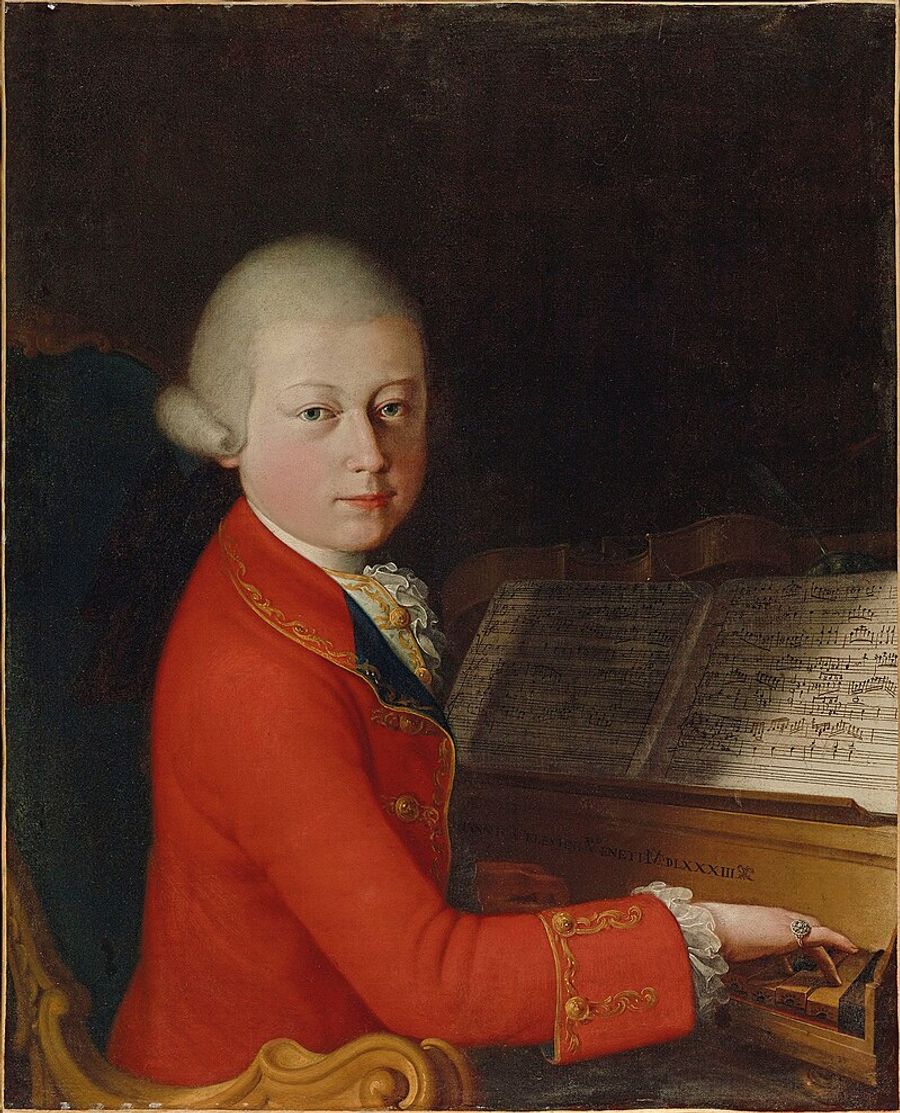
Mozart’s Offertory (Pro omni tempore) in C major, K. 117 (also catalogued as K. 66a), is a compact but festive Salzburg church piece, dated by the Mozarteum to December 1769—when the composer was just 13. Scored for chorus, strings, organ continuo, and bright ceremonial forces (trumpets and timpani), it offers an early glimpse of Mozart’s instinct for choral declamation and contrapuntal finish within the practical demands of Catholic liturgy.
Background and Context
In 1769, Salzburg’s court and cathedral culture required a steady supply of music not only for the Mass Ordinary (Kyrie–Agnus Dei) but also for the Proper—items that changed with the day, including the Offertory. For the young Wolfgang Amadeus Mozart (1756–1791), these “smaller church works” formed a kind of apprenticeship in writing efficiently for real services: clear choral textures, strong cadences for liturgical punctuation, and orchestration that could expand or contract to local resources.[1]
K. 117 is minor in fame, yet it is revealing historically. It belongs to the moment just before Mozart’s first Italian journey (late 1769), when Salzburg training, Viennese impressions, and South-German church style met in a remarkably confident adolescent hand.[1] What makes the work worth attention is precisely this “in-between” quality: it is not yet the mature Salzburg sacred idiom of the late 1770s, but it already shows Mozart thinking in larger rhetorical spans than one expects from a brief Offertory.
Composition and Liturgical Function
The Mozarteum’s Köchel Verzeichnis dates the Offertory to Salzburg, December 1769, and lists it as extant and authentic.[1] The designation pro omni tempore (“for any time”) indicates a general-purpose text suitable for use across the church year rather than for a single feast.[1]
The work’s transmission history also hints at its usefulness: later copyists in Salzburg preserved and recopied it, suggesting it could be fitted pragmatically into services when needed.[1] At the same time, scholarship and publishing traditions have sometimes linked K. 117 with an Offertory associated with Vienna’s Waisenhauskirche dedication in December 1768, a reminder that early Mozart chronology can be tangled—and that K. 117 sits near a real historical crossroads in the boy’s travels and commissions.[2]
Musical Structure
K. 117 is laid out in three concise panels, alternating choral proclamation with a more lyrical central solo section.[1]
Instrumentation (as given by the Mozarteum):[1]
- Brass: 2 trumpets
- Percussion: timpani
- Strings: violins I & II, viola
- Voices: SATB chorus
- Continuo: cello/double bass with organ
Sections (workparts):[1]
- I. Benedictus sit Deus — Allegro (chorus)
- II. Introibo — Andante (aria)
- III. Jubilate, jubilate — Allegro (chorus)
The outer choruses exploit C major’s ceremonial brilliance, reinforced by trumpets and timpani: a sound-world Salzburg listeners associated with public celebration and ecclesiastical splendor. Yet the most telling feature is not sheer volume but Mozart’s grasp of choral rhetoric—short, energetic phrases that can be articulated clearly in a resonant church, balanced by cadences that “read” in the liturgy.
The central Andante (Introibo) provides contrast: an inward, more cantabile span that briefly shifts the Offertory from proclamation to devotion. In miniature, this chorus–solo–chorus design anticipates procedures Mozart would use repeatedly in sacred works: public framing movements around a more personal, prayer-like core.
Reception and Legacy
K. 117 remains a rarely performed Offertory, overshadowed by Mozart’s later Salzburg masterpieces and by the better-known stand-alone sacred miniatures. Still, its afterlife is not merely archival: modern liturgical programs occasionally extract the final choral portion (Jubilate) as an Offertory anthem, a practical reuse consistent with the work’s pro omni tempore identity.[3]
For listeners and choirs today, the piece’s appeal lies in its paradox. It is modest in scale, but it carries a young composer’s unusually sure sense of structure: bright choral pillars, a lyrical interior, and a closing that feels designed to “seal” the liturgical moment cleanly. Heard in that light, K. 117 is more than juvenilia; it is a compact demonstration of how quickly Mozart learned to make Salzburg’s functional church genres speak with personality and momentum.
Sources
[1] Mozarteum (Köchel Verzeichnis) entry for K. 117, including dating (Salzburg, Dec 1769), workparts, and instrumentation.
[2] Edition Kainhofer overview noting scholarly debate about dating/occasion (Salzburg 1769 vs Vienna 1768 Waisenhauskirche tradition).
[3] St. Paul Cathedral (Pittsburgh) service booklet showing “Jubilate Deo K.117” used as an Offertory anthem (example of modern liturgical reuse).