20 Minuets (I. Zwölf Menuette in der Ordnung letzter Hand; II. Acht Menuette aus der ursprünglichen Reihe), K. 103
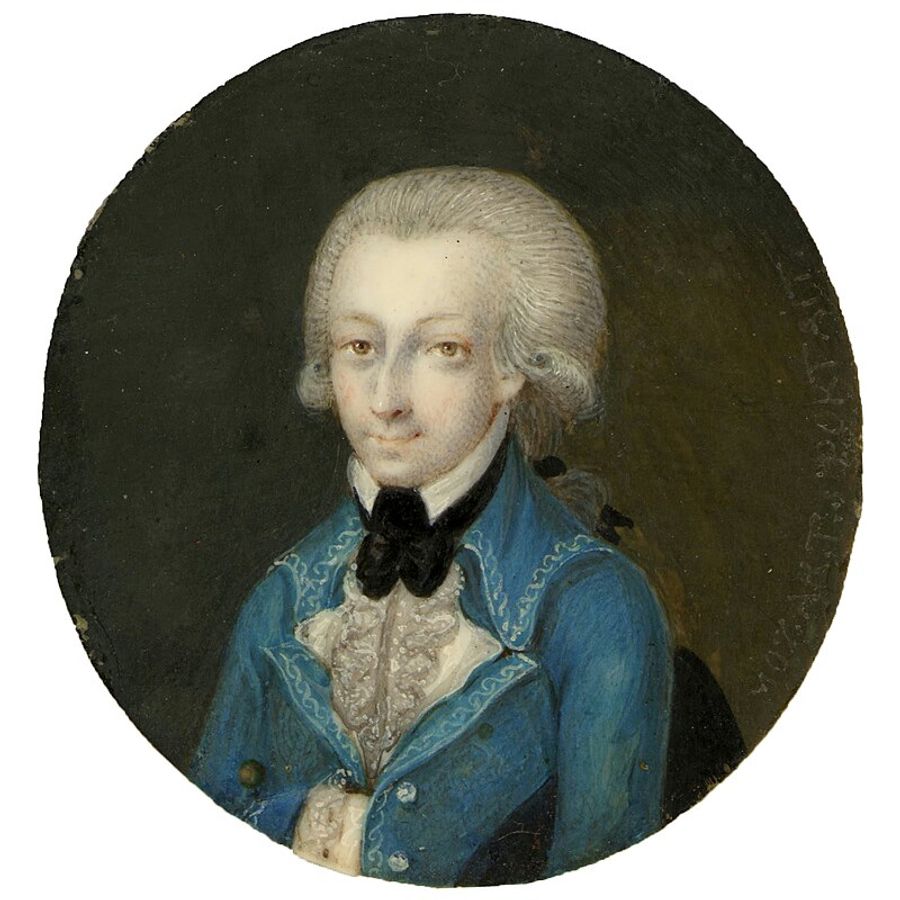
- Köchel Number
- K9 103 | K6 61d
- Genre
- Orchestral Music
- Form
- Dances & Marches
- Date
- 1771–1772
- Place
- Salzburg
- Age
- 16
Mozart’s 20 Minuets (K. 103; also catalogued as K. 6 61d) are a Salzburg set from 1771/72, assembled in two groups: twelve minuets “in the final order” and eight from an earlier sequence.[1] Written when he was about sixteen, these concise dances show Mozart treating the courtly minuet not as background filler, but as a workshop for balance, scoring, and character.
Background and Context
In Mozart’s Salzburg years, dance music was not a sideline: it was a practical necessity. Minuets—music for sociable occasions, whether court entertainments or private festivities—were expected in quantity, often issued in neat batches. Even if such pieces rarely command the fame of the symphonies and concertos, they reveal how a teenage Mozart could write quickly, idiomatically, and with a keen ear for what players could deliver at sight.
K. 103 belongs to this utilitarian world, yet it also hints at a mind already alert to ordering, revision, and presentation. The collection survives as twenty individual minuets grouped into two sequences with telling labels: I. Zwölf Menuette in der Ordnung letzter Hand (twelve minuets in the “final version/order”) and II. Acht Menuette aus der ursprünglichen Reihe (eight minuets from the original series).[1] The very existence of these headings suggests that Mozart—or an early organizing hand close to the sources—cared about how the set should circulate.
Composition and Premiere
The standard dating for K. 103 places it in 1771/72 in Salzburg (often specified more narrowly as 1772 in catalogues and discographies), with IMSLP giving “1771/72” and confirming the two-part layout.[1] The minuets were edited for the Neue Mozart-Ausgabe in the first volume devoted to dances (Series IV, Werkgruppe 13, Tänze, Band 1), an indication that—however modest the genre—these works sit securely inside the critical edition tradition.[1]
A specific “premiere” is unlikely to have been documented; dances of this type were typically used as needed, repeated across seasons, and adapted to available players. What can be said with confidence is that the set reflects the performing conditions of Salzburg’s court establishment: modest forces, flexible wind doublings, and music designed to project rhythmic clarity over a room of moving bodies.
Instrumentation
K. 103 is preserved as orchestral dance music with flexible options typical of the time. IMSLP lists an alternative title that effectively reads like a practical scoring plan—winds that can be substituted, plus a small string band—while also providing a concise instrumentation line.[1]
A representative scoring is:
- Winds: 2 oboes (or flutes), 2 horns (or trumpets)
- Strings: 2 violins
- Bass: cello and bass (often functioning as a single bass line)
This palette is worth noticing. First, it is economical: two melodic upper strings, a bass foundation, and winds used chiefly for color, harmonic support, and outdoor-friendly brilliance. Second, it is adaptable: the option to substitute flutes for oboes or trumpets for horns reflects real-life availability rather than purely “ideal” instrumentation.[1]
Form and Musical Character
Each item in K. 103 is, by design, compact: a minuet in triple meter, typically rounded and symmetrical, aimed at immediate intelligibility. Yet within that simplicity Mozart can vary articulation, texture, and tonal color from number to number, creating a sequence that is more than twenty identical “dance tunes.”
The minuet as a compositional laboratory
In Salzburg dance writing, the minuet functions as a kind of compositional laboratory. Because the form is short, the listener (and dancer) instantly perceives whether a phrase “sits” well: whether cadences arrive cleanly, whether the bass supports the turn of harmony, whether the winds enliven rather than clutter. K. 103 demonstrates Mozart practicing these fundamentals with unusual fluency for a sixteen-year-old.
Contrast and ordering: two groups, two perspectives
The collection’s editorial framing is part of its fascination. The first group, Zwölf Menuette in der Ordnung letzter Hand, implies a final ordering—suggesting selection, revision, or at least a conscious sequence.[1] The second group, Acht Menuette aus der ursprünglichen Reihe, preserves material from an earlier run.[1] For performers today, this can be taken two ways:
- as a ready-made “suite” (twelve pieces with an implied preferred order), and
- as a glimpse into workshop practice (the eight “original series” minuets as variants, leftovers, or parallel material).
Even without treating the set as a narrative cycle, listeners can hear a young composer learning how to keep a social dance from turning monotonous: changing the registral balance, letting the winds answer string phrases, and occasionally tightening the musical rhetoric to something closer to a miniature orchestral movement.
Reception and Legacy
Dance collections like K. 103 inevitably live in the shadow of Mozart’s later masterpieces; they are seldom programmed in mainstream symphonic concerts as standalone items. Yet the critical edition presence (NMA Tänze, Band 1) and the work’s continued circulation in scores and recordings show that the minuets retain practical value—especially for ensembles interested in historically grounded Salzburg repertoire.[1]
Why does K. 103 deserve attention? Because it reminds us that Mozart’s “maturity” did not arrive suddenly in Vienna. In Salzburg, under routine professional demands, he learned to write quickly for real musicians, to make flexible scorings work, and to craft music that succeeds instantly in its intended setting. The 20 Minuets do not ask to be heard as profound statements; rather, they offer something subtler and perhaps rarer: the sound of craftsmanship in formation—poised, alert, and already unmistakably Mozartian in its economy and charm.
Sources
[1] IMSLP work page for *20 Minuets*, K. 103/61d (dating, two-part grouping, NMA edition info, and instrumentation summary/alternative title).