- Köchel Number
- K9 33b | K6
- Genre
- Piano Music
- Form
- Piano Pieces
- Key
- F Major
- Date
- 1766
- Place
- Zurich
- Age
- 10
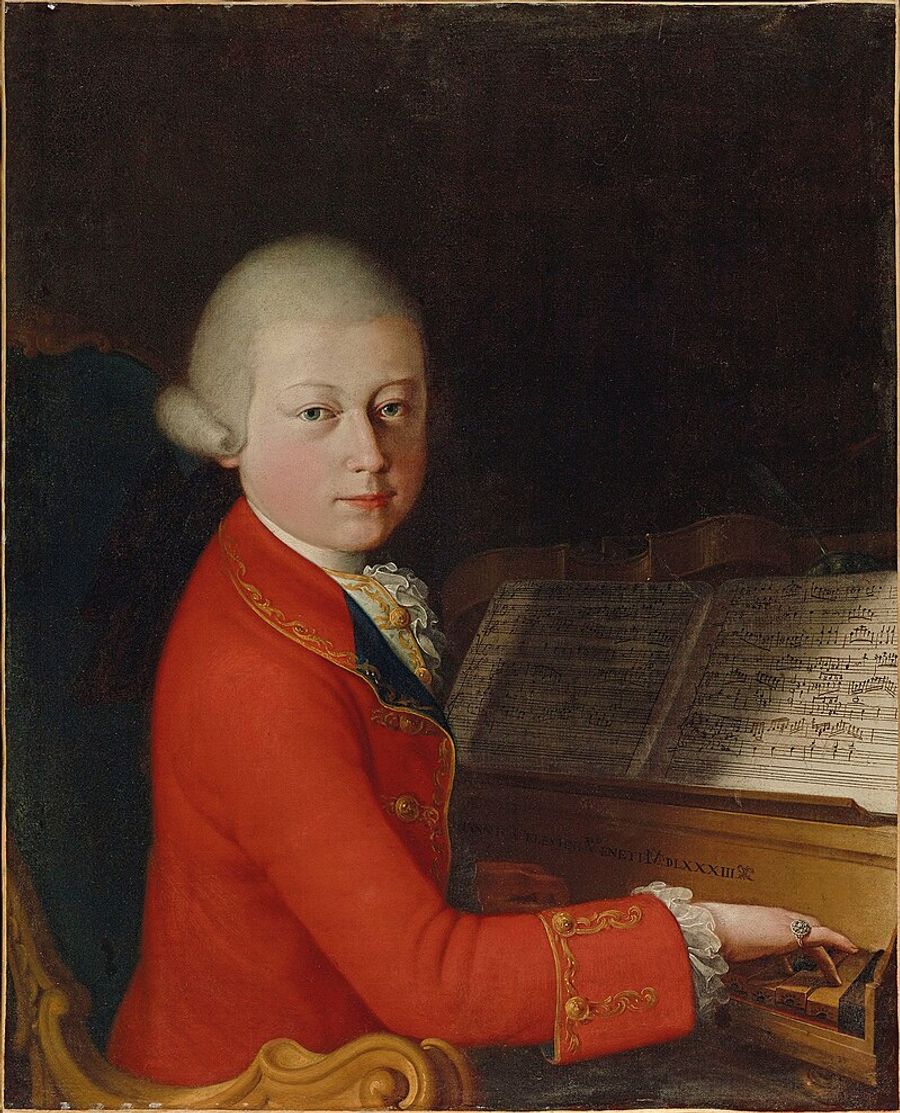
Mozart’s Movement for Harpsichord in F major (K. 033b) is a tiny, self-contained keyboard piece written in Zürich in October 1766, during the family’s long European tour.[1] Preserved on a single manuscript page, it offers a concise glimpse of the 10-year-old composer’s fluency with the polite, symmetrical phrasing of mid-18th-century clavier style.[1]
Mozart’s Life at the Time
In October 1766, Wolfgang Amadeus Mozart (1756–1791) was 10 years old and travelling with his family; the surviving source for K. 033b places its creation in Zürich.[1] The work belongs to the portable, occasion-driven keyboard pieces Mozart could produce quickly on tour—music suited to domestic performance as much as to demonstration of a prodigy’s ease at the keys.
Musical Character
K. 033b is a brief Allegro in F major, notated in 2/4 time and cast in two repeated sections (a compact binary design) spanning 26 bars in total.[2] Its surface is bright and straightforward: short, balanced phrases, clear cadences, and simple right-hand figuration over a functional left-hand accompaniment—features that keep the harmony moving while remaining well within a child composer’s idiomatic grasp. Heard as part of Mozart’s juvenile clavier output, the piece is less about thematic ambition than about control: a neat sense of proportion, a reliable tonal plan, and the beginnings of the quicksilver keyboard rhetoric that Mozart would soon expand in larger sonatas and concertos.